
When I’ve lived or traveled outside the U.S. on May 1, I’ve sometimes been exposed to celebrations, speeches, parades, or other activities in connection with May Day as “International Labor Day.”
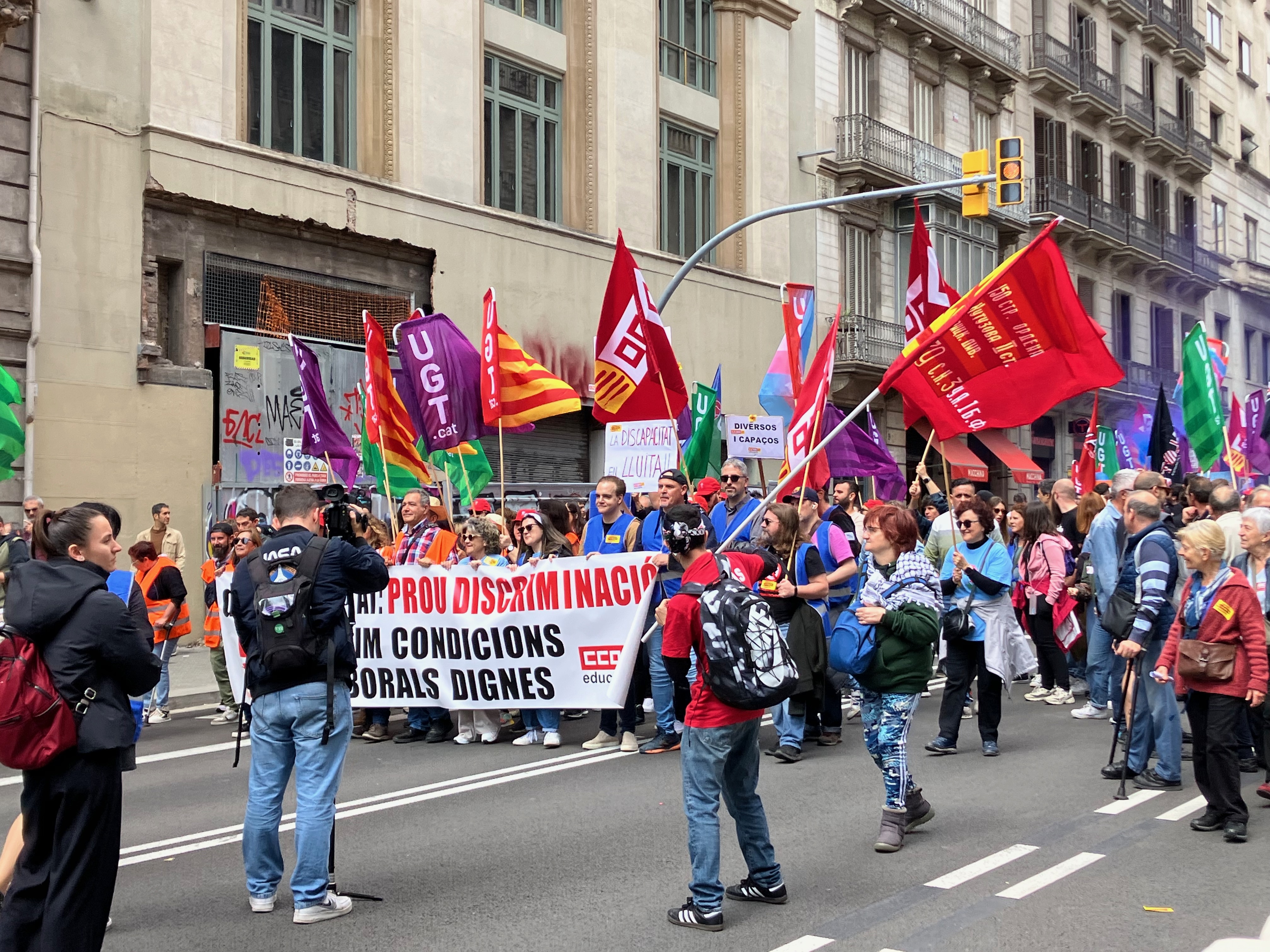
As I began searching for the origin of this holiday, I came across multiple mentions of the “Haymarket Incident,” and/or the “Haymarket Massacre,” a series of demonstrations and events in support of an 8-hour work day, centered on Chicago in 1886. The events of early May, 1886 were part of a larger global movement of workers advocating, sometimes at considerable risk, for better working conditions and shorter work hours. In 1889, the “Second International,” a loose-knit network of socialist and workers’ rights groups, sought to establish May 1 as International Labor Day. A holiday on this date is currently recognized throughout much of Europe, Asia, Latin America, and Africa. The U.S., Canada, Australia, and a few other countries host their ”labor day” on a different date, perhaps to distance it from such “socialist” origins.
A different context for “May Day” is its use as an international distress signal. Per Wikipedia: “Mayday is an emergency procedure word used internationally as a distress signal in voice-procedure radio communications. It is used to signal life-threatening emergencies, primarily by aviators, mariners, and emergency responders. It is shouted three times consecutively—‘Mayday, Mayday, Mayday’—to signify grave danger, such as engine failure, fire, or sinking, requiring immediate assistance.” It seems plausible that the call originated with the French expression “m’aider” (help me) back in the 1920’s when the majority of air traffic flew between the airports of Paris and London; the term was easier to distinguish on staticky radio channels than the alternate expression “SOS.”
Starting as far back as Roman times, probably even earlier, spring festivals have been held around the beginning of May, continuing even through the medieval period we sometimes call the “Dark Ages.”
The earliest “May Day” I remember occurred in 1954, on Saturday, May 1. I was a first grader at our elementary school in a small town in Maryland. We were putting on a festive pageant, for which I’d been chosen as a “princess” to represent our class. I was one of a dozen or so members of our “May Court.” The festival would also include a May Pole dance, with classmates weaving patterns using ribbons draped from a central pole. There’d be lots of food booths, midway style games, and much silliness as we enjoyed a day outdoors, free from the strictures of weekday classwork.
For part of April, we princesses practiced walking at a stately measured pace down concrete stairs to the lower level of the school playground, then over to a slightly shady spot at the playground’s edge. For the actual festival, a recording of “Pomp and Circumstance” would play over the school’s public address system and we’d all be costumed in pastel colored taffeta gowns. The coronation of our “May Queen,” one of the sixth grade princesses, would be the culmination of the afternoon fair.
In 2026, the Women’s March in the U.S. is organizing a nationwide day of action on Friday, May 1 (May Day), encouraging a “No Work, No School, No Shopping” strike to protest against political and corporate power. Per their website: “We are taking collective action and demanding a nation that puts workers over billionaires.”
I’m conflicted about how to spend this year’s first of May—rising inflation, threats to workers’ rights, voting rights, civil rights, plus a tense international situation would all seem to call for some sort of protest. So, though my marching days are mostly over and my retiree’s impact on the paid workforce is minimal, I’ll abstain from purchases or housework on this year’s May 1. This Friday, I’ll not be part of a homemaker’s “second shift,” either. The “no housework” injunction will require some pre-planning plus extra chore work by my husband.
And because it is also true that early May in this hemisphere is often the loveliest time of the year, I’ll spend as much time as practical outdoors, enjoying the fresh greenness of springtime.

