Tag Archives: International Women’s Day

Three Remarkable Women

On this International Women’s Day, I want to honor three older women who have over the years become heroines of mine: Wangari Maathai, Doris “Granny D.” Haddock, and, most recently, Saalumarada Thimmakka. None are women I’ve met or know directly. One lived in Africa, another in North America, the third in Asia. Their lives of collaborative service continue to inspire me, even though they are no longer physically with us. 

Wangari Maathai was born in Kenya in 1940. She pushed to get a good education, and along the way became an environmental and government reform activist. In 1977, she started the Greenbelt Movement, aimed at empowering rural women through planting and nurturing tree seedlings. Over time the movement grew and incorporated an effort toward more responsive, more transparent government at multiple levels. In 2004, Maathai was awarded the Nobel Peace Prize for her work, the first African woman to receive this honor. In her acceptance speech, she highlighted work completed, but also work yet to be done: 

“Today we are faced with a challenge that calls for a shift in our thinking, so that humanity stops threatening its life support system.” 

Maathai died in 2011, but the movement she started lives on. Its Greenbelt Movement website sets out several current interlocking goals: “[O]ur programs focus on reforestation, climate change adaptation and mitigation, water harvesting, gender-based advocacy, and creating sustainable livelihoods.” 

Doris Haddock for much of her life was a low profile New England wife, mother, and shoe factory worker. Born in New Hampshire in 1910, she attended college in Massachusetts during the late 1920’s until her secret marriage to James Haddock, the love of her life, got her expelled (evidence of a double standard that has not yet totally disappeared). The couple settled in New Hampshire, where Jim found work as an electrical engineer. Once their children were launched, Doris became more active in local government. She continued attending weekly public affairs sessions where she’d made good friends. During the 1990’s, first Jim and then her best friend Elizabeth died. Doris became more and more disgusted with the oversized role of large campaign contributions in elections at all levels. She began doing some physical training while considering ways to publicize the need for reform. 

On January 1, 1999, shortly before her 89th birthday, Doris set out from Pasadena, California on a cross-country walk to raise awareness of the need for campaign finance reform. Over 3,200 miles and 14 months later, she arrived in Washington, D.C., having met and talked with thousands of people during her trek and collected thousands of signatures calling for meaningful reform. She was later on hand in the gallery of the U.S. Senate in 2002 when a bipartisan campaign finance reform law gained passage there on a 60-40 vote. 

In 2004, Haddock accepted a last minute request to run for a U.S. Senate seat against a popular incumbent. She did not win that contest, but she again raised important issues. Per an L.A. Times article shortly before the election: 

“Out on the trail, Doris Haddock delivers this message: Nearly all evils born in Washington — lopsided tax policies, economic disparity, an ineffective healthcare system, even the war in Iraq — are caused by ‘career politicians who are funded by the special interests that they are supposed to be regulating.’” 

Haddock lived to be 100. She died, physically frail but still spiritually robust, shortly after the 2010 U.S. Supreme Court decision “Citizens United” opened the floodgates to unlimited campaign contributions. Several local and national organizations continue the work she championed, using her name and likeness in their promotional materials. 

Saalumarada Thimmakka was a childless illiterate Indian peasant woman who transformed the stigma of being unable to bear physical children into a verdant set of tree-lined oases in her impoverished part of India. She died in late 2025. In early 2026, her life and work were memorialized in a New York Times obituary. Ms. Thimmakka lived to be about 113 (records of her birth are inexact). Nearly 80 years ago, she and her husband started by planting 10 banyan tree saplings. After her husband’s death in the 1990’s, her efforts began to get expanded media attention. The scope of her tree planting increased. In 2019, she was awarded the Padma Shri medal, one of India’s highest civilian honors. Her adopted son continues her efforts, distributing thousands of saplings each year and organizing tree planting drives. 

Ms. Maathai, Ms. Haddock, and Ms. Thimmakka remind me of three sometimes paradoxical truths:

1) Lasting change almost always requires sustained effort.
2) Even in the darkest periods, one person can make a positive difference, and
3) We are stronger together.

Happy International Women’s Day! 

Women’s Day Winter Harvest

It’s been a while since I previously updated this blog. It’s been a busy, wet, cool season for me here in San Diego. For the first time since renting a community garden plot last spring, I’ve had chances to try my hand at cool season gardening. The cool, wetter than usual weather produced lettuce, carrots, chard, parsley, and kale—enough for salads that were a welcome addition to rainy day soups made with some homegrown leeks.

winter’s veggies

What people tell me is an unusual-for-here series of chilly, rainy days provided the impetus to go through my store of fabric scraps and to come up with a set that may provide some comfort and warmth for an area refugee family. 

quilted squares for refugee family

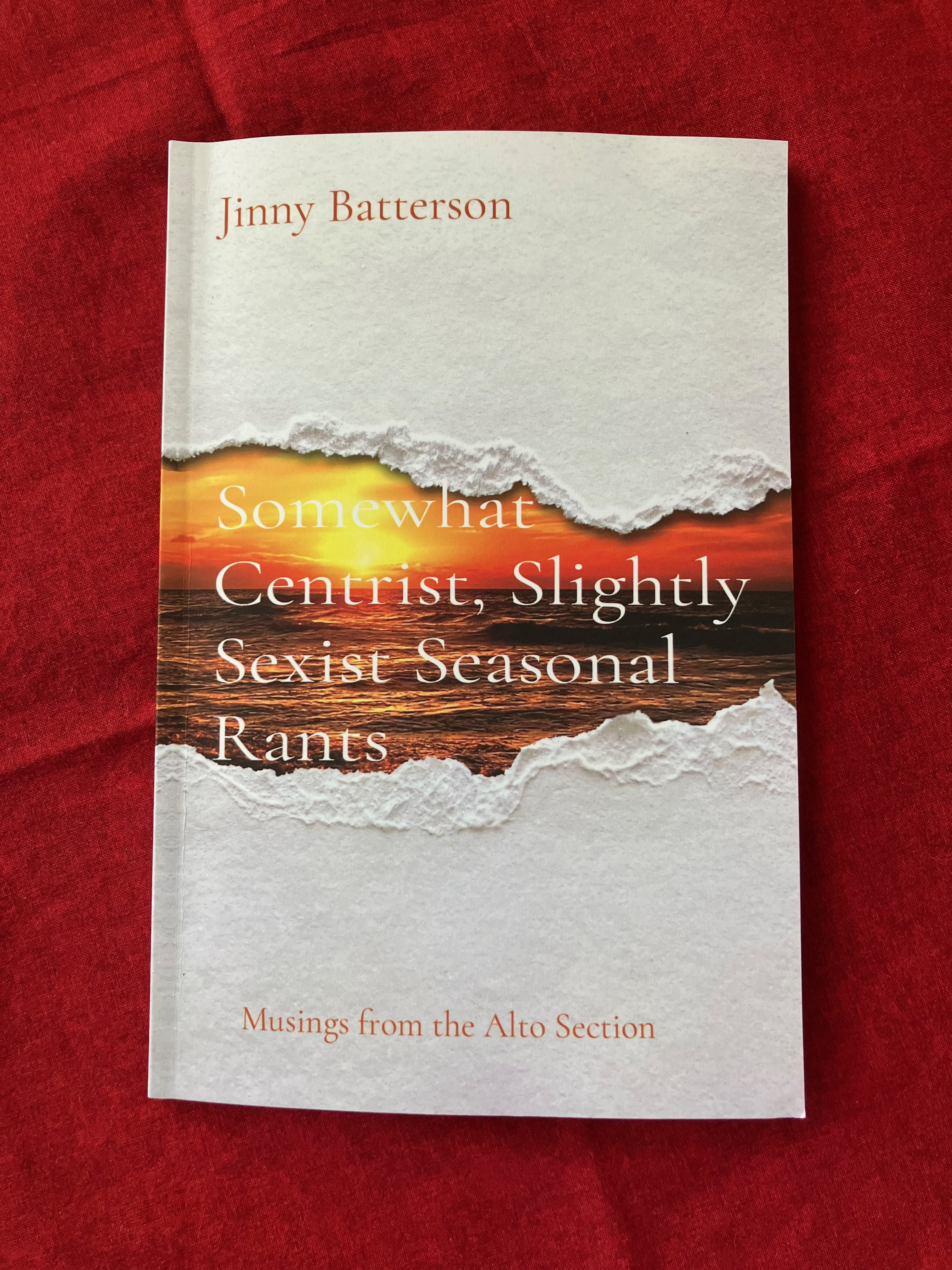
What’s taken up the bulk of my time the past couple of months has been adapting and updating some prior blog posts into a self-published book of essays with a long title  “Somewhat Centrist, Slightly Sexist Seasonal Rants: Musings from the Alto Section.” The book, now in its final proofing process, is due out later this month. It chronicles parts of my particular woman’s history and relates my individual views of some current issues. 

Today, March 8, is celebrated in many countries as “International Women’s Day.”  Multiple relevant events in the San Diego area are listed for today or later during this Women’s History Month. Some highlight this year’s theme, “Embrace Equity.” Despite generations of effort, women do not yet enjoy pay equity in most environments. Sadly, in many places we seem to be going backward on one of the most important equity issues of all, the capacity to manage our own reproductive health, to control our own bodies. 

Happy International Women’s Day to all as we continue the ongoing struggle for equity!  

The Politics of Human Reproduction

As a post-menopausal woman, I’m no longer directly impacted by the twists and turns of abortion debates and legislation. During my fertile years, I was privileged to live in areas where reliable contraception was available and reproductive options were improving. I was blessed with two much-wanted, much-loved children and a long-term partner who helped provide both material and emotional support as we navigated the great adventure of parenting. Once our children were past their most vulnerable years, I chose to end my fertility early, in part to avoid overpopulating an already human-crowded planet. 

Therefore my initial strong reaction to coverage of the “fetal heartbeat bill” passed recently in neighboring South Carolina surprised me. This particular fight has long since been joined by still-fertile women. I have no direct interest. Why, then, did a still photo of South Carolina governor Henry Dargan McMaster, an older somewhat sanctimonious male, white, signing South Carolina’s Senate Bill 1 while surrounded by other mostly older men, mostly white, plus a few women, rankle me so? On reflection, I suspect it’s a combination of personal and societal history.

Until after I was grown and married, I had little notion what abortion was. After a 1973 U.S. Supreme Court decision legalized abortions under certain circumstances, protracted legal and political battles erupted. Political candidates and office holders were sometimes judged primarily or solely based on their stance on this one issue. Through decades of debate, I’ve been exposed to lots of “pro-life”  and “pro-choice” publicity. Arguments at both extremes disturb me. I lean toward a “pro-choice” stance, but remember, too, the moral ambiguity captured in author Gwendolyn Brooks’ haunting 1945 poem “The Mother” (https://www.poetryfoundation.org/poems/43309/the-mother-56d2220767a02). 

In early 1975, when my husband dropped me off to get a pregnancy test at a women’s health clinic, to confirm what we both hoped would be true, I had to walk a gauntlet of anti-abortion protesters shouting, waving signs, and thrusting literature into my hands about the sanctity of all life. It did not seem to occur to these zealots that a women’s health clinic might perform services other than abortions. Their brochures contained images of a generic early-term fetus. In decades since, while driving through parts of the U.S. South, I’ve seen similar fetal images on huge roadside billboards. One even advertised a “pro-life registrar of wills.”

The particular legislation just passed in South Carolina does not directly penalize women seeking abortions, but makes performing an abortion after a “detectable heartbeat” (typically between 6 and 8 weeks of gestation) a felony, with possible hefty fines and up to two years of jail time. The South Carolina bill is among a number of recent bills, most enacted in poorer Southern states, circumscribing legal abortions to the point that they become nearly inaccessible to poor and at-risk women.

Globally, both the incidence of abortion and the legal restrictions placed on it have been declining in recent years, with only five countries (El Salvador, Nicaragua, the Dominican Republic, Chile, and Malta) placing total or near-total bans on the procedure. Between 1994 and 2014, the incidence of abortion in industrialized countries declined 19%. Rates of abortion are roughly comparable worldwide, whatever a particular nation’s abortion policy—estimated at between 34 and 37 per thousand women annually. (For more information, see https://www.thelancet.com/pdfs/journals/lancet/PIIS0140-6736(16)30380-4.pdf). What differs markedly are the rates of maternal injury and death resulting from unsafe abortions (see https://www.who.int/health-topics/abortion#tab=tab_2). 

What has often non-plussed me about the abortion debate, in the U.S. and globally, is how much it tries to compartmentalize the period of gestation, making it ostensibly separate from the periods before and after a pregnancy. Though alternative pregnancy options such as surrogacy, in vitro fertilization, and even transgender pregnancy are becoming more available in industrialized countries (though hugely expensive), the proportion of such pregnancies is small. The vast majority of fetuses are the result of male/female intercourse. 

What about the fathers-to-be? What are their roles? What legislation impacts them? More to the point, once a baby is born, what support is provided by someone other than the mother, be it another family member or an institution? We can too often seem lax in our efforts to provide the “village” it takes to raise a child. In 2021, I can find myself  juxtaposing fetal images with images of starving children in war-torn Yemen, their heads disproportionately large in comparison to their shriveled bodies (https://www.usnews.com/news/world/articles/2021-01-04/yemeni-boy-ravaged-by-hunger-weighs-7-kg).

On this International Women’s Day, I can applaud some of the improvements made in fetal, maternal, and child health globally. I can honor SC Governor McMaster’s wife and daughter. I can listen to the beating of my own heart. I can honor women’s choices around the issue of childbearing, while I hope and work for a society that concentrates less on what happens inside the womb and more on what happens in the world into which babies are born. 

International Women’s Day Thoughts

International Women’s Day Thoughts  —by Jinny Batterson

March 8, 2017 will be celebrated in many countries as International Women’s Day, a holiday that gradually has taken hold since the early 20th century as a way to honor women’s economic and social contributions and to press for more equitable treatment of the “fairer sex.”  No one agency, country, or non-profit is a primary sponsor for International Women’s Day. Some companies have underwritten celebrations in various places, perhaps hoping to get their names associated with being good corporate citizens, perhaps welcoming this occasion to market their products more emphatically to women.    

The first time I had a chance to participate in an International Women’s Day celebration came a decade ago, when I was teaching English at a small agricultural college on the far northwestern fringes of China. That year the holiday fell on a Thursday, and our classes were shortened to allow for an afternoon of amateur intramural sports. According to the journal entry I made at the time, I participated in “water bottle bowling” and jump rope competitions, winning an extra liter of cooking oil and a ribbon for my efforts.

In 2014, I attended a North Carolina International Women’s Day gathering in a local church hall on a Saturday afternoon. I don’t remember a whole lot about the celebration—it was small and fairly informal. Among the participants were several older nuns and a different group of singing elders, the “Raging Grannies.” The grannies wore aprons and floppy garden hats and belted out political satire words set to traditional tunes. After a while, all of us went home.

International Women’s Day was first recognized by the United Nations in 1975, in conjunction with the first International Women’s Conference and a U.N. themed “Year of the Woman.”  That same year, though not on International Women’s Day, women in the Nordic country of Iceland decided to take a day off to illustrate how vital women were to the smooth functioning of Icelandic society, despite what was then a 40% pay gap. According to excerpts from the account given by the BBC in 2015, the October, 1975 “Women’s Day Off” was a turning point in the relationship between the sexes in Iceland:

“Instead of going to the office, doing housework or childcare they took to the streets in their thousands to rally for equal rights with men. (An estimated 90% of Icelandic women took part, including rural women.)

It is known in Iceland as the Women’s Day Off, and Vigdis Finnbogadottir (Iceland’s first woman Prime Minister, elected initially in 1980) sees it as a watershed moment.

‘What happened that day was the first step for women’s emancipation in Iceland,’ she says. ‘It completely paralysed the country and opened the eyes of many men.’

Banks, factories and some shops had to close, as did schools and nurseries – leaving many fathers with no choice but to take their children to work. There were reports of men arming themselves with sweets and colouring pencils to entertain the crowds of overexcited children in their workplaces. Sausages – easy to cook and popular with children – were in such demand the shops sold out.

It was a baptism of fire for some fathers, which may explain the other name the day has been given – “the Long Friday.”

The pay gap in Iceland has not entirely disappeared, though it has shrunk to one of the smallest of any nation. In 2016, Icelandic women for a single day staged a smaller work stoppage as a protest of the enduring part of the wage gap—figuring that they were paid 14% less than men for equal work, many quit work at 2:38 p.m. rather than “work for free” for the rest of the day.   

So far, International Women’s Day has not caught on in a big way in the United States of America, where the gender wage gap hovers at about 20% nationwide, with considerable variation by state and a much larger gap for women of color. One of the initiatives favored by the current U.S. administration is support for childcare expenses, which typically helps families with working parents. So far, there is little detail about how such support would be administered or financed.  Considerable skepticism exists about whether that support would be structured to help improve the lives and earning capacity of those at the bottom of the wage scale.

In my family, women through the generations have carried at least their share of both nurturing and earnings responsibilities. If I do nothing else this International Women’s Day, I will pause for a moment to honor these foremothers who farmed, ran households, got educated, taught, provided vital family income, and invested for the future. Once they got the right to vote, they for darn sure did their best to make fulfillment and advancement easier for their daughters as well as for their sons.