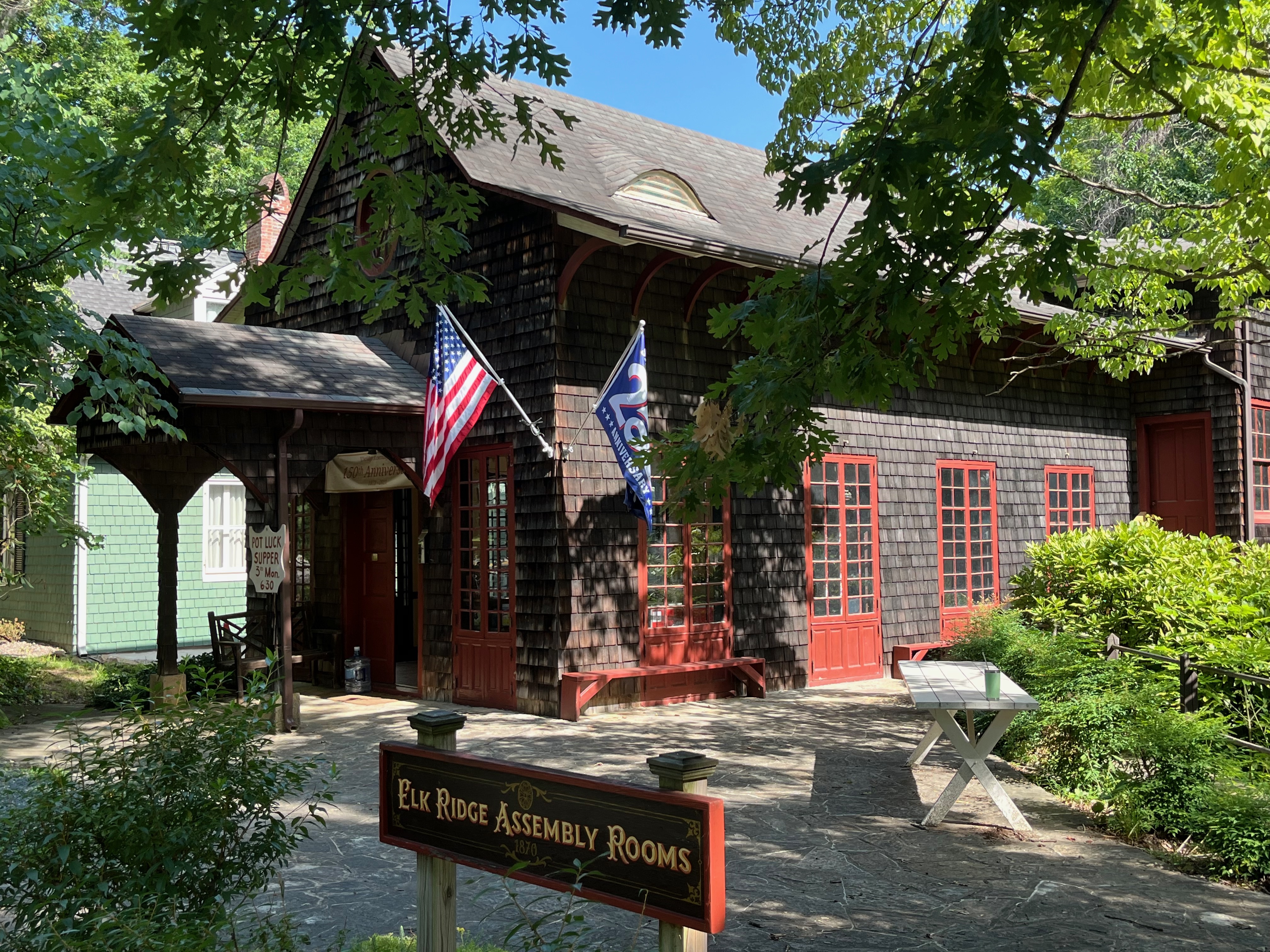
The year 1959 marked the end of the “fabulous fifties.” Eisenhower was finishing his second term as president. In January, Alaska had become our 49th state. Hawaii was about to become our 50th. The previous July, our family had moved about a mile across our small town to a new, much larger house built by my residential contractor father. We loved the additional space. We were pretty sure we’d finally “arrived” in the middle class. In 1958, we’d missed participating in the July 4th celebrations in our new neighborhood by just a few days, though we’d observed as guests. In 1959 we’d get our first chances to take part in traditions centered on what we all called “the Hall,” next door to our new house. The neighborhood made a big local deal of its 4th of July celebrations.
I was twelve years old. I’d just finished elementary school. I looked vaguely like the girl in the iconic 1953 Norman Rockwell painting, “The Shiner”—I had braids and typically wore my clothes without much attention to fashion. (See https://www.thewadsworth.org/highlight-rockwell/) However, instead of a black eye, I had eyeglasses. Like the girl in the illustration, I tended to be bossy and was somewhat adventurous.
Since our move, I’d reveled in an abundance of nearby kids about my age, a welcome contrast to our prior neighborhood. What I knew then about our new surroundings was basic—a congenial, close knit community with mostly stay-at-home moms, lots of children, hardworking dads, a mix of older and newer houses.
The 4th festivities started with a morning of children’s games on the lawn belonging to my friend Ann Miller’s family. Mrs. Maier, nine-time mom, organized the activities. If it wasn’t rainy or too hot, Mr. Miller would give a bunch of us kids a hayride in a big wagon pulled behind his farm tractor. Rain or shine, the final game of the morning would be a “turtle derby,” for which we’d been“training” captured box turtles for weeks.
Once the games were over, it was time for our neighborhood parade, a back-and-forth route along a short stretch of two-lane road near the Hall. We’d all rush home to get into our costumes, assemble our small floats or decorated bikes, then line up behind whichever parent had been designated to lead us. My 1959 memory is that my mom decided that this year of “two new states” would be perfectly represented by two little red wagons with my 5-year-old twin brothers in them, each wagon decorated with an Alaskan or Hawaiian motif. A big cardboard plaque attached to the side of the wagon would give the relevant new state’s name. My 7-year-old sister and I would pull the wagons. We wore matching white blouses, blue skirts, and red hair ribbons.
The rest of the parade was mostly bicycles (manually powered), their spokes and handlebars threaded with red, white, and blue crepe paper. We probably had a Statue of Liberty, her flowing robe much too easy to trip over. The parade sometimes halted briefly if a younger child had a crying fit or a neighborhood dog wandered onto the road. I don’t remember if there were prizes. The main point was just to have fun. When I checked with my brothers for their memories of this particular parade, their recollections were hazy at best. One thought there’d been a bubble-topped police car at one end of the quarter mile parade route to divert cars while the parade was going on. He seemed to think there had been a decorated pony one year, but he wasn’t sure which year.
Over the years, children grew up, new families moved in, the number of participants waxed and waned, but there was always a parade. After a post-parade potluck picnic at the Hall, then an afternoon baseball contest between the married and unmarried men, families would return home. After dark, a few folks would set off sparklers in their yards. Others would watch the closest large-scale fireworks displays out screened back windows, safe from ravenous mosquitos. Since 1959, I’ve walked in other parades, but none quite so memorable as this first one long ago.
As the 1950’s receded, the bucolic Norman Rockwell images many associated with American life gave way to soberer pictures. By 1964, Rockwell had stopped publishing his illustrations in the era’s popular weekly, the Saturday Evening Post. Chafing at their editorial limitations, he instead placed his equally iconic “The Problem We All Live With” in Look magazine (see https://en.wikipedia.org/wiki/The_Problem_We_All_Live_With). He’d painted a stylized image of first grader Ruby Bridges and the U.S. marshals who accompanied her as she integrated a formerly all-white elementary school in New Orleans in 1960.
The next decade witnessed a series of political assassinations plus civil rights marches and protests. Other concerns were increasingly overshadowed by American involvement in a costly and destructive war in far-off Vietnam. By the end of the 1960’s, I’d finished high school, then college, and gotten married. I had my first full-time job, in Baltimore near a large steel mill. When I went to visit my parents in my former home town, I had trouble talking with them. Sometimes we all assiduously avoided politics, at other times we got increasingly frustrated about each other’s views.
Succeeding decades brought their own triumphs and traumas. On a personal level, I helped raise two children to adulthood, helped mitigate and largely avoid a potential “Y2K” computer software disaster as the century turned, survived a health crisis and the deaths of my parents, became a grandparent. Globally, U.S. military involvement in Vietnam ended, but was later followed by involvement in Afghanistan, Iraq, and now Iran. After the former Soviet Union collapsed in the 1990’s, many areas of Eastern Europe experienced a renewal of freer, more democratic forms of government. However, authoritarian regimes persisted in all the world’s regions. Authoritarian tendencies resurfaced in parts of Western Europe and here in the U.S.
Not long before she died, my history-buff mother self-published a history of Elkridge, Maryland, the small town where she’d lived most of her 80-plus years and raised us children. Elkridge, it turns out, was much older than I’d been aware of growing up. It traces its history back to the early 18th century. It first prospered as a tobacco port, becoming a town in 1734, before Baltimore even existed. A century later, the area I’d moved to in 1958 became an enclave of summer homes for wealthy Baltimore lawyers and their families, escaping the oppressive summer city heat. They conducted lawyerly, increasingly vehement debates about slavery, states’ rights, national government, democracy. Once the Civil War broke out, neighborly communication diminished. After the war, relations between Southern and Northern sympathizers were strained. The Hall, formally named “Elkridge Assembly Rooms,” was built starting in 1870 as part of an effort to reknit this local community torn by conflicting regional allegiances.
As the U.S. celebrates its 250th anniversary in 2026, some of the triumphs and traumas of past periods are resurfacing. My Maryland sister-in-law informs me that the “Hall 4th” festivities will again take place this year. Its neighborhood parade may get photographed by parents and relatives, but is unlikely to make much of a splash on social media. Still, my hope is that the neighborliness embodied in such small, local celebrations will help us navigate some of the divides we can too easily fall prey to. Seeing each other face to face, sharing games, a small parade, a festive potluck, may be a partial antidote to an era when it’s easy to become inflamed by seemingly valid online arguments and highly selective choices of “facts.”
Though 1959 is long gone, “the Hall,” its 4th of July parade, and its legacy persist.