Tag Archives: gardening

Sally Letter 3: May Day (Beltane) 2021

Saturday, May 1, 2021 (Beltane/May Day); from Jinny in Cary, NC to Sally in Taneytown, MD

Dear Sal,

Happy May Day! It looks as if this may be the final one we spend in North Carolina. An offer we made on a small house in San Diego, not far from son Jason’s, has been accepted. Closing is to be later in May, probably done virtually due to both pandemic and distance. Jason and granddaughter Ada subbed for us today on a partial home inspection of the “new to us” place, a 2-bedroom, 1 1/2 bath single story detached house with a small yard and a privacy fence. It’s about three blocks from Jason’s, built as part of a planned community of about 700 houses in the early 1970’s. A homeowners’ association handles area landscaping and amenities, including tennis and pickle ball courts, lots of walkways and open space, plus a small open-air swimming pool. The HOA has fairly strict rules about decorating and modifications to the exterior of structures and to landscaping “outside the fence.”

We have a purchase offer on our townhouse here, but there are complications with the financing. I’m crossing my fingers, doing lots of gardening, trying not to over-worry. Somehow when the whole world seems to be coming unhinged, bothering about personal details seems less important. I’ll miss this place, and it’s been good to us. This morning I noticed a hummingbird at one of the columbines I’d planted earlier this spring in a shady area near our back woods. Among the bushes out front, I spotted a small green frog.

Having moved a lot during earlier periods of my life, I should probably be unconcerned about this particular relocation. It feels different in a couple of ways—of course, the pandemic, but also the sense that the house we’ll move into will be our “final home,” barring any later forced moves to a nursing home or care facility. Jason has been a big help, pinch-hitting for us on site visits and home inspections at the California end.

Son Scott and new girlfriend Morgan (whom we hadn’t met in person before) came from Ohio for a couple of days in late April to help us start packing and to relieve us of some furnishings they can use more readily than we will in our new location. It was a somewhat awkward way to meet Scott’s latest squeeze—“Hi, glad to meet you. Would you please put this box over there?”—but Morgan pitched in like a trooper.

Scott has recently moved in with Morgan and her three children from a prior marriage. She shares custody with her ex-husband, who lives nearby and works at one of the local automotive plants. The kids alternate weeks with mom and weeks with dad. For Scott, having three nearly instant “bonus” children, even part-time, may be quite an adjustment. For the short term, he’s being careful to take a back seat to Morgan in decision making for Mylee (12), Brooks (8), and Parker (6). From what they tell us about their rental house, it has plenty of room, but could use a handyman. Its earliest foundations, now mostly covered over, date from 1895. It seems to be pretty far out in the country, as opposed to where we’ll be in San Diego, about three miles from downtown in a fully built out “burb.”

We’ve done a good bit of decluttering and packing already, but will have one final push in the next week or two. Our tentative plan is to hire a “PODS” (portable on-demand storage) unit and to use it to ship a minimum of stuff—Dad’s lamps, rocking chair and bookcase, a durable dining room set, a bed frame, books and knickknacks, plus enough bedding, linens, dishes, and kitchen stuff so we can make do without splurging on more, at least at first. The next time you hear from me will be from sunny southern California.

I don’t remember helping with any of your moves. I do remember that Mom, after hauling a station wagon full of stuff from Maryland to the little house Jim and I shared in Vermont in the early 70’s, explained to me in no uncertain terms that this was her final trip as a “relocation assistant.” She almost had her way. We did use one of the outbuildings at the Lawyers Hill house to store some of our stuff during our next employment misadventure, our  subsequent unemployment and “travel therapy” trip along the Mississippi River.

From what you’ve written me about life at White Rose Farm, it’s both gratifying and deeply challenging. I admire the chutzpah it took to transform yourself from someone with a background mainly in counseling and personnel management into a biodynamic farmer in your 50’s. I still have a news article from the Frederick, Maryland News-Post in 2009 in which you explained your rationale for the farm: “It’s [my] job, as owner and operator of White Rose Farm, to keep all the insects happy, as well as the plants, and to treat all the living things as if they have intelligences, ‘because they do.’”

I’m remembering a visit to the farm, I don’t know the year, when you enlisted me to help weed some rows of carrots. My painstakingly slow weeding technique left me “in the dirt,” as I tried to clear the row assigned to me while you polished off three or four. You’ve created a place that speaks both of beauty and of struggle. Hope your struggles are abating for now. Please take good care!

Love, Jin
Sally Letter 2: Groundhog Day (Imbolc) 2021

Tuesday, February 2, 2021 (Imbolc, Groundhog’s Day); from Jinny, in Cary, NC, to Sally, in Taneytown, MD

Dear Sal,

Happy Groundhog Day! This year’s groundhog celebrations are decidedly muted nearly everywhere. I read that “Sir Walter Wally,” Raleigh’s official groundhog, remains in seclusion at his winter quarters in eastern Tennessee this year, rather than on duty for local Groundhog Day celebrations. The natural history museum where he typically holds court in Raleigh is closed because of the pandemic. Does Taneytown have groundhogs, I wonder? I seem to remember from earlier times an especially obnoxious marmot-like creature that your farm dog tried unsuccessfully to capture and kill. Punxsutawney, PA, is probably a ghost town this year.

Some breaking personal news—I am now partway to being covid-vaccinated! I got my first of two shots at a mobile clinic I found out about through a local mostly black A.M.E. congregation that I’ve been attending either virtually or in person as conditions allow. When I phoned to sign up for the shot, I had a slight twinge of white guilt, thinking I might be taking a slot that would be more equitably filled by a black A.M.E. congregant. After a little consideration, my desire for covid immunity overrode any twinges of guilt. In our area there’s a certain amount of “vaccine hesitancy,” regardless of race or ethnic background. I think the A.M.E. minister at the church I’ve been going to has done a great job of alerting people both to covid risks and protection possibilities. Once I got to the vaccination site, I found an appropriately masked multi-racial mix of folks in the waiting area. Most of the people I saw at the clinic were over 50. Nearly half were black. I noticed a few other local A.M.E. parishioners on the day I went, which further eased any guilt. I’m a little sore and headachy, but don’t have a fever.

It makes sense to me that health care workers got first access to the vaccines. It’s a big relief to me that son Scott and daughter-in-law Kelly, both working in hospital settings, are now fully vaccinated. Health workers are the people with the highest risks and exposure, and those most needed to help us deal with serious covid cases. Still, I’m glad there’s finally a publicly available set of vaccines. I’ll need to wait several weeks before getting a second shot. Husband Jim will see about signing up in a few days.

The weather has been pretty dreary lately, though not uniformly so. We’ve had a couple of “light” snowfalls sandwiched between periods of cold rain, chilly nights, and a few mornings of glare ice. I’ve even seen an initial bluebird on a branch out behind our condo; it seems to me that nesting season is starting earlier than usual.

Our library is again partially open—they now offer “take out books,” a little like take out food. You order online, then come, appropriately masked, to a vestibule area at the entrance to the library. A staffer checks your temperature via contactless thermometer. If you aren’t feverish, you get to sanitize your hands, then go to a temporary set of shelves and find your selections in a paper bag with your last name on it. Not the same as full library access, but a lot better than nothing. It seems a shame that our big new regional library was only open a few months before the pandemic hit. I’ve heard that some of the library staff, instead of being furloughed, have been converted into contact tracers. They’re good at research and tracking down leads, so the transition makes sense. We’ve been getting lots of publicity about “flattening the curve”—keeping the rate of new infections low enough so our hospitals don’t get overwhelmed with cases.

Jim and I have learned enough about a new-to-us video conferencing application called “Zoom” to try to organize a set of virtual “Groundhog Day” parties this coming weekend. We bought a year’s subscription to the service. We’ll invite two separate shifts of friends to sign on for a couple of afternoon sessions. The bad news this Groundhog Day is that it’s still too risky to try large in-person gatherings; the good news is that virtually we can include friends, like Bob and Rita in Georgia, whom we wouldn’t otherwise get to see at all. Wish you had enough internet access to join us!

When planning the party, I read back through my journal entries from February 2, 2020 and was surprised at how different life was just a year ago. Jim and I had just gotten back from a mid-winter break to the Turks and Caicos Islands in the Caribbean, transiting on our way back through a poorly ventilated local airport that would have been a real super spreader of covid infections. Our Sunday afternoon in-person Groundhog party coincided with the 2020 edition of the Super Bowl, so attendance was sparse.

The two of us are beginning to think about moving to San Diego to be near son Jason and family once we’re fully vaccinated. From what we’ve seen or heard of friends and neighbors who’ve gotten covid infections, plane travel is one of the highest risk activities—poor air circulation and lots of people in tight spaces. We’ve been in the habit of flying out to see the San Diego Battersons at least a couple of times a year, which doesn’t seem very smart during a pandemic whose duration is still very much in question. I’m not sure how we would manage the relocation, or even if it is practical—real estate sales are pretty well stymied for now, with “open house” home showings a non-starter.

Still, we won’t have many more years to watch grandkids Parker and Ada grow up, and we’ll eventually likely need help coping with life as we age. It makes sense to move sooner if/when we can, rather than waiting until this awful pandemic has run its course and/or we’re too doddering to take care of ourselves. I’ve started looking at online real estate listings not far from Jason’s house. Housing prices in southern California are ridiculously expensive, but unlikely to get lower any time soon.

Now that the election has been decided and a new administration has been sworn in, I’m paying somewhat less attention to politics. I’m relieved not to face the prospect of four more years of the “orange man.” I’m still disgusted by some of the shenanigans that went on on January 6. Remember how our folks would tell us that watching too much TV would turn our brains to mush? Guess our outgoing chief exec is a good example of that, or maybe it’s more his moral sense that is mushy.

Occasionally, I indulge my spiteful side by listening to musical satirists. One of my favorite numbers at the moment is a parody of “Johnny Be Good” entitled “Donny Be Gone.” Peppy tune, clever words, good rhymes. We still have a lot of work to do to get through the pandemic, both as a nation and as a global community, but at least we’ll be less inundated by lies, slurs and innuendos coming from the White House. Got this quip from a recent phone call with a friend: “I bought a warranty for the year 2021. Is it too late to turn it in for a refund?”  On an earlier phone call, a different friend summarized 2020 this way: “It was like looking both ways before crossing the street and then getting hit by an airplane.”

I’m still making face masks for the project at church, though at a slightly slower pace. I sent a big packet to California for Christmas. As far as I can tell, grandkids Parker and Ada liked their quilt-lets. The good old U.S. Post Office has been a real boon during shut-downs. Hope spring will come early at the farm. Please take good care!

Love, Jin

Sally Letter 1: Hallowe’en (Samhain) 2020

Saturday, October 31, 2020 (Samhain/Hallowe’en); from Jinny, in Cary, NC, to Sally, in Taneytown, MD

Dear Sal,

We all expected this year to be a contentious election, with your locale having a very different political climate than where I am. The pandemic has complicated everything, yet I’m still glad I had a chance to facilitate this year’s voting. I may include more information than you need below, but I hope to convey both the tension and the excitement of seeing a small part of the 2020 general election from a front row seat:

Today, my assignment as a nonpartisan early voting poll worker for this year’s national election finally ended. I’m worn out. I’ll have a couple of days to recover before a very long day on Election Day itself. The stresses of trying to help keep myself, my coworkers, and voters as safe as practical during a pandemic competed with the excitement of participating in a historic electoral contest. I’d previously worked in both the primary and general elections in Wake County, North Carolina in 2018, and then in the primary election here in 2020, held just before covid changed our elections and our lives.

As the 2020 general election season approached, local boards of election throughout North Carolina (and elsewhere) worried about having an adequate staff of poll workers—many poll workers trend older and would thus be more vulnerable to covid and its complications. Boards of Election officials lost sleep over staff retention, staff training, and staff safety. In Wake County where I live, media ran lots of public service announcements seeking temporary poll workers. Our early voting site was fortunate that over half our primary cycle’s workers signed up again, even one fortyish former basketball center who was still on a waiting list for a heart transplant.

Before voting started, we had a full day of general, then on-site training. We had enough experienced workers to integrate the “newbies” quickly. Turnout was not too heavy for the first few days; by the time we started to get really busy, we worked together well. We typically rotated among different tasks—greeters, voter check-in (with access to offline computerized county voter rolls), voting booth assistants, help desk workers, ballot box assistants, and a shift supervisor. We had remote access to a county-wide “help line” via secure telephone.

Because of the pandemic, the voting site, though in the same Student Center at North Carolina State University where I’d worked the primary, had been shifted to a larger room with more space and better ventilation. A couple dozen of us were assigned to a site in one of the large ballrooms at the student center. Early voting started on Thursday, October 15 and ran through today, before an interval to prepare for Election Day next Tuesday. Officials at our site moved Chris, our former basketball star, to a “help desk” station that involved the least direct contact with large numbers of early voters.

Each morning before the polls opened, a designated worker placed a half gallon pump spray bottle of hand sanitizer on a stand at the entrance to the ballroom. Someone regularly refilled the bottle so there was always enough sanitizer for anyone who wanted it. We also had boxes of the pale blue face masks you see people wearing in hospitals.

Due to extended early voting hours and to minimize worker risks, there were two shifts. I chose the earlier one, carpooling with a neighbor to arrive at the site at least half an hour before the first voters began to check in. Each morning, we got disposable plastic gloves, hospital-style face masks, and individual plastic face shields to minimize our chances of viral infection. No one is sure yet exactly how infection spreads, so we were cautious. Poll workers regularly wiped down and sanitized voting booths. I was impressed with how much “PPE” (personal protective equipment) our county election officials had been able to obtain and distribute in the months since the pandemic’s start.

Each shift got short breaks and one longer meal break, with about an hour’s overlap between the two shifts. Nearly everyone packed snacks and a lunch–area restaurants and snack bars were either closed or “take out only.” As far as I know, none of our workers got covid. Some of the time, the weather was pleasant enough to go outdoors on breaks.

Over the 17 days of early voting, we’d get the occasional “in your face” voter. He (or more rarely she) would deliberately come to the voting site without a mask and refuse the offer of one at the entrance. Once he/she reached the check-in station, they’d lean far forward over the voter check-in table, spit out their name and address, and then smirk, as if to say “I dare you to tell me I’m being inconsiderate.”  Because we were on a college campus, we had lots of younger voters. They were among my favorites, providing a vicarious thrill through their excitement at casting their first ballot. I saw a lot of “NC State” themed face masks on voters of all ages. I only processed a couple of people I knew—one a member of a Cary discussion group gone dormant due to the pandemic, another a local cousin. I’m glad I had a chance to participate. I’m very relieved that neither I nor any of my coworkers got sick.

With so much up in the air because of the pandemic, our procedures adapted a couple of times during the voting period to improve safety and convenience. As far as I could tell, everyone who came through “my” line while I was processing voters was legitimate. Turnout was very high. The numerous state and local races provided additional motivation for people to show up. (Also, just maybe, because of the pandemic, there were a lot fewer other choices of how to spend your time?) Many people this cycle voted by mail, with the number of mail-in ballots increasing several fold from prior, non-covid cycles. Once the initial tallies of election results are done, I plan to write up a blog post about my experiences and the overall effort here in Wake County.

When not “working the polls,” I’ve been doing as much outdoor activity as I can. It helps ground me, keeps me healthier, and also, I think, helps make our immediate vicinity more appealing. I’ve raked lots and lots of leaves throughout our condo complex. I’ve cleared most walkways and lawns, then carted the leaves to a wooded area nearby. I also planted a couple of cold-season perennials in the small area behind our condo—a euphorbia (“spurge”) and a hellebore (“Lenten rose”). If I’ve done my research correctly, both are deer-resistant, in contrast with the hostas I tried earlier that seem to have become “deer snacks.”

Indoors, our condo is generally cleaner than normal for this time of year, except for a repurposed section of our kitchen table. Using a sewing machine borrowed from a neighbor, I’ve been sewing batches of multi-layer cloth face masks out of scraps left over from other sewing projects plus donations from friends. A member of our church coordinates efforts to distribute these via other church and civic groups to “essential workers.” These folks continue to provide us with groceries, health care, and other services despite their higher risks and often lower access to sources of protective gear. I’ve done about 30 sturdy masks so far.

I’m taking a socially distanced quilting class and am working on small “quilt-lets” for the grandkids. Neither is likely to be as distinctive as the animal-themed quilts you sewed decades ago for Jason and Scott. Think you mentioned in our latest phone call that the farm had had an early frost. Hope you’re enjoying a somewhat slower pace now that much of the harvest is finished. Will stop here. Please take good care!

Love, Jin

(See “A Post-Election Day View,” on jinnyoccasionalpoems.com for Wake County 2020 preliminary voting totals, put onto blog on November 9, 2020).   

Interdependence Days

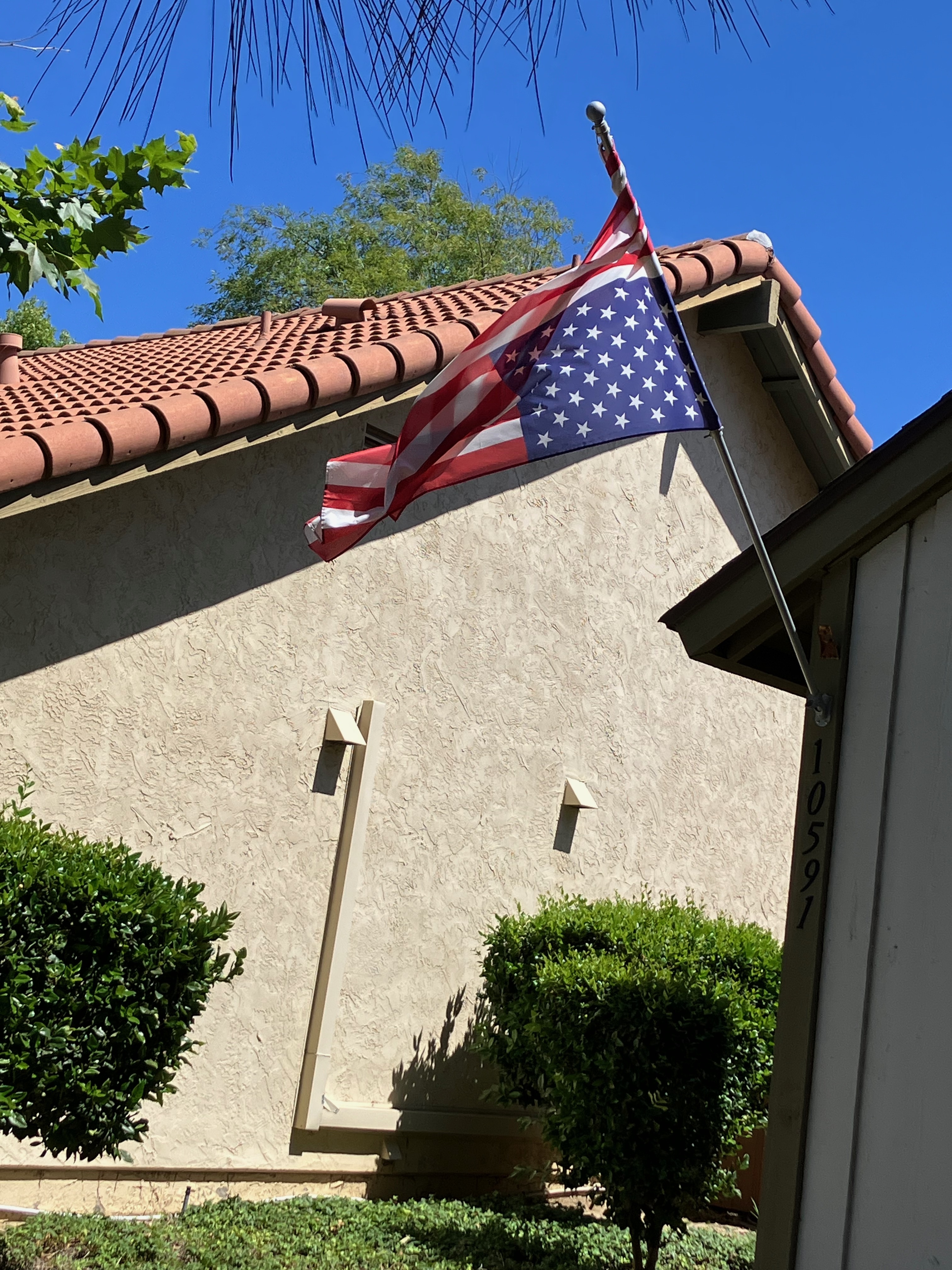
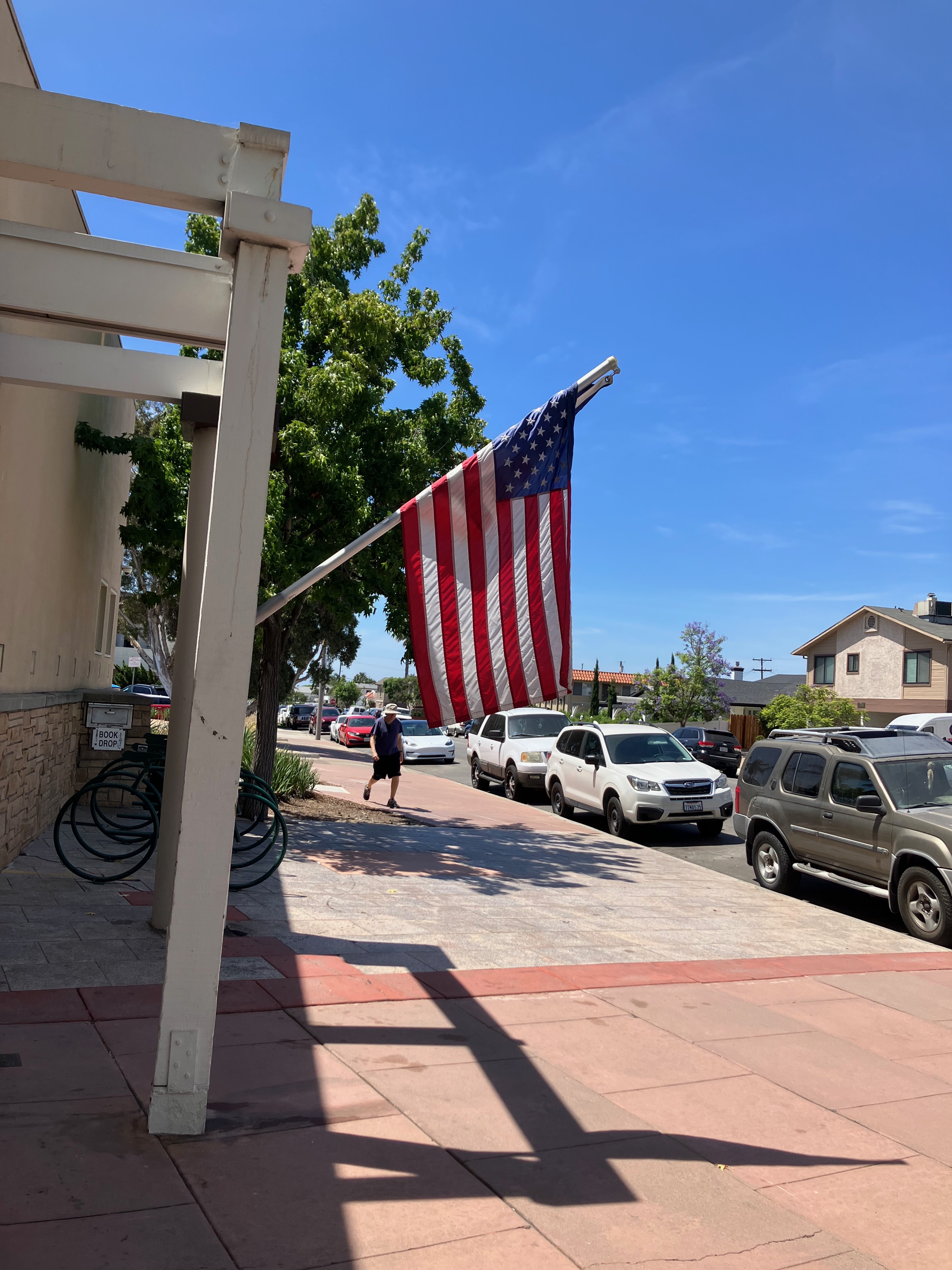
This year’s 4th of July celebrations did little for me.
Much flag waving seemed phony, some neighborhood camaraderie felt forced.
I ached as U.S. ICE raids continued, as civilian deaths mounted in too many armed conflicts.
I wanted to skulk away, to forego my allegiance to much of anything.
But I remain part of a wider whole. Whatever my pique at political or social shenanigans,
I do not have the option to resign from humanity.

So I briefly retreated to gardens that nourish me, some of whom I tend:
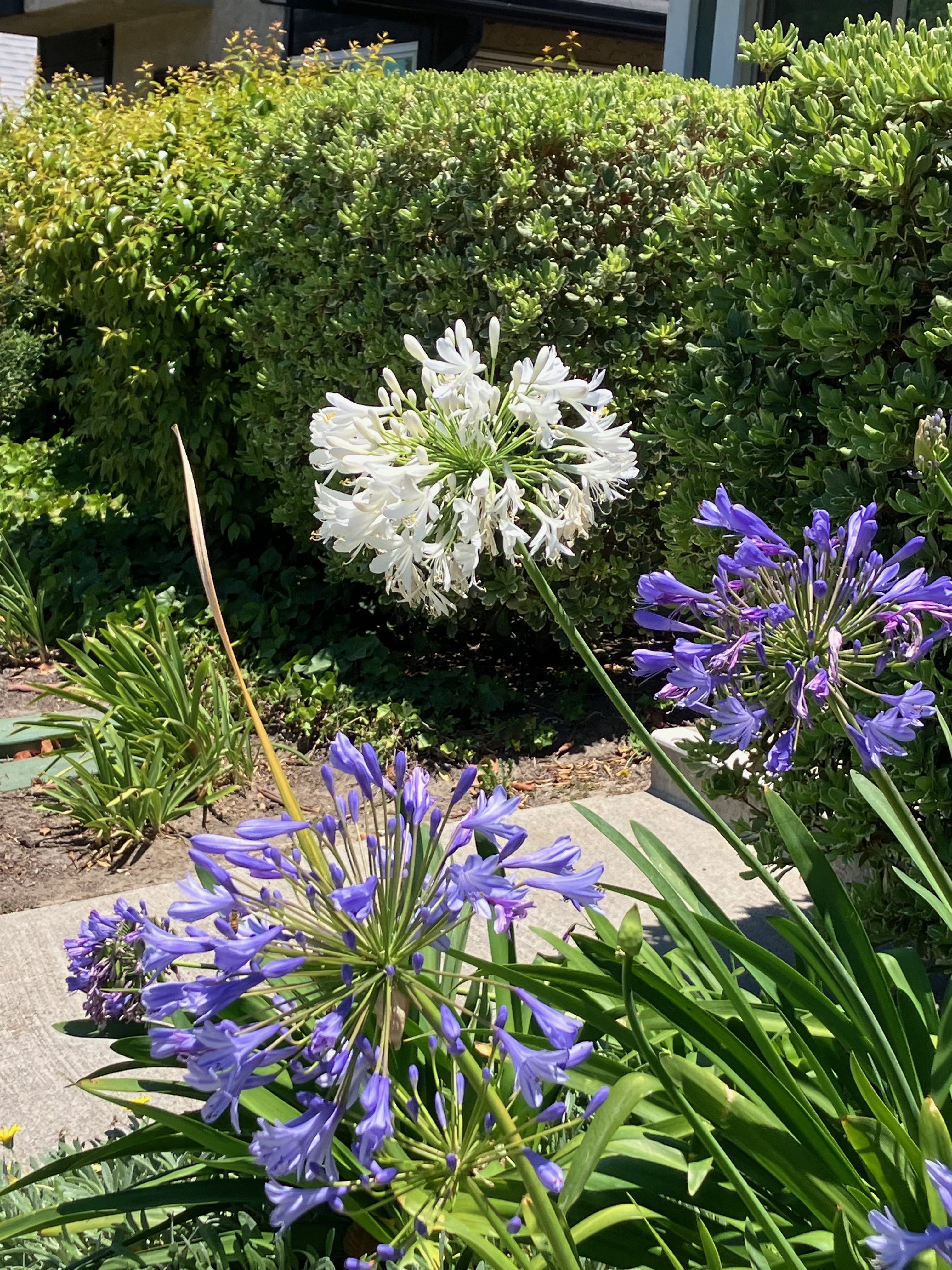
I admired walkway African lilies (agapanthus), most likely planted
When our 1970’s housing subdivision took shape over a decommissioned firing range.
This time of year, blue and white agapanthus blooms adorn our nearby streets,
Their starbursts quieter, more calming, less ephemeral than fireworks.

Within my own yard, I reveled in two sets of red blooms:
Along a sunny side fence, snapdragons from last year. They’d overwintered
In this mild climate where distinctions between “annual” and “perennial”
Get increasingly blurred.

overwintered snapdragons
shade-loving impatiens

Against the opposite fence, impatiens, cut-rate at the
Distressed rack of a local garden shop, now hold forth in most-of-day shade.

One day per year serves me as reminder of our nation’s independence. On other days,
I’d rather honor our interdependence with a natural world that graciously includes us.

May we continue to reconcile independence and interdependence, wherever we are.
Hurrah for the red, white, and blue, whether flags or flowers!

Last Day of Summer, Southern California


It’s been a summer with periods of brutal heat,
Mostly, it’s been brutally dry.
Futurists bandy about terms like “aridification,”
Though sudden downpours have carved
More gashes into wounded hillside landscapes.

This morning I awoke at first light to a thin film 
Of condensation on our bedroom’s window glass.
After a clear, cool sunrise, a gentle ocean-scented breeze.
I meandered uphill to our local community garden,
Where I spent a calming hour trimming back succulents.

Temporarily insulated from political punditry, 
I relished the quiet, the hummingbirds and
Butterflies and late-season blooms.
On a day like today, it does not seem entirely
Unrealistic to hope for more moderate media.

It does not seem unrealistic to hope and pray for drizzles 
Of autumn rain, nourishing the liquidambar trees
Whose colors have again come early and muted.
It is enough to concentrate on soil and a pleasant sun,
To consider instances of compassion here and there.

Of course there are wars and famines, 
A pandemic that wanes but is not entirely gone.
Of course there are hurricanes, floods, wildfires,
Erratic weather, ruined crops, but today,
The prospect of a peaceful harvest peeps through.

Planting Season

This April has not provided a great backdrop for poetry, despite its designation in the U.S. as National Poetry Month. Too many people are busy slamming each other physically or via verbal abuse. Not enough are participating in good-natured poetry slams. 

Likewise, the month has been somewhat problematic for planting, as military invasions and erratic weather have both contributed globally to farmers’ woes. So I was heartened when, amid all the horrid news coming out of Ukraine, I saw a short video clip a few days ago about a Ukrainian farmer who’d regained access to his fields after a Russian military withdrawal from his area. He was out surveying his acreage, preparing to fill in recent bomb craters and then to plant much of his 100 acre spread in sunflowers. 

As a neophyte gardener in southern California, I’ve been tentative with this year’s planting, with limited success so far. Some of the succulents I’ve attempted to grow in pots have survived, others not. My springtime carrot “crop” is laughable. Most of the yard plantings that predated my arrival are holding their own, though about a third of the trees in our housing development have varying degrees of die-back. Each weekend, I spend time at our neighborhood’s closest community garden, listening to more experienced gardeners, gathering tips. Then I continue planting and experimenting with water conservation and shade provision measures, as the sun daily gets higher in the sky. 

It’s nourishing to me to spend time outdoors—minimizing my exposure to airborne viruses like covid. Outdoor, unplugged time also helps reduce my exposure to the incessant chatter of media types. Many seem intent on nudging everyone toward the extremes of the political spectrum, clamoring for our attention like overstimulated toddlers.

When active gardening isn’t enough to mitigate my worries about the state of the world, I sometimes turn to scriptural sources for reassurance. One partial verse that has long inspired peace activists and aging flower children like me occurs in two different books of the prophets. Both Isaiah and Micah talk of a time when wars will cease, when former weapons will be transformed into gardening tools:  

“…and they shall beat their swords into plowshares, and their spears into pruning hooks; nation shall not lift up sword against nation, neither shall they learn war anymore.” (Isaiah 2:4; Micah 4:3) 

      Micah then goes on with a second gardening reference:  “…but they shall sit every man under his vine and under his fig tree, and no one shall make them afraid, for the mouth of the Lord of hosts has spoken.” (Micah 4:4)

Loath to conflate any of our current earthly political leaders with the “Lord of hosts,” not even a little, I still long for and work toward a time when it may be possible for each of us to sit outdoors unafraid. 

So, as another planting season progresses, I take heart. Maybe this year some sweet potatoes, maybe sunflowers, maybe corn. Maybe a different kind of seed—a donation for humanitarian relief, a soothing refrain in the ear of a frightened child. What seeds will you plant?  

Meditation/Appreciation of “Earth Was Given as a Garden”

“Earth was given as a garden, cradle for humanity; 
tree of life and tree of knowledge placed for our discovery.
Here was home for all your creatures born of land and sky and sea;
all created in your image, all to live in harmony.”

The first time I was exposed to this hymn was at a UU music camp a decade or so ago. This paean to our earthly garden echoed a lot of my beliefs about the value of gardens and the importance of caring for our home planet ( hear a rendition of all three verses at YouTube.com/watch?v=hmlV65kdt84). (A later set of words to the same tune also touches some of the same themes: “Blue Boat Home” by Peter Mayer, in later UU hymnal Singing the Journey as #1064, at YouTube.com/watch?v=0XziR3M2wYk). 

The first time I gardened was in childhood, I don’t remember exactly when. One season that sticks in my mind is a dry summer in Maryland in the mid-1950’s. I would have been about eight years old. During this drought, it was my job to water the bell pepper plants in our small hillside garden. A couple of times a week, I would haul a bucket of water uphill from the nearest outdoor spigot and carefully surround each pepper plant with water. My dad had dug a saucer-shaped trench around each pepper so the water would have more chances to soak in, rather than run off.

Later, when our family moved nearby to a larger house with a lot more land, we had a bigger garden, too far away from the house to water. Most years, extra water was not needed. I don’t think I contributed much to this garden, aside from eating the produce. I remember we used to grow corn. Somehow, the homegrown ears tasted sweeter than anything we could buy at the grocery store. Despite the predations of area raccoons, there was nearly always enough for a few delicious corn-on-the-cob meals. 

We also grew tomatoes. The red fruits were a bone of contention between human eaters and the local turtle population. Nearly every year, we’d find at least a couple of ripe tomatoes with substantial chunks eaten out of them. Actually, we didn’t mind the turtles’ inroads too much. Having turtles in the tomato patch made it easier to find a competitor for that year’s 4th of July turtle race—a neighborhood tradition. For several weeks before the 4th, we kids were busy scouting out turtles and putting them into temporary quarters in cardboard boxes or somewhat more formal animal cages. We’d feed them lettuce and vegetable table scraps and try to “train” them so they’d be in top form for the race.

When the big event came, around noon at the neighborhood picnic, we’d carefully place each turtle under the bushel basket “starting gate” at the center of a roped-off circle. We’d whisper some final words of encouragement, then step back behind the rope circle to cheer our turtle on. Most turtles snoozed through the race, but each year produced a winner—at least one turtle valiantly lumbered toward his/her former remembered home in the tomato patch.   

The year my new husband and I moved from a series of urban environments to Vermont in a somewhat misguided attempt to “return to the land,” I became a part-time adult gardener. We purchased a small house on a wedge-shaped lot in the state’s capital city, Montpelier. Because we moved in November, it was a half year or so before I could put seeds into the ground. I did start some tomatoes indoors—local lore suggested beginning seedlings on “town meeting day,” a set date in March when all Vermont’s towns held local meetings. My seedlings were anemic and spindly. Later, once the danger of frost was mostly past, I replaced my homegrown efforts with hardier young plants from the local garden shop.  

In Vermont, I was able to grow cool weather crops that did not thrive in Maryland when I was growing up—romaine lettuce, broccoli, and a strange shaped brassica called kohlrabi. When my in-laws paid a visit in late summer, I proudly cooked them some homegrown kohlrabi. Afterwards, I belatedly learned that it was one of my father-in-law’s least favorite vegetables. While living with his mom and siblings on a friend’s Midwestern farm during the waning days of World War I, he’d been fed an overabundance of kohlrabi and had sworn off them for the rest of his life. Kohlrabis look like something out of a sci-fi movie—central orbs with little leafy projections sticking out of them. I was not sorry to have experimented with them. I just needed to remember never to serve them to my father-in-law again. 

Our experiment in Vermont living did not last long enough for me to become a very adept northern gardener, but it did whet my appetite for further garden attempts. Our next move, to Richmond, Virginia, included an initial stint of apartment living that did not foster gardening. However,  when we purchased a house with a yard, I was off to the races. The first chore was removing the growth of wild clematis that had vined its way across the back yard. Next came turning the hard soil and deciding what to plant. Tomatoes for sure. Maybe some corn. Peas, carrots, lettuce, scallions, onions, beans, eggplant, and one year, potatoes. My early harvests rarely made much of a dent in our grocery bill, but digging and hoeing and weeding the garden helped me let off steam, forestalling the escalation of many a family fight.    

Partway through our Richmond stay, I wandered further afield—to sub-Saharan Africa for a two-year stint in a Peace-corps-like program. Our younger son Scott and I lived in half of a small duplex at the edge of the United Nations housing complex in the small city of Bujumbura, Burundi. The climate there was much different from any I’d encountered before. Although day length and temperatures varied only a little during the year, the rainfall changes were stark. From May to September or October, it rarely rained at all. Maybe a brief occasional shower, but basically nothing. People who had vegetable gardens either watered them or arranged for anything to be dormant during this “long dry season.”  A smattering of  planting began in advance of the “short rainy season” that typically ran from late September until mid-December, when there could be a harvest of sorts. A “short dry season” in late December and January allowed us expats from Europe and North America several storm-free weeks in which to fly home for the winter holidays with our non-expat relatives. Then it was time to plant in earnest—the “long rainy season” was when most foodstuffs were grown. Staples like manioc, corn, and beans, plus fodder for the cattle and other ruminants, enough to last through the long dry season until pasturage again became available with the short rains. 

I tried growing beans and peas on trellises outside out kitchen door. They were kind of straggly, but I think we may have gotten a couple of meals’ worth. They certainly did little to replace our need for the town market, where our housekeeper bargained for most of our food. During my two-year stint, I learned a little about the predominantly rural, agrarian economy of Burundi. Population pressures were immense, so a diet based mostly on beans, corn, and manioc made much more sense than the western meat-heavy diet I’d been accustomed to before. 

Once back in Richmond, I refined my techniques. Eventually I was able to produce enough vegetables to reduce the carping from other family members about my “less-than-minimum-wage” work. 

“Besides,” I told them, “it’s a lot cheaper than psychotherapy.”  

Then, about the time the younger generation was ready to fly the nest, we moved to a larger house with a huge yard containing a level, sunny spot just perfect for gardening. Over time, I got better at outwitting the bunnies and squirrels. We eventually had lettuces, onions, tomatoes, squash, broccoli, asparagus, and a little corn. One year I experimented with popcorn—fun, but not all that practical, given the cheaply available store brands. 

The year we put the house up for sale, I went all out in spring planting. Maybe the well-ordered rows of lettuce, scallions and spinach encouraged the eventual buyers, who were also avid gardeners. The following year, my empty-nester husband and I lived in a northwestern Chinese desert. I tried windowsill gardening. Basil grew well with some pampering and watering. Our several other jaunts in China were either too brief or too busy to allow for a real garden. However, I reveled in the variety of produce available in the “garden province”  of Sichuan, where I spent over a year in total during the course of the next five years. 

Now I live in southern California, a climate best described in an earlier environmental book as a “Cadillac desert.” We have long, long dry seasons. If we are lucky, we get enough cool weather rains to green the hills a bit in January and February. I heard recently that some early fall rains this year had been unexpectedly generous, filling some of our parched reservoirs from a third to nearly half full. Still, not enough moisture to break a lingering multi-year drought. I’m studying rainwater harvesting, drip irrigation, mulching, and other water conservation techniques. Learning to live in harmony with this climate will make for an interesting, challenging gardening year.   

Sometimes You Win; Sometimes You Learn

Now can be a challenging time to be a human. A global pandemic has killed over 4 million of us and infected over 200 million, with no signs yet that the number of cases or deaths is abating. The United States of America has just become the most recent foreign government to exit Afghanistan after a lengthy ground war. Whether that country can meet its many challenges remains to be seen. Within the USA, recent severe weather has caused deaths and destruction in nearly every region, with floods in the South and East and wildfires in the West. There are so far few indication that widespread wars, deaths, or destruction are likely to end any time soon. 

Now is the season in the part of the globe where I live when children return to school  after a traditional summer break. On a recent weekend, I volunteered with a group of parents and community members to help clean the outdoor spaces at my granddaughter’s elementary school before the start of classes. Time spent at the campus gave me a broader exposure to the school than I’d earlier gotten while picking her up at her classroom. Many classroom doors had inspirational sayings written beneath the teacher’s name. Some were fairly pat, “You’re amazing;” “You’re awesome;” “You can do it;” etc. 

One door had an inscription that was new to me: “Sometimes You Win; Sometimes You Learn.” A brief internet search showed the slogan as the title of a book written by American motivational speaker, consultant and pastor John C. Maxwell in 2013. I haven’t yet read the book; I was favorably disposed toward it after learning that its foreword was written by former basketball coach John Wooden of UCLA fame.  

If there has been one positive aspect to the covid-19 pandemic for me so far, it’s been the motivation to spend an increasing proportion of my waking hours outdoors. Public health officials counsel outdoor activity, especially socially distanced outdoor activity, as one aspect of an effort to slow the spread of the virus. Along with the use of face masks, reduced crowd size at both indoor and outdoor events, contact tracing, and vaccination, the use of the outdoors for as many activities as practical is recommended. 

I love to garden. For me, putting seeds in the soil and having plants later appear is little short of miraculous. I also love to participate in group singing. Now that most choirs are virtual, I’ve developed a pandemic ritual of listening to recordings of favorite hymns. A special blessing in this challenging time has been the lyric “Earth Was Given As a Garden.” (You can listen to one version at  youtube.com/watch?v=hmlV65kdt84, a recording by the UU Chancel Choir of Oakland, CA.)  When I’ve had a discouraging day, the final few lines help renew my hope: 

“…bid our waste and warfare cease,
Fill us all with grace o’erflowing,
Teach us how to live in peace.” 

Amen!  

Didace’s Garden

It’s a magical time of year here in central North Carolina. The trees have leaves of that vibrant green that’s unique to early spring, before they gradually darken and fade in the heat and dust of later seasons. Shrubs and flowers bloom in profusion, both in cultivated spaces and in parks and woodlands where they’ve either originated or escaped. Recently I spent a couple of hours “tidying up” parts of a traveling friend’s back yard. Mostly, I wanted an excuse to revel in the colors and blooms of the nearly solid wall of azaleas along one side of her property.   

As I raked and pruned, I remembered a different garden, a different season, a different part of the world. For a couple of years in the 1980’s, I had a temporary assignment in the small central African country of Burundi. Most weekdays, I worked in a rural development office in the country’s capital city of Bujumbura, participating in a project to strengthen and diversify a network of consumer/producer cooperatives throughout the country. Burundi then had a few business people and high government officials with great material wealth, a local and expatriate community of civil servants and shop owners who lived modestly, and over 90% of its populace who ground out a bare living as subsistence farmers. It is somewhat ironic that this Peace-Corps-like assignment was the only time in my life when I had human household help. Modern appliances were few; electricity was expensive and intermittent; having an employee to tend the yard was a godsend. My duplex neighbor and I shared a gardener/night watchman, Didace.

Any lasting impact I had in the country was more likely a result of my interactions with Didace than of any tasks I accomplished at the office. Though he had little formal education, Didace was proud of his skills as a small-hold farmer. While he scoffed at my feeble attempts to grow temperate-climate vegetables in the tropics, he faithfully dug small plots for me in September and January, at the beginnings of each of the country’s two rainy seasons. Later, he tracked down supports for the pea and bean vines that straggled upward. The income he got from maintaining foreigners’ gardens supplemented what he could grow on his farm to eat or sell, helping provide a better life for his family.

Before the first Christmas season of my assignment (which occurred during a lull between the shorter and longer of the two rainy seasons), I mentioned to Didace that I would be traveling to Greece to see family over the holiday. Was there anything I could bring back for him and his family as a small gift?  He thought for a while, then explained that what he’d really enjoy were some pictures of his family and his small farm. Didace had noticed the snapshots of family and travels that I kept on the room divider in our open-plan bungalow. Would I be willing to visit his home, take pictures with my (traditional) camera, then get the film developed on my trip and bring back several of the best photos?

We made plans for me to borrow a project vehicle one weekend in early December and to drive, then walk, to his family’s home in the hills above town. The paved road quickly became dirt, which gradually got more potholed and rutted. Didace met me at the intersection of the road and a person-wide path that led further into the hills. Once we arrived at his house, he pointed with pride to the tin roof he’d recently installed with a loan/advance on his monthly wages. He introduced me to his wife and two young sons, and then showed me around the small plots where they grew beans, corn, and cassava, a root vegetable whose tubers provided most of the carbohydrates of the Burundian diet. At one edge of the house was a small banana grove. A few chickens scratched in the dirt.

Then, in a small fenced area, I saw a flower garden. If memory serves, it had a mixture of gladiolas, dahlias, and other showy flowers I didn’t recognize. They were beautiful. I asked why his family chose to grow flowers on some of their limited acreage. Partly, he said, so they could sell the best blooms at the Bujumbura central market for additional income. But mainly, just because they were pretty. I wish I had made and kept copies of the pictures of Didace and his garden. Beauty knows no boundaries.            

A Good Failure

(Generations run long in our family. My older grandfather was born in rural Mississippi in September, 1869. He lived until 1961, through immense changes in the political and social landscape which he puzzled to make sense of.  I hope this remembrance does him justice.)

“You can learn a lot from a good failure,” my grandpa used to say,
Whenever he could get anyone to listen, which was not that often.
He probably spoke from experience, as someone who went bust
During the Texas oil boom at the turn of the last century.

Undaunted, he moved furniture and family further north,
Though he never lost some of the regionalisms of his upbringing.
For the next 20 years or so, he plodded along as a Baltimore bookkeeper,
Counting other people’s money, until the Depression dried up even that.
He got odd jobs when he could, but mainly lived out the rest of a long life
Supported by the earnings of his wife, and later his children.

If that hurt his Southern male pride, he got over it.
He raised berries, which flourished, and pecan trees, which
Grew spindly and refused to bear fruit
In the Maryland climate. During the summer,
He sat in their shade in a rakish straw hat, waving a straw fan,
Telling his granddaughter stories of triumphs and failures.