Didace’s Garden —by Jinny Batterson

It’s a magical time of year here in central North Carolina. The trees have leaves of that vibrant green that’s unique to early spring, before they gradually darken and fade in the heat and dust of later seasons. Shrubs and flowers bloom in profusion, both in cultivated spaces and in parks and woodlands where they’ve either originated or escaped. Recently I spent a couple of hours “tidying up” parts of a traveling friend’s back yard. Mostly, I wanted an excuse to revel in the colors and blooms of the nearly solid wall of azaleas along one side of her property.
As I raked and pruned, I remembered a different garden, a different season, a different part of the world. For a couple of years in the 1980’s, I had a temporary assignment in the small central African country of Burundi. Most weekdays, I worked in a rural development office in the country’s capital city of Bujumbura, participating in a project to strengthen and diversify a network of consumer/producer cooperatives throughout the country. Burundi then had a few business people and high government officials with great material wealth, a local and expatriate community of civil servants and shop owners who lived modestly, and over 90% of its populace who ground out a bare living as subsistence farmers. It is somewhat ironic that this Peace-Corps-like assignment was the only time in my life when I had human household help. Modern appliances were few; electricity was expensive and intermittent; having an employee to tend the yard was a godsend. My duplex neighbor and I shared a gardener/night watchman, Didace.
Any lasting impact I had in the country was more likely a result of my interactions with Didace than of any tasks I accomplished at the office. Though he had little formal education, Didace was proud of his skills as a small-hold farmer. While he scoffed at my feeble attempts to grow temperate-climate vegetables in the tropics, he faithfully dug small plots for me in September and January, at the beginnings of each of the country’s two rainy seasons. Later, he tracked down supports for the pea and bean vines that straggled upward. The income he got from maintaining foreigners’ gardens supplemented what he could grow on his farm to eat or sell, helping provide a better life for his family.
Before the first Christmas season of my assignment (which occurred during a lull between the shorter and longer of the two rainy seasons), I mentioned to Didace that I would be traveling to Greece to see family over the holiday. Was there anything I could bring back for him and his family as a small gift? He thought for a while, then explained that what he’d really enjoy were some pictures of his family and his small farm. Didace had noticed the snapshots of family and travels that I kept on the room divider in our open-plan bungalow. Would I be willing to visit his home, take pictures with my (traditional) camera, then get the film developed on my trip and bring back several of the best photos?
We made plans for me to borrow a project vehicle one weekend in early December and to drive, then walk, to his family’s home in the hills above town. The paved road quickly became dirt, which gradually got more potholed and rutted. Didace met me at the intersection of the road and a person-wide path that led further into the hills. Once we arrived at his house, he pointed with pride to the tin roof he’d recently installed with a loan/advance on his monthly wages. He introduced me to his wife and two young sons, and then showed me around the small plots where they grew beans, corn, and cassava, a root vegetable whose tubers provided most of the carbohydrates of the Burundian diet. At one edge of the house was a small banana grove. A few chickens scratched in the dirt.
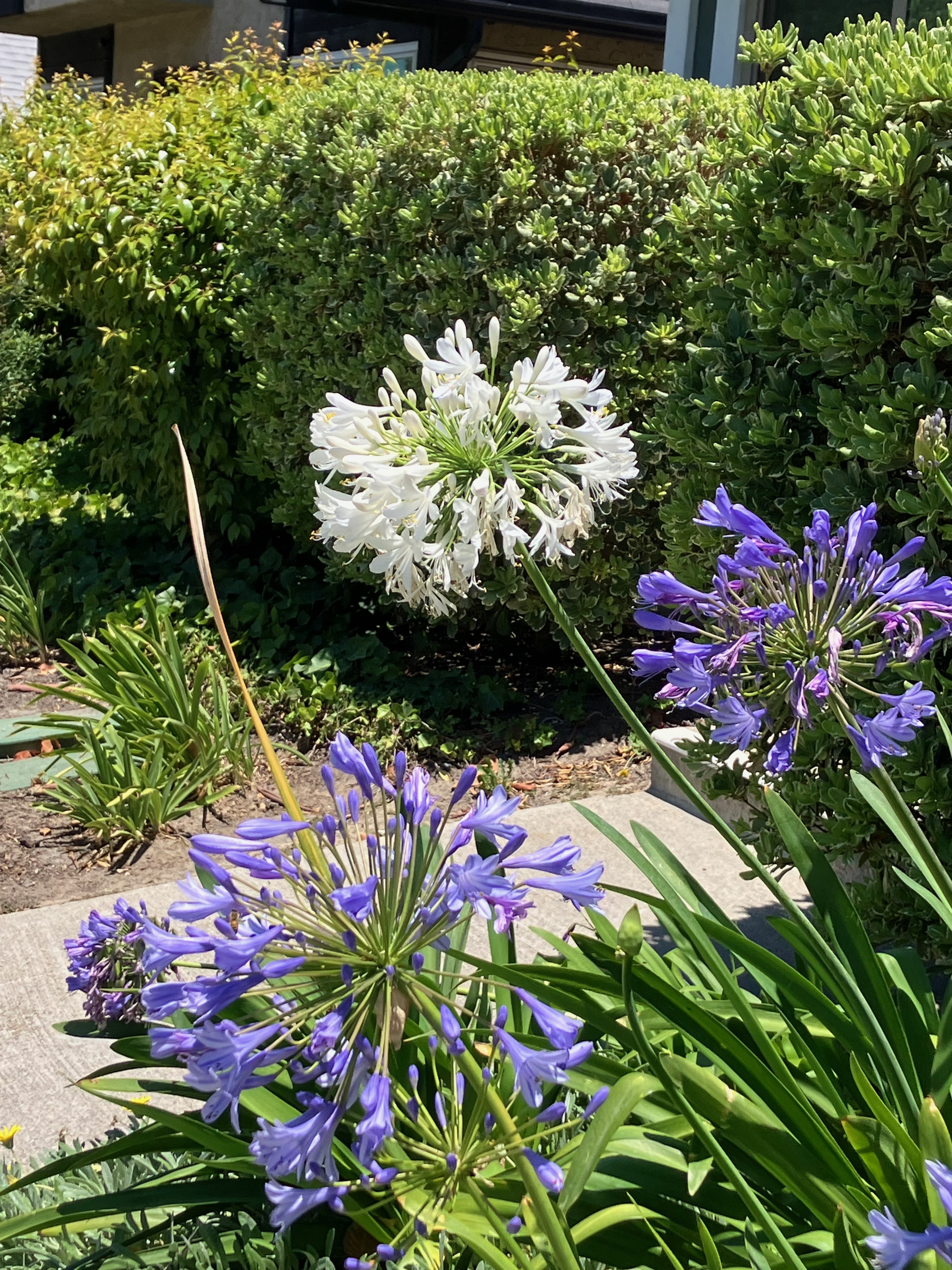
Then, in a small fenced area, I saw a flower garden. If memory serves, it had a mixture of gladiolas, dahlias, and other showy flowers I didn’t recognize. They were beautiful. I asked why his family chose to grow flowers on some of their limited acreage. Partly, he said, so they could sell the best blooms at the Bujumbura central market for additional income. But mainly, just because they were pretty. I wish I had made and kept copies of the pictures of Didace and his garden. Beauty knows no boundaries.



 Jinny's Occasional Poems