Category Archives: Uncategorized

Ten November Notions

A few months ago, I posted an entry mentioning a 2018 book I often refer to: Hans Rosling and family’s study of global conditions Factfulness (https://jinnyoccasionalpoems.com/2025/03/15/newsworthy/). 

We’re in the early days of “National Novel Writing November.” While any novel I may have inside me has yet to agitate for birth, I would like to make the effort to write somewhat more frequently during this month when writers of all genres are encouraged to put pen to paper (or hands to keyboards). 

The Roslings published their book, subtitled “Ten Reasons We’re Wrong About the World—and Why Things Are Better Than You Think,” before the Covid-19 pandemic and before some of our current political dysfunction in the U.S. and elsewhere. I believe that their “ten reasons,” also called “instincts,” are still relevant, perhaps even more so now than when they wrote. I plan to explore each one of the ten, not necessarily in order, every few days between now and the end of November. (Their non-profit information foundation, Sweden-based gapminder.org, subtitled “important stuff most people get wrong,” makes frequent updates to the information they study.)  

As an introduction, I’ve photocopied the page near the end of their book that lists their ten reasons, providing a catchy graphic for each one. In the text of the book, the Roslings mesh statistics with personal stories from Hans’ life. One early experience, his near-death from drowning as a 4-year-old, helped form Hans’ world view, as did successive brushes with mortality as he pursued a career as a global health researcher with a concentration on sub-Saharan Africa. 

My interpretations of the ten reasons are somewhat different from Hans’, based on my own life experiences and opinions. Your interpretations will likely be different from mine. Still, I hope that by focussing on each “instinct” in turn, we may all wind up with slightly different perspectives on the opportunities of the present moment, as well as its dangers. 

Next up, the “urgency” instinct.  

Power in Walking, Power in Listening, Power in Quiet

My aging body performs better and heals faster if I walk a good bit every day. In recent weeks, some of my walks have had a dual purpose—maintaining fitness and also helping support the democratic institutions on which our government is built. Last Saturday, I was one of millions who took to the streets as part of “No Kings” protests throughout the U.S. The atmosphere at the event I attended was festive. It made the roughly 2 mile walk go quickly and lessened any tiredness on a fairly hot day. I was careful to stay hydrated. I enjoyed looking at hand-made signs that were a big part of the event. Though I wished some people’s protest signs, banners, and inflatable figures less closely mirrored the disdainful rhetoric we often hear from our current national executive, I could identify with some of their justifiable anger. Some of the younger generations in my family work in government. They have been repeatedly buffeted and challenged by the sometimes haphazard, sometimes vengeful demands, firings, and shutdowns that seem to be prominent tools of this administration. 

Earlier this month, I spent time alternately sitting silently in courtrooms and walking the halls of the U.S. federal courthouse nearest me, bearing mute witness to increasingly harsh, sometimes arbitrary processing and deportation of asylum seekers who show up for their asylum hearings. I have few illusions that either of my protest walks will influence policy in the short term. Still, putting my body where my convictions are in non-violent, non-threatening ways seems appropriate.

Because I arrived early for “No Kings,” I had time to meander among booths set up by various environmental and civic groups near the starting point of the march. I signed a petition or two. I noticed what especially galling aspects of government mismanagement or overreach were being most prominently disputed. One new-to-me civic proponent was one I almost missed. A single person staffed a small table with a tented sign, “The Listening Project.” I walked up to him and asked what he was doing. 

“I’m trying to provide an example of good listening. Listening is really important,” he told me. “Many of us are not very good listeners, but practicing good listening can become a habit, like brushing your teeth every day. If you think of listening as a muscle, it’s one that gets stronger with practice. “ 

Given this implicit permission, I proceeded to talk about how frustrated I felt at the current political stand-offs in our country. It sometimes has seemed to me, I explained, that all this talk of “polarization” tends to become a self-fulfilling prophecy. He neither agreed or disagreed explicitly, but did note that he’d had chances to listen to people from all along the political spectrum. Sometimes, he observed, listening to people whose opinions might be quite militant to begin with resulted in their softening their stances as they felt heard. Listening can be powerful, he reiterated.  

Most of us live in places and spaces that have gotten noisier over the years—airplane engines, traffic, sirens, leaf blowers, not to mention beeps and chirps from our electronics. It can be harder and harder even to hear each other, let alone listen. Too often, we compound the problem by ramping up our own noise output. So we need a third power, the power of quiet. 

In researching this essay, I ran an internet search on “rising ambient noise levels in the U.S.” I found a website for an annual event that I hadn’t known existed, “International Noise Awareness Day.” (Its 31st iteration will occur on April 29, 2026.) I clicked on a link to an interview with author Chris Berdik about his recently published Clamor. The author had submitted his book proposal before the pandemic, but wound up doing much of his research and writing during pandemic-related shutdowns. Alongside its tragedies, the pandemic measurably lowered ambient noise levels in the world’s noisiest places. Berdik argues forcefully that noise is one of the stressors we have not yet paid enough attention to, that hearing loss is only part of the damage caused by too much noise too often.  

To walk, to listen, to be quiet—three powers often overlooked. May we choose more often to walk together, to listen better to each other, and to find peace in quiet, both within and without.  

Vacation Rental

A sort of hybrid, really—less posh
Than a luxury hotel stay or an all-inclusive cruise,
Certainly less opulent (and less expensive)
Than a crewed private yacht.

Still, less chore filled than everyday
Living, clean linens typically supplied,
Fairly often nearby restaurants or
Delis to reduce meal prep tasks.

Because hosts may exaggerate online the allure 
And amenities of their properties, especially
In popular holiday destinations, it pays
To do some independent research before booking.

More often than not, guests
Never get to meet their hosts
In person, instead getting key
Codes to open gates and doors.

The interpersonal graciousness of
Localized hospitality is mostly gone.
Interfaces among actual people
In the “hospitality industry” get more
Complex, contacts more attenuated.

Nevertheless, when all goes well—no weather foul-ups
Or travel delays–a vacation rental can provide
A much needed change of scene for a few days:
A chance to recharge, maybe to renew
Our flagging sense of vocation.

beach house in Pacific Grove, CA

Getting Ready for the Rain

For the first time in about a month,
Our weather apps are showing a non-trivial
Chance of showers tonight or tomorrow–maybe
As much as half an inch. Oh, ecstasy!

I scurry around, getting our small yard
Ready for the rain: positioning buckets to catch
Run-off from the gutter-less part of the roof,
Moistening the soil around area
Trees and shrubs to improve absorption
If/when the rains do come, clearing out roof gutters,
Sweeping away detritus from street edges, replenishing pea
Gravel on our slightly sloping garden walkway.

For as long as I can remember, I’ve
Been a weather nerd. My Maryland childhood
Included watching the approach of summer thundershowers,
Sledding during winter’s rare snowfalls, learning to swim
Just well enough to make it across a neighbor’s pool,
Keeping cool-ish during August’s soggy heat.

Here in San Diego, our heat is more apt to
Arrive in September or October, sometimes
Bringing with it the Santa Ana winds that heighten
Wildfire danger. Rain this time of year can be
A blessing, especially when it falls gently.

Weather nerdiness also exposes me to the
Increasing number of places where weather events
Are getting less gentle–friends in North Carolina
Have been displaced by Hurricane Helene,
Folks I know further north in California were burned
Out this past January, while some San Diegans are still
Recovering from our January, 2024 floods.

It’s not yet clear to me what further changes I’ll
Need to make as our rains become even more
Hit or miss. Last week, I visited Yosemite for the
First time, learning from its guides about the extremes
Of past weather in its granite-encircled, glacier-scoured valleys.
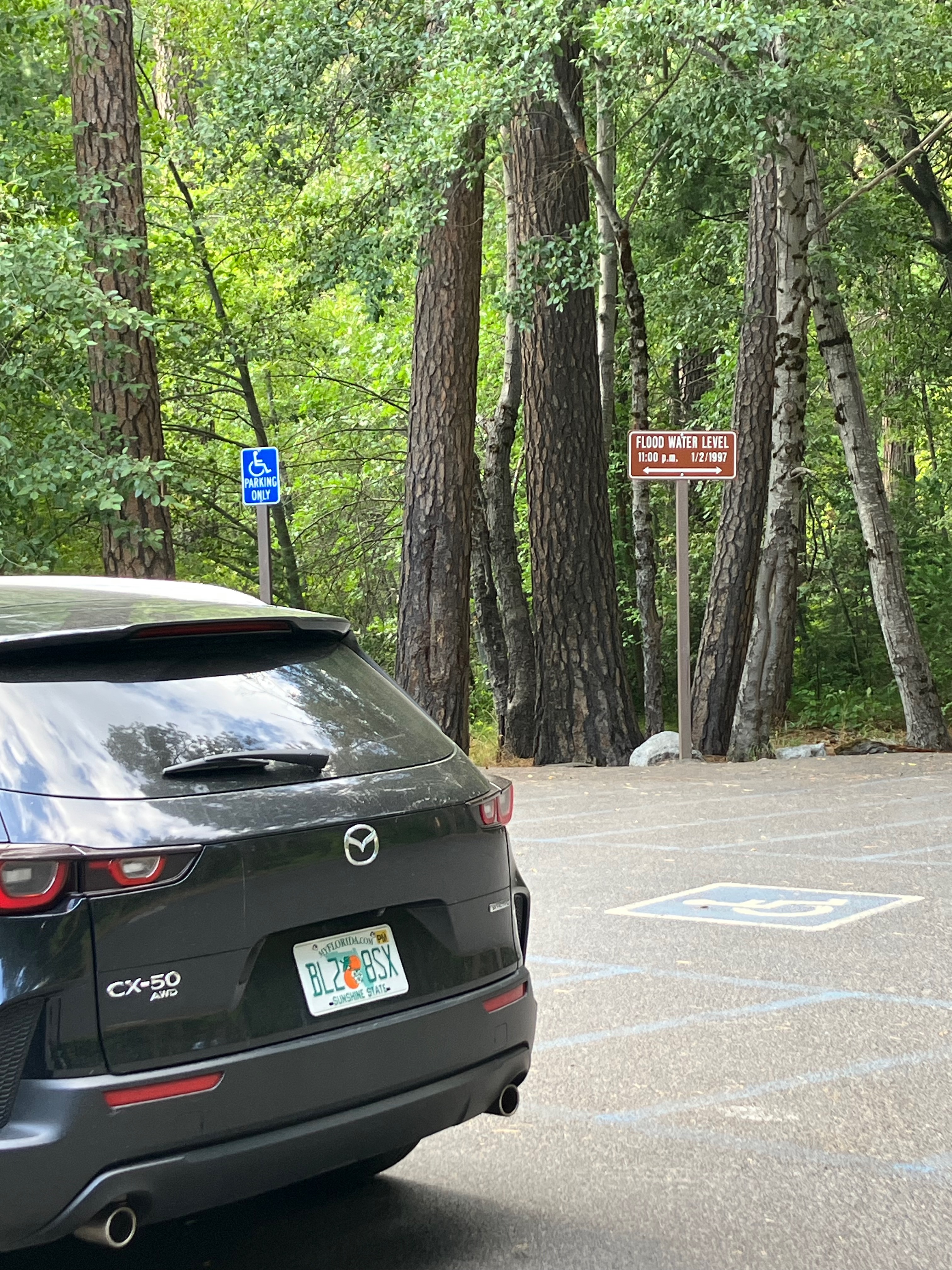
Its highest recent flood, noted at a parking area, would
Have drowned anyone not safely escaped to higher ground.

Regardless of our political outlook or economic status,
I believe we’d be wise to productively, concertedly
Get ready for the rain.

What Good Is August?

At first blush, it seems a mere blot on the calendar—
Wedged between the heroic hoopla of July 4 and
The start of another workaday year around September’s
Labor Day. People in their prime have disappeared from workplaces,
Taking their camping gear, their beach bags, their teenaged offspring
And their air-conditioned vans with them elsewhere.

Those of us left comfortably behind are only a little envious. 
We loll lazily on lounge chairs, or float face up in bathtub-warm
Backyard pools, while grills entice with odors of slowly broiling brats.
Vintage music plays at local festivals–Beach Boys, Beatles,
Sometimes even Sinatra. Bocce tournaments bring out the
Men in white. Parasols make a temporary comeback.

The furious scandals of pre-recess government seem less
Pressing for the moment, the final few tomatoes extra juicy.
August is not regal, not “august,” its aspect instead laid back.
Sharing vowels with its mood, August is languorous.
Before the rushed tumult of impending autumn,
Such languor is both welcome and sorely needed.

Interdependence Days

This year’s 4th of July celebrations did little for me.
Much flag waving seemed phony, some neighborhood camaraderie felt forced.
I ached as U.S. ICE raids continued, as civilian deaths mounted in too many armed conflicts.
I wanted to skulk away, to forego my allegiance to much of anything.
But I remain part of a wider whole. Whatever my pique at political or social shenanigans,
I do not have the option to resign from humanity.

So I briefly retreated to gardens that nourish me, some of whom I tend:
I admired walkway African lilies (agapanthus), most likely planted
When our 1970’s housing subdivision took shape over a decommissioned firing range.
This time of year, blue and white agapanthus blooms adorn our nearby streets,
Their starbursts quieter, more calming, less ephemeral than fireworks.

Within my own yard, I reveled in two sets of red blooms:
Along a sunny side fence, snapdragons from last year. They’d overwintered
In this mild climate where distinctions between “annual” and “perennial”
Get increasingly blurred.

overwintered snapdragons
shade-loving impatiens

Against the opposite fence, impatiens, cut-rate at the
Distressed rack of a local garden shop, now hold forth in most-of-day shade.

One day per year serves me as reminder of our nation’s independence. On other days,
I’d rather honor our interdependence with a natural world that graciously includes us.

May we continue to reconcile independence and interdependence, wherever we are.
Hurrah for the red, white, and blue, whether flags or flowers!

In Praise of Libraries

To me, libraries are among the unsung heroes of our societal institutions. They typically get taken for granted until something goes wrong, or the budget goes short. I depend on our public libraries for much more than books. When I visit a library branch, I often get to observe all different ages and economic levels, from toddlers to dowagers with pearls to homeless folks in well worn jeans. I get to check out both nourishing fiction and varied non-fiction. Nearly every subject imaginable is covered, along with the entire spectrum of political views. I can browse the latest newspapers and magazines. I can do Internet research on one of the computer terminals typically available for patron use. Most library buildings provide community meeting spaces, often making community rooms available to civic and non-profit groups for free or at minimal cost. Public libraries are among our most vital “third spaces,” neutral zones, neither work nor home, for getting recharged. 

As one librarian recently told me, “Libraries are among the few remaining spaces where you can hang out without being expected to buy anything.” Libraries help combat the loneliness that can worsen the mental and physical health of seniors.  

Photo of a Carnegie-Endowed Public Library

When in 2021 I arrived at my current home town as part of a cross-country move, libraries were still closed due to covid restrictions.  A library-related quote from a lean time in my young adulthood came back to me: “Libraries will get you through times of no money better than money will get you through times of no libraries.” Now, no longer cash-strapped, I was bereft of a major source of information and entertainment without library access. I very much missed the peaceable, low-stress interactions these venues had provided pre-pandemic. I appreciated the many creative ways libraries had adapted to provide what services they safely could during pandemic lockdowns. Once our central library reopened, I hurried to get a library card and to begin visiting and checking out materials. 

A while later, once our local branch reopened, I signed up as a library volunteer. Through volunteer hours and small-scale donations, I do my bit to support library programming. Nearly all our library branches have volunteers. We assist with day-to-day functioning and sometimes provide fundraising help through book sales and craft fairs. The more I volunteer, the more I appreciate the work, both paid and unpaid, that’s required to help keep our community well balanced and well informed, with access to the reliable information that helps citizenship flourish.

For over seventy years, ever since my grandmother first began taking me to story hours at our nearest library, public libraries have been a lifeline for me. The monthly library jaunts Granny and I took enriched me both intellectually and emotionally. Later, libraries helped me navigate term papers and college research assignments. During stressful times, they provided resource materials and outlets for harmlessly venting some of my frustrations. (My husband once joked that he’d know to start worrying if he saw me reading a murder mystery with an on-call computer programmer as the victim.)

In 2025, budget constraints are again threatening the health of many library systems, both urban and rural. Our city’s initial budget proposal for the next fiscal year projected cuts of about ten percent to the library system’s current allocation. It called for systemwide closures two days a week, regardless of branch patronage levels. It didn’t distinguish, among its thirty-seven branches, those in lower income areas where libraries are most crucial as a community resource.

Libraries can and often do provide the “ounce of prevention” that helps reduce the “pound of cure” required via police patrols, court costs, and emergency services. Those of us who are library partisans need to become better at touting the benefits of public libraries, intellectual, emotional, and societal. (Hence this blog post and multiple letters and emails to my local public officials.) 

When I walk past our local library branch the first weekend of each month and notice the temporary flag announcing “Used Book Sale Today,” I feel a small glow. Long may such flags wave! Long may public libraries flourish!   

Other “One Percents”

As wealth and income gaps in the U.S. widen, complaints grow about “the top 1%” economically. We suspect the very wealthy of using tax loopholes, unfair competition, lobbying, abuse of public office, and various government policies to further enrich themselves while many of the rest of us languish. 

A one percent figure is a somewhat arbitrary cutoff, but can be useful shorthand for “a small proportion” in any given field. Percentages for nearly everything also may change over time. Thinking about wealthy “one percenters” got me to wondering about other examples of contemporary low percentages. Below, then, are some other “one percents” in the U.S. and globally: farmers, legal (and illegal) immigrants, redheads, intersex persons, Icelanders. 

Way back when the first U.S. census was taken in 1790, about 90% of the country’s roughly 4 million people were farmers. Over many decades, population increased and farms generally consolidated. Most became more highly mechanized. The number of farms dwindled over time, along with the proportion of farmers. At the latest U.S. agricultural census, in 2022, only 1.2% of the U.S. labor force were farmers, albeit very productive ones. (Domestic farmers produce over 85% of the food and beverages purchased in the United States.  The U.S. is the world’s leading exporter of corn and rice by volume, and has generally been the world’s leading exporter of soybeans by value.)  

Our “country of immigrants” has seen vast changes in its levels of immigration. One measure of legal immigration is the number of “green cards” issued for new Legal Permanent Residents. In 1820, the first year to register immigration status, only 8,400 new  LPR’s were admitted. Then, our total population was about 9.6 million, so registered immigrants accounted for less than 0.1% of Americans. During the 19th century, immigration levels increased, reaching an initial peak in 1854. That year, 427,800 LPR’s were admitted to our country. Because since 1820, we’d added new states and increased our total population to over 23 million people, the 1854 LPR proportion was between 1 and 2% of the total population at the time. Still, that year’s number of LPR’s was an over 50-fold increase from the 1820 figure. 

Twentieth century U.S. immigration reached an all-time low in 1933 during the Great Depression, with just 23,100 LPR’s among a total population of over 125 million, less than 0.02%. Until after the end of World War II, U.S. immigration rates stayed very low. An all-time high in legal immigration came in 1991, when over 1.8 million LPR’s were admitted, somewhat less than 1% of our then total population of about 250 million. (source for historic immigration figures: https://www.migrationpolicy.org/programs/data-hub/charts/Annual-Number-of-US-Legal-Permanent-Residents?width=850&height=850&iframe=true). 

Most estimates of the number of “illegals” in the U.S., immigrants whose documentation is either missing or invalid, range between 10 and 15 million. Reliable numbers are hard to establish. However, even at the high end, this is less than 5% of the U.S. 2020 census population of over 331 million. 

I was born a redhead, one among a roughly estimated 4% of the U.S. population. Until fairly recently, I was the only known auburn-haired child in our extended family. My grandparents sometimes recalled a distant cousin who maybe had red hair like me. Generally my family liked my red hair. However, once I started school, I got mild teasing from some blond or darker haired classmates.

As gender identity debates continue to roil our “culture wars,” I recently learned of a category new to me, the poorly understood phenomenon of “intersex.” Being intersex is definitely biological, not a choice. It begins in the womb. As fetuses, intersex individuals acquire some genital and sex-linked characteristics of both female and male. Young woman-with-balls Emily Quinn is among the best known intersex Americans. (Another well-known intersex person is South African Olympic athlete, runner Caster Semenya.) In her 2018 TED talk, Emily estimates that she/he is one among more than 150 million living humans with mixed female and male characteristics. (Without extensive biological testing, it can sometimes be hard to tell if someone is intersex.) If accurate, Emily’s figure represents between 1 and 2% of the global human population of over 8 billion.

Iceland is a small island nation in the northern Atlantic whose population is only about 0.1% of the U.S. total. Iceland has many unique characteristics, but the one that most buoys my sense of possibilities is that it has the smallest “gender pay gap” of any developed country. By 2024, U.S. women’s access to high-income professions had improved. A former gender pay gap of 60 cents on the dollar had been cut by over half. U.S. women now earn nearly 84 cents for every dollar paid to similarly qualified men. In Iceland, women earn nearly 92% of men’s compensation, not yet quite equal, but an inkling that gender pay parity is possible.

Some of the figures above give me hope; they also provide food for thought. However, my main concern as I continue to age isn’t any of them. It’s the small but increasing proportion of elders with their mental and physical faculties in decent shape. Even into their 80’s and 90’s, they continue to be alert, contributing members of their communities. They are a 1% I hope to be able to join!   

April Foolishness

April, thank heavens, is nearly over. It’s been a real seesaw ride, with on-again/off-again tariffs, roll backs of environmental safeguards, and wild gyrations in the U.S. and other global stock markets. Civil rights are under attack, amid detentions and deportations of highly questionable legality. Along with all this have come near constant doses of hyperbole, vitriol, and vacuousness from various U.S. national officials. Whoa!  

Outside the U.S., wars in Gaza and Ukraine grind on, causing ever-deepening destruction and human misery. Despite our current President’s boast of ending the Ukrainian conflict even before his inauguration, what talks are occurring seem far from establishing even a temporary cease fire, let alone a resolution of the status of disputed territory plus security guarantees to prevent a recurrence. In Gaza, regardless of Israeli Defense Force claims to be hunting just Hamas terrorists, the density of the Gazan population means that more and more civilians are being killed, maimed, or starved to death. Globally, various other armed conflicts simmer or worsen, less noticed in America-based publicity. 

To adjust my perspective a bit, I went back to an artistic work from the previous time the world seemed on the brink of falling apart, in the early 1940’s. I watched the classic Charlie Chaplin movie, “The Great Dictator,” originally released in October, 1940. At that time, the U.S. had not yet entered the rapidly spreading conflict we now know as World War II. However, German military forces had occupied Belgium, the Netherlands, Luxembourg, and much of France. Germany’s then-ally, the Soviet Union, had annexed the Baltic states of Latvia, Lithuania, and Estonia, while German ally Italy had invaded Greece. The German air force was conducting frequent bombing raids over Great Britain. Jews in Warsaw, Poland were being herded into an increasingly crowded and restrictive ghetto.

In the movie, Chaplin plays both anti-semitic dictator Adenoid Hynkel, ruler of the mythical country of Tomainia, and his look-alike, an anonymous Jewish barber who’d previously fought for Tomainia during the first World War and had suffered twenty years of amnesia stemming from his injuries. The barber, after returning to his former shop, regaining his memory, and being caught up in anti-semitic raids, flees with his former commander, both of them dressed in military uniforms. The barber is mistakenly presumed to be Hynkel and is pressured into giving a speech to the citizens of the neighboring country of Osterlich, recently invaded by Hynkel’s troops. Impersonating Hynkel, the barber, instead of more bombast, gives an impassioned speech about the need for peace and justice: 

“I’m sorry, but I don’t want to be an emperor. That’s not my business. I don’t want to rule or conquer anyone. I should like to help everyone – if possible – Jew, Gentile – black man – white. We all want to help one another. Human beings are like that. We want to live by each other’s happiness – not by each other’s misery. … To those who can hear me, I say – do not despair. The misery that is now upon us is but the passing of greed – the bitterness of men who fear the way of human progress. The hate of men will pass, and dictators die, and the power they took from the people will return to the people. And so long as men die, liberty will never perish.”

Though release of “The Great Dictator” was initially limited in some U.S. cities with substantial German-American populations, over time it became Chaplin’s most successful film commercially. The film has also won critical acclaim as one of the greatest comedies ever produced. In 1997, it was selected by the Library of Congress for inclusion in the National Film Registry.

As we approach the final day of this tumultuous month, it may be just coincidence that April 30 marks a couple of other transitions in recent history: On April 30, 1945, Adolf Hitler committed suicide in his Berlin bunker, as opposing troops closed in from both west and east; on April 30, 1975, the final Americans left South Vietnam after a generation of American involvement, as troops from the north shelled the presidential palace in Saigon.

This April, we’re also marking a transition of leadership in one of the world’s major faiths. We’re partway through a nine day period of mourning for Pope Francis, who died earlier in April. For over a dozen years, Francis used his papacy to speak up for the world’s underserved—our natural environment, and those of our human citizens who have least benefited from the global economy.  

While watching one bombastic leader hold forth in an Oval Office centered on a toy airplane, we can remember that his style is not the only possible option. Both Chaplin’s barber and the former leader whose simple casket was recently laid to rest provide viable counterexamples.

Newsworthy?

The news seems to come at us faster and faster these days. With so many channels and so many media, it can be hard to keep track. Hard, too, to keep away from the insistent, worrisome chatter. Might our job/investment portfolio/health care/retirement income go up in smoke if we don’t pay close enough attention? Might the next global conflict be just around the corner? Might the U.S. devolve into its next civil war during the current congressional or presidential term? Will we ever get to civil peace again?

Most mental health advice suggests that limiting our news consumption helps maintain our sanity. When we pay too much attention, we can easily succumb to the belief that everything is out of control, that things are bad and getting worse. 

It helps me to take a step back. Being older in this instance can also be an asset. Having endured prior booms, busts, and disasters helps me put things into perspective. 

As a lifelong bookworm, I’ve also developed during the past couple of decades some “go to” volumes for perspective adjustment. Two stand out, both for their global range, and for their hopefulness: 

———–

Half the Sky, by Nicholas Kristof and Sheryl WuDunn, was published in 2009. Its title derives from the Chinese folk proverb, “Women hold up half the sky.” The book focusses on women’s situations in the developing world and how we might achieve women’s development goals globally. Kristof and WuDunn explore some of the gaps and practices that continue to disenfranchise women and girls. The authors stress adequate health care, education, and entrepreneurship as avenues for progress, benefitting both women and men. They present vivid examples, while being realistic about roadblocks. One is our human tendency to focus on individual stories over the “big picture.” For example, in discussing maternal mortality ratios, they touch briefly on overall statistics. Global data on such rates, from 2005, ranged from 1 death per 100,000 live births in Ireland to 2,100 in Sierra Leone. The authors then write: “…[W]e hesitate to pile on the data, since even when numbers are persuasive, they are not galvanizing. …[S]tatistics have a dulling effect, while it is individual stories that move people to act.” (p. 99)  

Factfulness, by Hans Rosling with Ola Rosling and Anna Rosling Rönnlund, was published in 2018. The subtitle to the Roslings’ book is attitude adjusting all by itself: “Ten Reasons We’re Wrong About the World—and Why Things Are Better Than You Think.” Hans Rosling died while the book was in progress and was succeeded in authorship by his son and daughter-in-law. Hans gained wide recognition as a global health researcher who made statistics both more approachable and more relevant. He pioneered representing global datasets with proportionately sized bubbles for different countries or regions. He also showed bubbles in motion for longer term trends. (You may want to watch his TED talk from 2006 on late 20th century human fertility, health, wealth, and change titled “The Best Stats You’ve Ever Seen,” or a 4-minute BBC presentation of “200 years of health and wealth in 200 countries.”)  

In Factfulness, the Roslings sum up Hans’ life’s work by pointing out the harmful “instincts” that can skew our assessments of overall conditions. One that I find especially prevalent in current news is the “size instinct.” As they explain: 

“You tend to get things out of proportion. I do not mean to sound rude. Getting things out of proportion, or misjudging the size of things, is something that we humans do naturally. It is instinctive to look at a lonely number and misjudge its importance. …

The media is this instinct’s friend.  …

The size instinct directs our limited attention and resources toward those individual instances or identifiable victims, those concrete things right in front of our eyes.”  (pp. 128-129)

———-

Much of our current media, it seems to me, suffers greatly from overuse of the  “size instinct.” Though huge numbers can get bandied about without much context, much of our media highlights whichever isolated facts promote their respective political agendas. Our size instinct is not new, but can get amplified in our media-saturated lives. 

Several decades ago, I was exposed to the slogan “Think globally, act locally.” The Kristof/WuDunn and Rosling books remind me to pay attention to widespread, longer term trends, while at the same time concentrating my energies and skills toward making the locale where I live a little bit more humane, a little bit more equitable. Facts are mutable over time. Women do hold up half the sky. And if enough of us make small improvements wherever we are, over time we’ll become worthy of better news.