Category Archives: Uncategorized

The Rip Van Winkle Effect

Yesterday was the first time in many months when the people I saw at a local shopping center were mostly unmasked. Due to widespread vaccinations, many former restrictions had been lifted. Life seemed somewhat more “normal,” yet at the same time somewhat surreal. I thought maybe I’d fallen into a time warp. Who were all these strange people with exposed mouths? It reminded me of the Rip Van Winkle story I’d heard when I was a kid. I looked up a text of this Washington Irving tale from the early 19th century.

The basics: Rip Van Winkle was a middle-aged farmer in a small village in the Hudson River valley during the 1760’s or thereabouts. Though an amiable sort, he never made a go at farming. He spent a good bit of time away from home, a home that contained multiple children and a wife who often chided him about his lapses as a farmer. He sometimes frequented the local tavern, but even more often he took his gun and his dog and went hunting in the surrounding hills. 

On one of his woodland rambles, he encountered a strange man who was carrying a heavy keg uphill. Rip helped with the keg and later with its contents, which put him into a deep sleep. When he awoke, he was surprised to find that his beard had grown long and his joints had grown stiff. He was at a loss to figure out why. When he returned to town, some of the buildings had changed and he didn’t at first recognize anybody. He nearly got into trouble by offering his fealty to Good King George. The former colonies were now an independent country, he learned. After being vouched for by another local elder, Rip was given a welcome by his now-grown daughter. Gradually it dawned on him that he’d slept for a whole generation and was now an old widower, his wife having died a few years before. Once he adapted to life in his daughter’s house, he enjoyed an old age with the freedom to indulge his gift for stories and for entertaining the younger generations. 

Before the pandemic, I’d considered myself a spry retiree, an active participant in the community where I lived. My husband and I traveled widely, both in the U.S. and overseas. I thought we’d spend at least several more years traveling before we became frail enough to need to move near a grown child for support. Covid-19 changed our trajectory. For over a year, we were virtually housebound. Both over 70 with some underlying health conditions, we learned that according to the best available information, we’d be vulnerable to serious illness or even death should we be exposed to the virus. We coped partly by staying in contact via phone and internet. I sewed lots of decorative cloth face masks for family, friends, and local non-profits. Jim learned to paint river rocks and distributed them outdoors in nearby parks and trails. Early in 2021, we were fortunate to find an available vaccination site. 

By the time our immunity was at an acceptable level, our timetable for a move had compressed substantially. We began searching for a new home near  one of our grown children. We exchanged coasts, going almost as far as was possible within the contiguous U.S. Our new-to-us community is quite different from where we used to live. I’m learning Spanish. The quality and quantity of Mexican-themed restaurants are amazing. Automotive traffic is awful. 

My joints are stiffer than pre-pandemic. My hair is grayer, my middle more expansive. A little like post-nap Rip, I wonder what role I and other vaccinated seniors can play in dealing with the challenges that lie ahead. As a cohort, we are the most thoroughly vaccinated, with over 75% of us over 65 having received a full complement of vaccine.  

Like Rip, we may be able to share stories of past adversity and coping skills with the next generations. We will also need to adapt further to climate change (heat waves, droughts, floods, plagues of grasshoppers, wildfires, and so on) and social changes (demographic shifts, electoral reform, police reform, reducing violence, upgrading infrastructure, etc.). We may sometimes be as confused as Rip Van Winkle was when he awakened into the brand-new United States of America. 

On Being Undocumented, Uncomfortable, and Racist

Last month I moved from central North Carolina to southern California. I was fortunate to be able to move by choice. Still, moving always poses challenges. Now most of my extended family is in a different time zone from me. Connections from my old location have been broken. We don’t have enough chairs. I don’t have automated payment accounts for local utilities. I don’t have a local doctor, dentist, or even a health care plan. I don’t know any of the local bakeries, take-out joints or restaurants. A good bit of the time, I feel lost. One of the most disorienting aspects of my “new life” is being relatively undocumented—no local driver’s license, no local bank, no supermarket chain I recognize, no voter ID, no links to local media channels. My challenges are minor, but I SO want my current uncertainty to end!  

In my old location, I’d counted myself a white liberal. I thought I’d worked through issues surrounding whiteness in 21st century America. I’d participated in marches and protests, listened to Rev. William Barber’s impassioned, informative speeches about racial inequities, given money and time to progressive causes. In my new location, many people around me speak other languages instead of or in addition to English. I feel vaguely threatened. 

A few days ago, I got a packet of forwarded mail containing monthly magazines with articles examining U.S. historical racism and still unresolved racial and ethnic tensions. One article described the “race card project” started by journalist Michele Norris in 2010. She’d initially asked 200 people to send her their thoughts about race, distilled into just six words (theracecardproject.com). A real challenge for somebody as wordy as I am! What popped into my head was succinct, embarrassing, and accurate: “I thought I owned the place.”  

In school in the 1950’s I’d been taught that European settlers had “conquered the wilderness,” “shown pioneer spirit,” “plowed the prairie,” “expanded the frontier,” “defeated the savage Indians,” “fulfilled manifest destiny,” etc., etc.  Once I began to read and travel more widely, I learned some limits of this Eurocentric viewpoint.

In my new home, adding to my disorientation is discomfort at having to further relinquish my former historical narrative. The version of U.S. history and growth I still partially carry around inside me has been at best incomplete, at worst, deliberately falsified. For thousands of years before the earliest European explorers came to North America, indigenous people lived in what is now the United States. Much of the hard manual labor to create the agricultural and industrial economies of our country was done either by enslaved Africans or by poorly paid Chinese and other Asians. Currently, much agricultural and caregiving work is done by low-paid latino/latina immigrants. I now live on land stolen from indigenous tribespeople.

Some of my ancestors were slaveholders. Even the majority, those who didn’t directly benefit from slavery or subsequent Jim Crow laws, had access to financial support and government programs that were effectively, if not officially, racially biased. Being “racist” applies not just to members of the KKK or white people who use the “N” word or anyone who makes disparaging remarks about “those people.” A racist can be someone of any background (though in the U.S. usually white) who benefits explicitly or implicitly from a system of arbitrary advantage. That includes me. 

The people in line with me at the DMV yesterday came in all shapes, colors, and sizes, spoke with lots of different accents. Many DMV employees could speak two languages or even more. Might I have to own up to my lingering biases, to adapt and participate in a more diverse culture here? 

What I’m experiencing mimics some stages of grieving laid out in earlier research on death and dying: 1) denial, 2) anger, 3) bargaining, 4) depression and 5) acceptance. I seem partly to be cycling through the first four stages of grieving, grieving the death of the myth of white supremacy:

1) Who, me, a racist? 2) How dare you! 3) Look, I can show you my NAACP card. 4) I will never get this right.  

Many of my background may be experiencing grief stages as well. If we are ever to coalesce as a fully multi-ethnic society, we’ll have to reject the myth of dominance, white or otherwise. We’ll have to temper our denial, anger, bargaining, or depression. Instead, whoever we are, whatever our backgrounds, we’ll need to more fully accept and embrace the humor, resilience, and graciousness that are also part of the human heritage.    

Driving Across “Flyover Country”

The past year or so has been challenging. The covid-19 pandemic ended or upended many lives, causing us to question former habits, try out new ones, ponder whether life could ever return to “normal.” For my husband and me, the pandemic accelerated a move we’d originally planned to undertake several years into the future—from one U.S. coast to the other to be close to a grown son and his family. 

It took most of the winter and early spring of 2021 to make the needed arrangements: to find a buyer for our previous house, plus someone to sell us an “age in place” home close to where one of our sons lives in southern California. Then the more physical work began. Giving away, selling, or discarding half a lifetime’s worth of furniture, clothes, and knickknacks that would not fit into our downsized new home. Then packing, packing, and more packing. Renting a mobile storage unit and figuring out how to fit our remaining stuff into it, one piece of furniture or box at a time. Family and neighbors pitched in. 

Finally but also too soon, our departure date arrived. Before heading across the country, we made a couple of detours to visit family and friends, some of whom might not be around the next time we had a chance to visit “back east.” Then, from a suburb in central Maryland, westward ho! 

We stopped briefly in central Ohio to meet our other son’s current intentional family. Then we threaded our way across Indiana and Illinois on rain-slick, pot-holed roads to a Mississippi river town in Iowa, one-time home to a set of great-grandparents. The namesake store that Jim’s great-grandpa had founded was no longer doing business, but its building still stood, raised nameplate in place.  

In front of great-granddaddy’s store in Iowa

Iowa’s interstates provided a near continuous view of wind farms. As we passed, their blades were turning, producing renewable energy. Rest areas where we took pee breaks had shelters surrounding their picnic areas. Once we’d been blown around by the near-constant wind, we understood why. Historical markers at these areas mostly chronicled settlers’  stop-off points and routes westward. Here and there, some mentioned the original inhabitants. Place names memorialized them, too: Iowa, Sioux City, Keokuk, Wichita, Topeka, Pawnee, Kiowa, and many more.

The further west we got, the bigger and emptier the landscape seemed. Irrigation rigs gradually became more plentiful icons in the flat, windy landscape. In western Kansas, we swerved slightly to visit the small town of Greensburg. A while ago, I’d read articles about the resurrection of this town, nearly flattened by an F5 tornado on the night of May 4, 2007. In the wake of recent increases in severe weather events, the saga of Greensburg has again become newsworthy. 

When we arrived late afternoon, the Greensburg town museum was open. We took an hour or so to tour exhibits of the town’s origins, near-death, and reconstruction. Founded in 1886 with help from stagecoach entrepreneur D.R. Green, the town’s initial claim to fame was a large, stone-lined hand-dug well completed in 1888. The well descended over 100 feet to reach the Ogallala aquifer to provide the town with water. Though no longer functional, the “big well” is a centerpiece of the reconstructed museum. 

Along parts of the museum walls were pictures and videos of the tornado’s destruction. On the morning of May 5, 2007, little remained of the pre-tornado town. Thanks to warnings that were largely heeded, there were only a dozen fatalities, but only three of the town’s buildings remained standing. Everyone was rendered homeless. Government, non-profit disaster relief agencies, and individual volunteers from near and far responded quickly to help the town recover. It took a while for the idea of a “green Greensburg” to take shape. Other exhibits described the planning and reconstruction process, highlighting some of the rebuilt town’s environmental features.

I don’t have the technical expertise to fully appreciate the conservation and renewable energy components of the renovated town, which includes a wind farm, solar panels, and energy-efficient public buildings and private residences. Museum exhibits stressed that rebuilding and economic development efforts have not been without snags. Greensburg’s  post-tornado population, growing slowly, is a good bit smaller than before. Also, like many small towns on the Great Plains, Greensburg perennially struggles to provide good jobs and a good quality of life for its residents. Like most places, Greensburg has recently suffered economically and socially from the pandemic. Nevertheless, for me the town had a vibrant feel to it, personified by the 80-something museum docent who sold us our tickets. She explained that she’d spent her whole life in Greensburg. The 2007 tornado was the first and only one in her lifetime to hit this settlement smack dab in the middle of “tornado alley.” She very much expected to finish her life well before the next one hit. In the meantime, she was proud of the efforts the town had made to reinvent itself. For additional information about Greensburg and its rebirth, please search the internet for various Youtube videos and recent news articles.

After Greensburg, we caught bits of the U.S. Southwest—sections of the Oklahoma and Texas panhandles, New Mexico, Arizona, then southern California. Partly because of the pandemic, partly because we were just strangers traveling through, we had few extended interactions with locals. It seemed to me that masking and social distancing regulations varied a good bit from place to place, as did compliance with any restrictions. Reactions probably had less to do with governments at any level and more to do with peer pressure. People mainly imitated their neighbors. Many seemed to have a fierce independent streak that the prospect of a potentially lethal, readily spread virus did little to abate. Even in small towns, though, customs and ethnic mixes were changing.  

By the end of our car pilgrimage, I had a much greater respect for the gritty folks who make their living and maintain their communities in “flyover country.” For me, a car trip rather than a plane ride provided insights I might well have missed in non-covid times.  

The Politics of Human Reproduction

As a post-menopausal woman, I’m no longer directly impacted by the twists and turns of abortion debates and legislation. During my fertile years, I was privileged to live in areas where reliable contraception was available and reproductive options were improving. I was blessed with two much-wanted, much-loved children and a long-term partner who helped provide both material and emotional support as we navigated the great adventure of parenting. Once our children were past their most vulnerable years, I chose to end my fertility early, in part to avoid overpopulating an already human-crowded planet. 

Therefore my initial strong reaction to coverage of the “fetal heartbeat bill” passed recently in neighboring South Carolina surprised me. This particular fight has long since been joined by still-fertile women. I have no direct interest. Why, then, did a still photo of South Carolina governor Henry Dargan McMaster, an older somewhat sanctimonious male, white, signing South Carolina’s Senate Bill 1 while surrounded by other mostly older men, mostly white, plus a few women, rankle me so? On reflection, I suspect it’s a combination of personal and societal history.

Until after I was grown and married, I had little notion what abortion was. After a 1973 U.S. Supreme Court decision legalized abortions under certain circumstances, protracted legal and political battles erupted. Political candidates and office holders were sometimes judged primarily or solely based on their stance on this one issue. Through decades of debate, I’ve been exposed to lots of “pro-life”  and “pro-choice” publicity. Arguments at both extremes disturb me. I lean toward a “pro-choice” stance, but remember, too, the moral ambiguity captured in author Gwendolyn Brooks’ haunting 1945 poem “The Mother” (https://www.poetryfoundation.org/poems/43309/the-mother-56d2220767a02). 

In early 1975, when my husband dropped me off to get a pregnancy test at a women’s health clinic, to confirm what we both hoped would be true, I had to walk a gauntlet of anti-abortion protesters shouting, waving signs, and thrusting literature into my hands about the sanctity of all life. It did not seem to occur to these zealots that a women’s health clinic might perform services other than abortions. Their brochures contained images of a generic early-term fetus. In decades since, while driving through parts of the U.S. South, I’ve seen similar fetal images on huge roadside billboards. One even advertised a “pro-life registrar of wills.”

The particular legislation just passed in South Carolina does not directly penalize women seeking abortions, but makes performing an abortion after a “detectable heartbeat” (typically between 6 and 8 weeks of gestation) a felony, with possible hefty fines and up to two years of jail time. The South Carolina bill is among a number of recent bills, most enacted in poorer Southern states, circumscribing legal abortions to the point that they become nearly inaccessible to poor and at-risk women.

Globally, both the incidence of abortion and the legal restrictions placed on it have been declining in recent years, with only five countries (El Salvador, Nicaragua, the Dominican Republic, Chile, and Malta) placing total or near-total bans on the procedure. Between 1994 and 2014, the incidence of abortion in industrialized countries declined 19%. Rates of abortion are roughly comparable worldwide, whatever a particular nation’s abortion policy—estimated at between 34 and 37 per thousand women annually. (For more information, see https://www.thelancet.com/pdfs/journals/lancet/PIIS0140-6736(16)30380-4.pdf). What differs markedly are the rates of maternal injury and death resulting from unsafe abortions (see https://www.who.int/health-topics/abortion#tab=tab_2). 

What has often non-plussed me about the abortion debate, in the U.S. and globally, is how much it tries to compartmentalize the period of gestation, making it ostensibly separate from the periods before and after a pregnancy. Though alternative pregnancy options such as surrogacy, in vitro fertilization, and even transgender pregnancy are becoming more available in industrialized countries (though hugely expensive), the proportion of such pregnancies is small. The vast majority of fetuses are the result of male/female intercourse. 

What about the fathers-to-be? What are their roles? What legislation impacts them? More to the point, once a baby is born, what support is provided by someone other than the mother, be it another family member or an institution? We can too often seem lax in our efforts to provide the “village” it takes to raise a child. In 2021, I can find myself  juxtaposing fetal images with images of starving children in war-torn Yemen, their heads disproportionately large in comparison to their shriveled bodies (https://www.usnews.com/news/world/articles/2021-01-04/yemeni-boy-ravaged-by-hunger-weighs-7-kg).

On this International Women’s Day, I can applaud some of the improvements made in fetal, maternal, and child health globally. I can honor SC Governor McMaster’s wife and daughter. I can listen to the beating of my own heart. I can honor women’s choices around the issue of childbearing, while I hope and work for a society that concentrates less on what happens inside the womb and more on what happens in the world into which babies are born. 

The Longest Year

This day last year, March 3, 2020, marked the first reported cases of covid here in North Carolina. It was also the day of our presidential primary. As of today, we’ve logged over 11,000 covid-related deaths in our state, over half a million in our country. We have a different President, after an election process fraught with tension and followed by an insurrection. It seems like a very long year. 

As the pandemic began to impact us, we were told at first not to wear face masks. Hospitals and health workers were short of personal protective gear, so any available supplies were needed for them. Starting March 10, 2020, North Carolina’s governor began issuing a whole string of executive orders aimed at containing or mitigating the spread of the virus. A “stay at home” phase began March 30. Executive Order 121 enjoined residents “to stay at home except to visit essential businesses, to exercise outdoors or to help a family member. Specifically, the order bans gatherings of more than 10 people and directs everyone to physically stay at least 6 feet apart from others.” Schools had closed. Parents and teachers scrambled to come up with alternative child care arrangements and virtual learning plans. Stores sold out of paper goods. Small businesses and communities of color were among the worst impacted. 

Nationally, our then-President predicted that the virus would disappear on its own. Locally, most social, religious and philanthropic groups canceled in-person meetings and began congregating in virtual spaces. Public service announcements advised us to “flatten the curve,” so that caseload spikes did not overwhelm the health care system. As spring limped toward summer, cases seemed to dip, then surge, then dip, then surge again in mind-numbing seesaws. Our regional newspaper printed the statistics of cases, hospitalizations, and deaths along the edge of its front page, a sort of grisly “box score.” Whether or not to hold in-person political rallies became a political issue of its own.  

If it was an uneasy summer for all, it was especially trying for those impacted by extra-judicial police killings captured on mobile phone video. Protests erupted across the nation and around the world. Through it all, even mask wearing got politicized. 

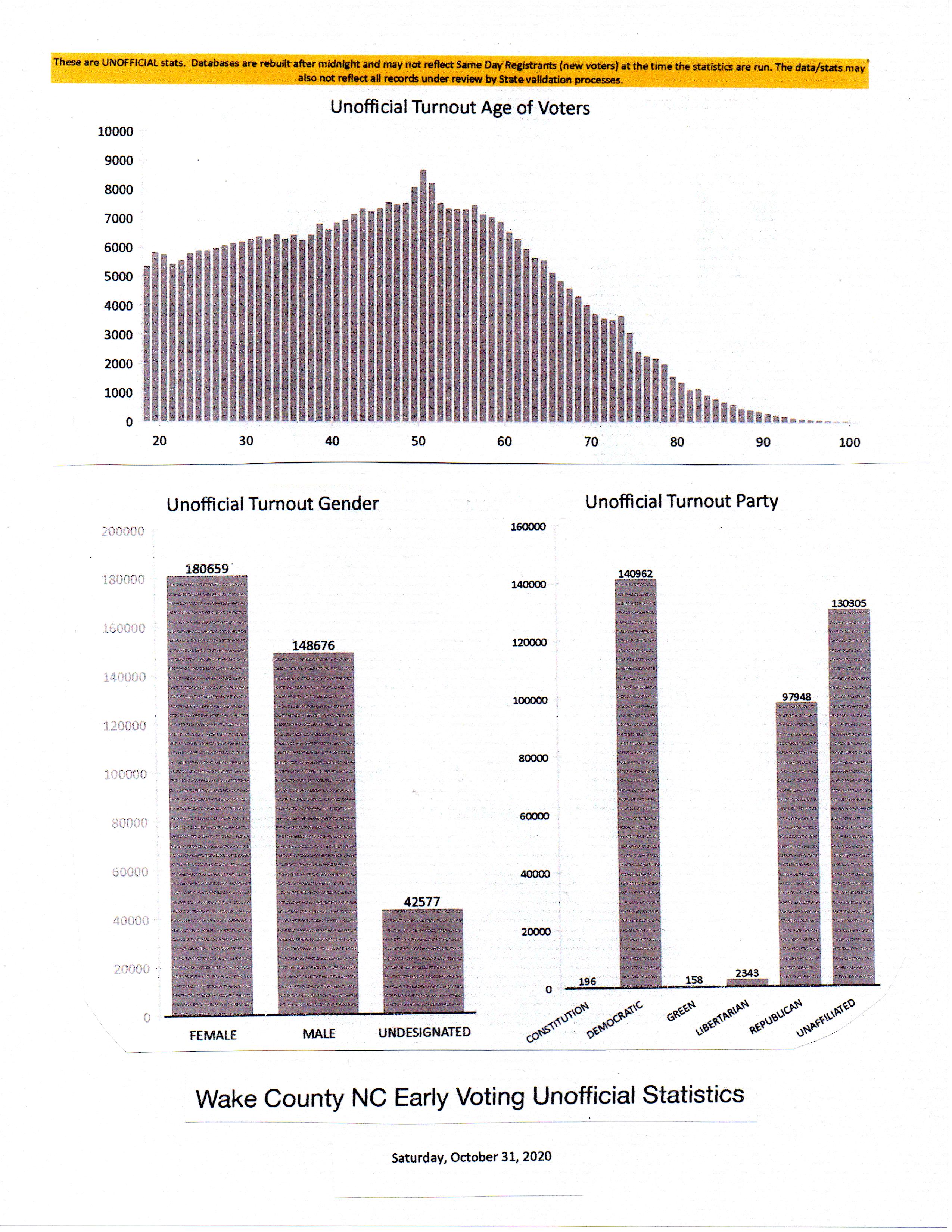
Fall brought additional complications, as jurisdictions tried to come up with safe yet inclusive ways to hold an election during a pandemic. Non-partisan election workers needed to be hired, trained, retrained, and/or retained as procedures changed, election boards jockeyed for adequate protective equipment and supplies, and the elder-skewed workforce from prior elections debated whether to risk possible infection by working in 2020. By election day, voter participation rates had surpassed records going back over a century. In our county, the proportion of absentee ballots quadrupled. 

It took what seemed like forever to ascertain a winner of the presidential race, amid delayed counts, recounts, and multitudes of court cases. The loser refused to concede, opting instead to allege massive voter fraud, unsubstantiated by anything other than his massively distorted ego. Thousands of his most avid supporters came to Washington D.C. on January 6. After he addressed a rally near the White House, some of them went to the U.S. Capitol to disrupt the certification of electoral college results. A few nearly succeeded. Their actions continue to roil our politics, just as the pandemic is starting to be dented by more widespread vaccinations and better compliance with public health measures, just as financial relief for the neediest works its way through Congress. 

It’s my fervent prayer that the next twelve months will seem less endless than the preceding twelve, that some of the underlying societal ills laid bare by the pandemic will be tackled with more than lip service, and that our understanding of our dependence on the natural world will deepen. A small answer and blessing blooms in a tree well near our townhouse—this year’s first daffodils. 

First daffodils, spring 2021
Trees Resting

Trees Resting  —by Jinny Batterson

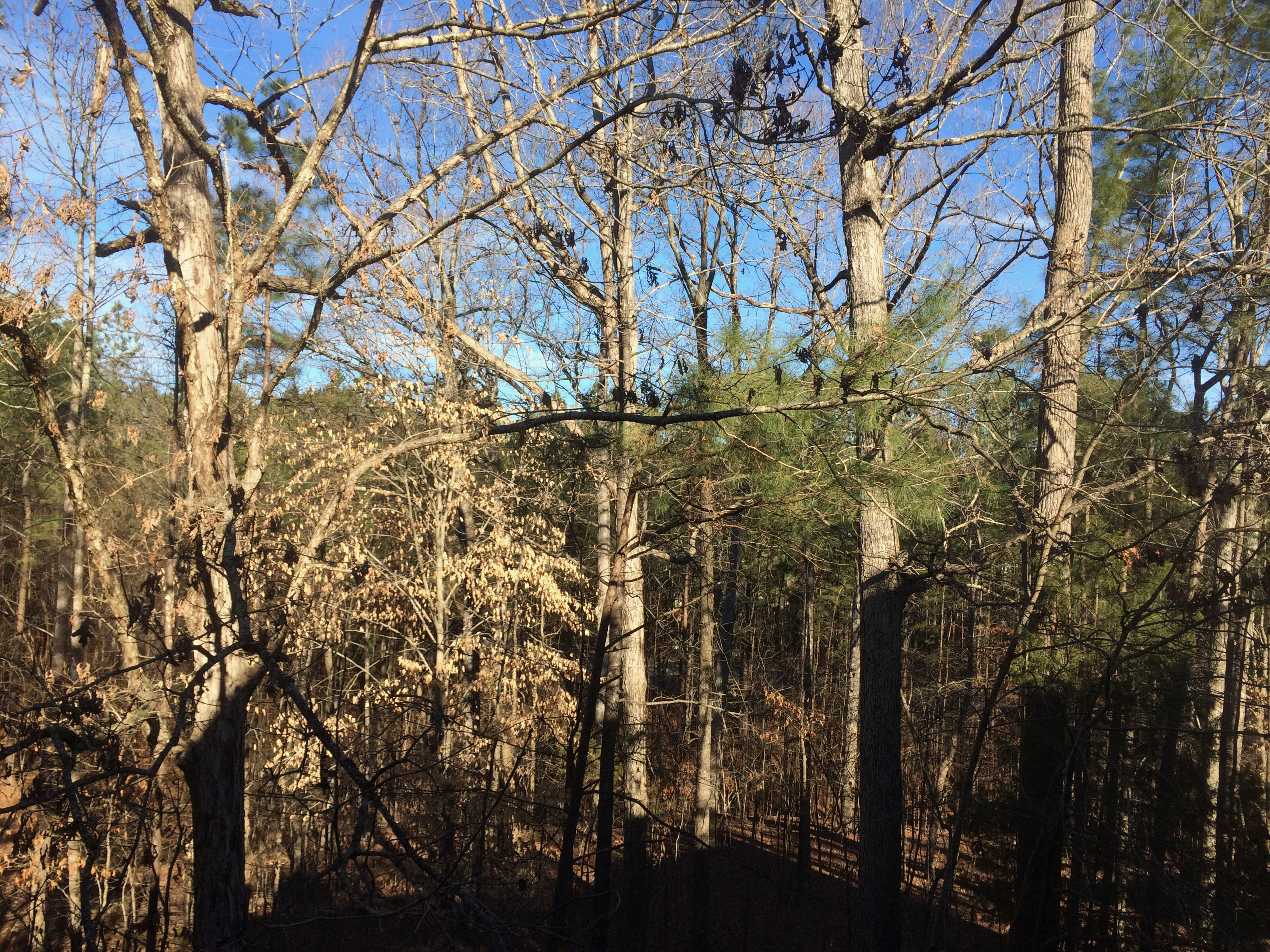
Behind our townhouse is a strip of woodland,
Too narrow and too steep to build on.

In warm seasons, its leafy expanse helps mute
The noise of the car and truck traffic beyond,
Helps disguise the bareness of our increasingly
Urban former small town.

In warm seasons, it diminishes the din of earth movers
Destroying woodlands a little further away–
Woodlands a little wider, less steep– gouging space
For more townhouses, apartments, or condos.

In this season, though, most of the leaves are gone,
Leaving just fringes of scrub pines drinking in
The diminished sunlight, leaving the dormant beech
To let last year’s bleached remnants flutter in the wind.

In this season, I hear and see the traffic,
Grate at the incessant “beep, beep, beep”
Of construction equipment nearby.

In this season, the trees are resting, saving up sap,
Rooting deeper in advance of the
Next set of warm seasons, when
Their new growth may again green the hillsides.

In this novel season of pandemic-enforced rest,
My dreams are sometimes dark.
On especially noisy days, I imagine a world
Without cars or condos or humans,
Only trees, resting.

                                              Trees resting

The Rest of the Story

The late 1960’s were a turbulent time, somewhat like the period we’re living through now. Starting in 1965, I attended a small liberal arts college in a mid-sized Virginia city. Through studies and socializing, I was exposed to professors and fellow students with a variety of backgrounds and opinions, some quite different from the prevailing views in the small Maryland town where I’d spent my first 18 years. Off campus in our college town, though, prevailing sentiments were every bit as conservative as those I’d grown up with. 

Sometimes as a break from my studies, I listened briefly to a local radio station. Usually I was just trying to catch a local weather report, but I often wound up exposed to all or part of a nationally syndicated news broadcast by radio announcer Paul Harvey (Aurandt). I don’t remember much specific content from Paul Harvey’s broadcasts, but I recall a general tone. In a 2009 obituary, his style was characterized as valuing “rugged individualism, love of God and country, and the fundamental decency of ordinary people.” Through my newly expanded collegiate lens, it seemed to me that Harvey was leaving out huge parts of the news—events and perspectives that did not coincide with his spin. I was learning of historic lynchings, seeing housing and employment discrimination firsthand, experiencing the escalation of the Vietnam war, noting the routine harrassment of minorities and women. None of this seemed fundamentally decent. I began to question the premises of Harvey’s perspective.  

A segment I often caught before the weather forecast was “The Rest of the Story,” typically a relatively unknown part of the life story of a famous person. One especially widely heard segment is about a high school dropout who applied in his early 20’s for an entry level job at the Swiss patent office and nearly didn’t get it. Not until the end of the segment are we told that “Al” may have suffered early life failures, but eventually went on to become world-famous as theoretical physicist Albert Einstein  

(for a rebroadcast, listen to https://www.dailymotion.com/video/x2v3sh1).  Part of the rest of Paul Harvey’s life story was a February, 1951 trespass onto the grounds of government classified research agency Argonne National Laboratory near Chicago for which he was never charged.  

These days I have a schizoid relationship with media. I need to stay informed; too often a media broadcast or internet post leaves me inflamed instead. It is very difficult to follow any news source for long without buying into some of its inherent biases. Images of a violent mob storming the U.S. Capitol are hard to ignore or stay indifferent to. Is there a rest of the story? Temporarily putting aside the role of Mr. Trump, what were the varying motivations that led some to become violent, others to remain as bystanders, and most of America’s population to stay away? Is there anything to be learned from the life histories of those who demonstrated, those who desecrated, those who tried to defuse tensions, those who attempted to report live as events unfolded? 

Few of the reports I’ve heard yet can provide much insight. Too often we get competing narratives that emphasize conflicting aspects of reality. About the only commonality seems to be that all of us are tense. 

We may never know the whole story. Imperfect, incomplete knowledge is part of the human condition. However, if we listen more and speak less, do the messy work of decoupling legitimate grievances from scapegoating and vengeance, insist on both accountability and mercy, we may learn more of the rest of the story.    

McCarthy’s Ghost, Slavery’s Ghosts, Learning All the Verses

I write this on the morning of January 7, 2021, after a 24 hours that tried American democracy in ways not seen for a while. Our electoral system has survived a challenge. Once an unruly mob was finally cleared from the U.S. Capitol, both houses of the U.S. Congress debated and then certified the electoral victory of Joseph R. Biden, Jr. to become the 46th President of the United States. However, challenges remain. Amid a global pandemic, social problems abound. The reputation of the U.S.A. as a beacon of democracy has been badly tarnished, if not destroyed.

I was born into a United States of America reeling from World War II plus the dawn of the nuclear age. My childhood was spent in the shadow of possible thermonuclear war. Our family lived close to Washington D.C.  A nuclear attack on the U.S. capital city would lead to our deaths—from the blast itself or more slowly from radiation poisoning. Nuclear danger from our postwar rival, the communist Soviet Union (USSR), was real but hard to gauge.

Postwar tensions had helped change the make-up of the U.S. Congress. During the early 1950’s, a first-term Senator from Wisconsin made headlines about the alleged presence of “Communist infiltrators” in American government and media. Joseph R. McCarthy’s initial list of possible infiltrators and spies grew, leading to the blacklisting of many left-leaning writers, artists and civil libertarians. In early 1954, hearings about McCarthy’s attempted meddling in the U.S. Army were broadcast on television, a TV first. The senator was shown, per multiple sources, as “bullying, reckless, and dishonest.” (See partial transcript, including Army Special Counsel Welch’s “Have you no sense of decency?” quote at http://historymatters.gmu.edu/d/6444/).  In retrospect, we realize that the distortions introduced by McCarthy made it more difficult to distinguish actual threats from malicious character assassination and misinformation. Later in 1954, McCarthy was censured by the U.S. Senate. Although he remained in office, his influence waned. He died of liver failure in 1957. 

One of McCarthy’s chief advisors, Roy Cohn, went on to mentor real estate developer and 45th President of the United States, Donald J. Trump, a master at social media. We still live with McCarthy’s ghost. Late yesterday, two prominent social media outlets, Facebook and Twitter, belatedly and temporarily deactivated Mr. Trump’s accounts. His posts had helped incite what became a full-blown riot and assault on the United States Capitol. He continued to spread false allegations about the election’s outcome.

Our country’s Declaration of Independence proclaims as self-evident that “all (men) are created equal, and that they are endowed by their Creator with certain unalienable Rights, that among these are Life, Liberty and the pursuit of Happiness.” We are taught from an early age to revere this founding document. What we are not taught, or taught only much later, is that about a third of the signers of the Declaration, including coauthor Thomas Jefferson, were slaveholders. 

We still live with slavery’s ghosts. The inherent contradiction between professed equality and the myth of white supremacy poisons our civic life. This past summer, widespread multiracial demonstrations against police brutality and racial injustice highlighted flaws in our criminal justice system. Since the outbreak of covid-19 related illnesses in the U.S., disparities in their impacts on communities of color have spotlighted lingering health and economic imbalances. Our education system’s attempts to adapt to remote learning further implicates the divides we’ve created in information access.

 I was brought up in a mainline Protestant congregation, taught the importance of loving our neighbors and ourselves. During the 1950’s at our small stone church, I was also exposed to lots of MAGA-style American exceptionalism and triumphalism. We frequently sang a hymn that I grew to dislike as I became a young woman, though its ghosts persist. It seemed sexist and militaristic and badly out of date:

Lead on, O King Eternal,
the day of march has come;
henceforth in fields of conquest,
thy tents shall be our home.
Through days of preparation
thy faith has made us strong;
and now, O King eternal,
we lift our battle song.

(In my initial interpretation, the third verse, about crowns and conquest and a mighty God,  seemed also to revert to militaristic themes.) 

What I much preferred was the second verse:

Lead on, O King eternal,
till sin’s fierce war shall cease,
and holiness shall whisper
the sweet amen of peace.
For not with swords loud clashing,
nor roll of stirring drums;
with deeds of love and mercy
the heavenly kingdom comes.

This morning I delved into the origins and evolution of this hymn. The lyric was composed as part of a seminary graduation ceremony, a rousing send-off for newly minted ministers. Ernest W. Shurtleff, its author, was among the graduates from Andover Theological Seminary in 1887. He served several American congregations before moving to Europe in 1905. From 1906 until the start of World War I, he was director of student activities at a Paris school. He then did war relief work in France until his death in Paris in 1917. Subsequent variations of the hymn’s lyric have adopted more inclusive language, such as one referring to the Biblical story of the exodus and “O Cloud of Presence.”  More recent interpretations make clearer that the “battles” Shurtleff envisioned were spiritual rather than temporal. (See a longer explanation in https://www.umcdiscipleship.org/articles/history-of-hymns-lead-on-o-king-eternal.)  

The inscription on Shurtleff’s tombstone ends with this summation: 

The path of the just is
as the shining light.

May we follow this light through whatever darkness lies ahead. May we react to yesterday’s travesties with outrage, yes, but also with deeds of love and mercy toward our neighbors and ourselves.  

NC Chinese Lantern Festival, 2020

This year, 2020, has been an unsettling year, burdened with more than its share of tragedy, leading up to a strange holiday season. As life got more constricted, large-scale gatherings fell by the wayside. Mid-autumn, our town announced that this year’s Chinese Lantern Festival, typically held during the shortest days of fall/winter in a large outdoor park, was reluctantly being canceled due to health and safety concerns. Bummer!  Another feel-good event fallen victim to the scourge of covid-19. 

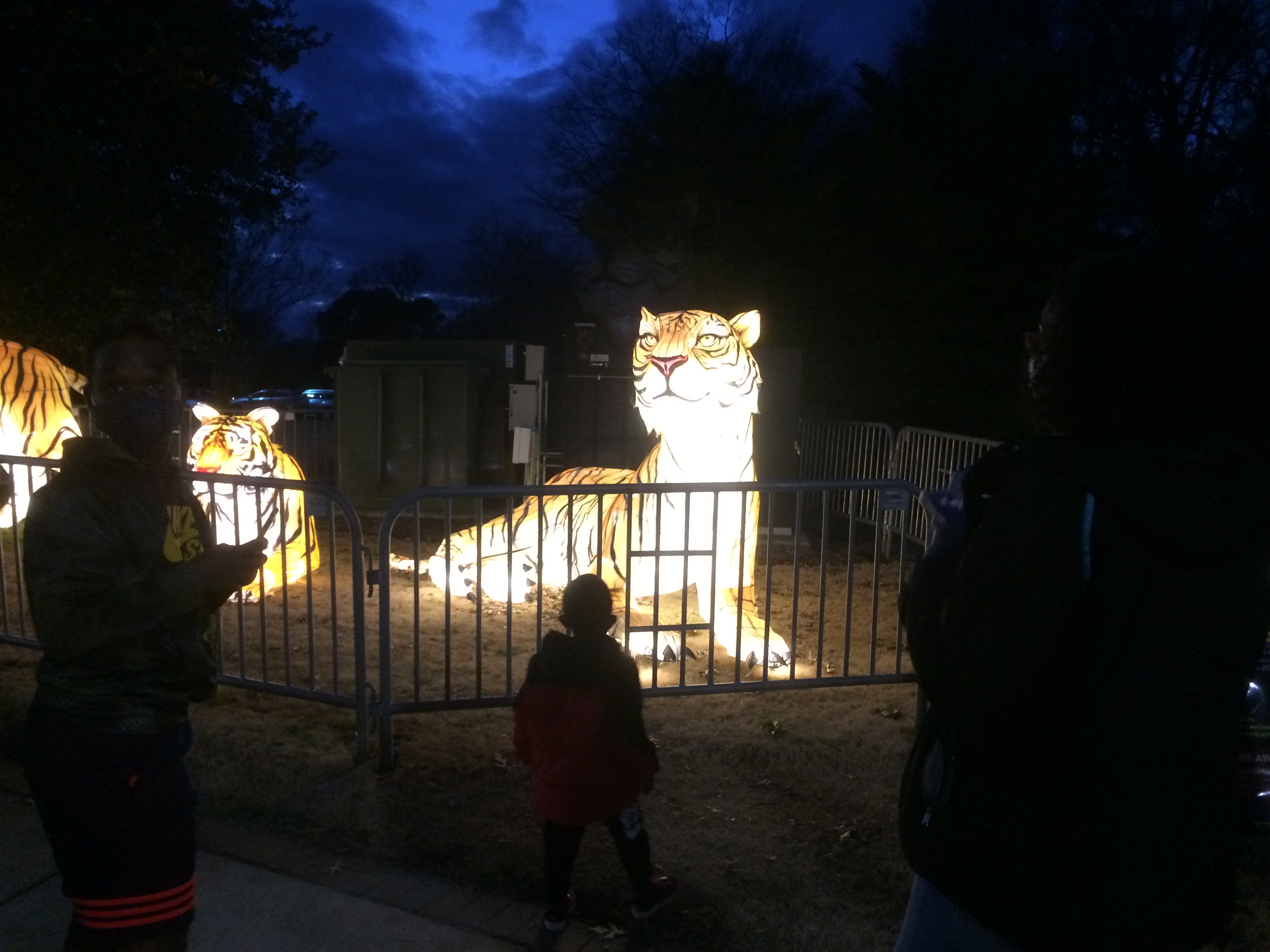
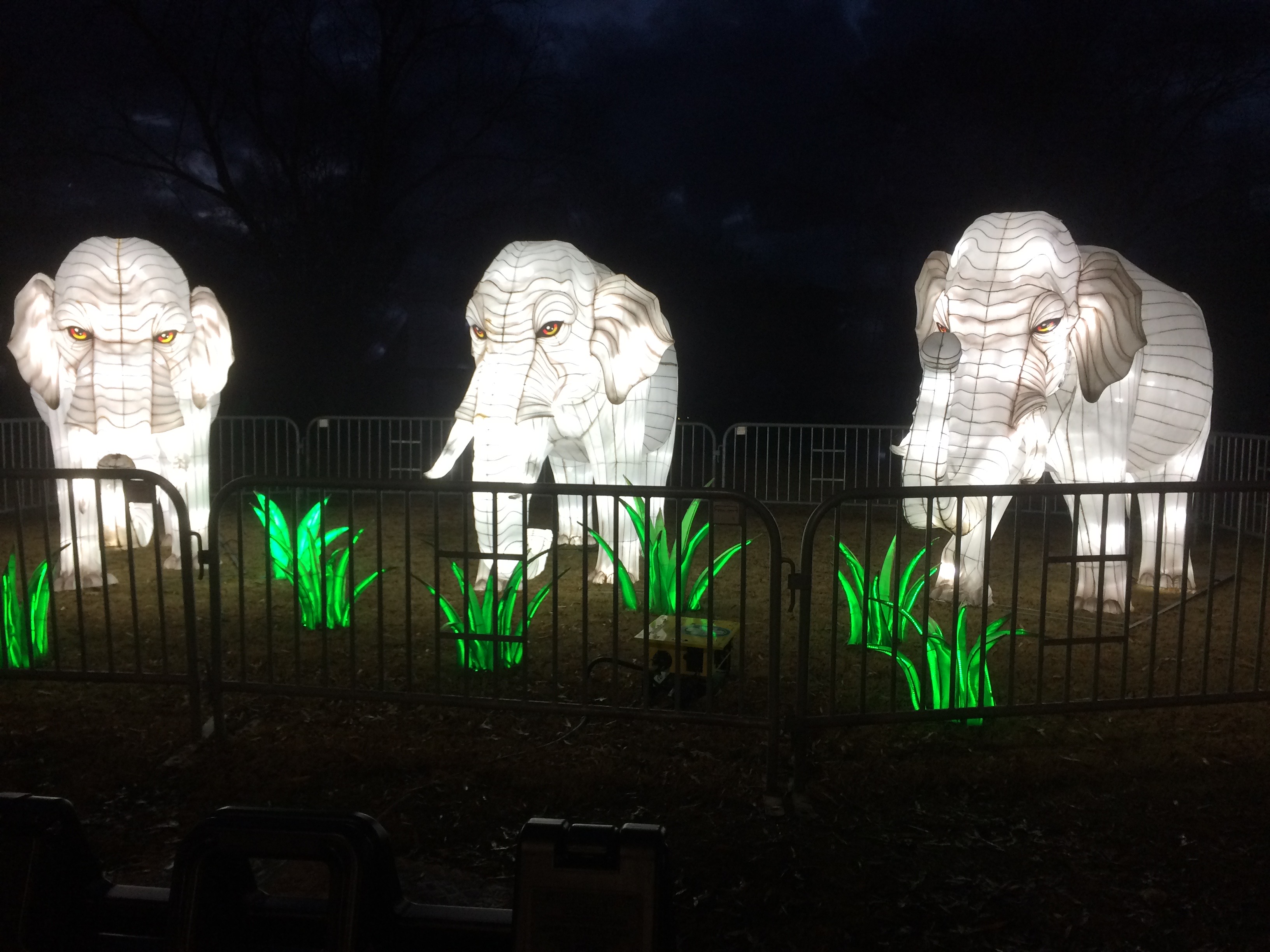
For several previous years, winter evenings in our part of North Carolina had been brightened by the display of an abundance of LED-lit silk lanterns. The many lifelike or fanciful figures were variations on the traditional Chinese lanterns fabricated in a small Chinese city where the craft of lantern-making is centuries old. A Chicago-based affiliate helped organize and provide logistical support for American exhibits, which focussed more and more strongly on depictions of animals.

In late November, I finally got a welcome glimmer toward a pandemic-adapted “new normal.” After eight months of closures or “take-out-only books,” our regional library reopened. The spacious structure, open only a year or so when the pandemic upended life as we’d known it, had incorporated health screenings and stricter limits on the number of patrons at any given time in order to operate safely. The second or third day after the reopening, I ventured downtown to the library, passed the screening questions and the temperature check, and got my first “fix” of in-person perusal of both fiction and non-fiction titles. As I walked outdoors nearby, I noticed that a small open space (where the old library had been) had a collection of inflatable figures, being blown nearly off their moorings on this windy day—a very scaled down holiday display. It was a week or so before I had a reason to venture downtown again—to return some books.

Lo and behold, the flimsy figures in the open space had been replaced by a display of well-anchored, life-sized silk elephants, with a sign saying they were part of a diminished Chinese Lantern exhibit. I vowed to come back after dark to see them in their LED-infused glory. The display (one of seven, it turned out) had been positioned in a way that minimized the dangers of close contact. It was adorned with cautionary signs about social distancing, maximum numbers of people, and mask wearing. One weekday evening in December, my husband and I met a couple of local friends for a socially distanced ramble to see all of the animals—elephants, tigers, a rhino, red pandas, a bear and a jaguar, snakes, and eagles. 

My husband, who keeps up with local news more closely than I do but doesn’t always remember details, thought he’d seen that the figures were “on loan” from a zoo in the Midwest. Once we tracked down an appropriate reference, we found that earlier in the year they’d been part of an exhibit at the Cleveland Zoo, so hadn’t needed to make the lengthy trip from Zigong in order to enthrall North Carolina audiences.    

My hope is that the holiday season of 2021 will find the pandemic finally in our rear view mirror. Our town then may again be able to host a full (and pricier) version of the lantern festival. However, I think it’s heartening that even this year, though the lights may have been diminished temporarily, they haven’t been extinguished. Merry Christmas! Happy New Year! Happy (upcoming) Year of the Ox!

Senior Crafting

some senior crafts old and new


more senior crafts

One Christmas when I was in elementary school, I was among many girls my age to get a potholder loom kit as a gift, probably from a non-resident aunt.  I spent part of that winter crafting multi-colored potholders from the loops provided with the square-shaped miniature loom. My mother graciously consented to use the somewhat lumpy things in her kitchen. (Mom was not especially fussy about equipment and accessories.) As I recall, the potholders were washable. They shrank only marginally once run through our wringer washing machine. Though the one I had in childhood has long since made it to the dump, such looms are still available for purchase. The next generations of potholder-makers may be getting some as holiday gifts.  

As I grew older, I learned to sew.  As a teen, I made some of my own outfits, stretching my limited clothing allowance. My grandmother taught me to knit, though I don’t remember knitting much except for an impatiently completed sweater for my then-boyfriend-now-husband that came only partway down his midriff. 

This holiday season, hubby and I are retired, locked down, with too much time on our hands and little social life. We’ve each discovered a craft outlet that fulfills some of our need to feel connected and useful: Jim decorates sets of garden pebbles, distributing them in area tree wells and along park paths; I make small “quilt-lets” and decorative fabric face masks. 

Previous generations of our families had different craft outlets. While doing this year’s minimal straightening and decorating for Christmas, I uncovered a few “potholders” from our elders—a crocheted afghan, some wooden candlesticks that my post-retirement dad turned on a lathe in his backyard wood shop, decorative tissue holders and toilet paper holders that my mother-in-law produced as part of a yarn crafts class. Perhaps “craftiness” is a skill set that lies dormant during the busiest parts of our lives, resurfacing once we have more leisure (certainly abundant in 2020!)

We may eventually need to downsize further, discarding or recycling yesteryear’s  “potholders.” For now, their quirks provoke curiosity: the uneven dimensions of the candle holders, the “squiggly thing” atop one of the toilet paper holders. I wonder if Dad got tired, after raising twins, of “matched sets” of anything, or if it was just difficult to get his raw materials to lathe into uniform shapes.  I wonder if Mom B., somewhat bored as she completed yet another tubular shape, decided to include on the top of a bird-sided holder, a sinuous brown and orange shape that doesn’t look part of the original pattern of concentric rings—maybe the worm that got away? 

The coldest days of the year lie ahead. We’re in for a few more challenging months while we await widespread vaccinations and the end to this pandemic. Perhaps our elders were wiser and craftier than we realized at the time—when times got tough, they got creative. Whimsy matters!