
During a recent extended visit to a part of Ohio where a grown son and his family live, I spent a few days of non-family time in the town of Wapakoneta. Created in 1833 from former Indian lands after the forced removal of remnants of the Shawnee tribe, Wapakoneta prospered in the 19th century as a railroad transit point for farm goods. Over time, it developed a range of local industries as well. “Wapak” still functions as a market hub along the I-75 corridor south of Toledo. As county seat of Auglaize County, it also conducts the business of local government. In addition, the town attracts tourism because of its most famous former resident, “first on the Moon” astronaut Neil Armstrong. At one edge of town, there’s a substantial museum to the U.S. space effort that culminated in Armstrong’s walk on the moon. Wapakoneta is justly proud of this hometown hero, who returned to Ohio after his NASA career. Armstrong lived out most of his forty-three post-walk-on-the-moon years in the state. On an earlier occasion, I’d visited the Armstrong Air and Space Museum and was impressed with its scope.
On this year’s Wapakoneta visit, though, I mainly wanted to spend some quiet time enjoying a slower pace of life and exploring other parts of town. I checked out the vintage downtown with its imposing 19th century buildings that now housed a variety of small shops and restaurants. Early in my stay, I had coffee and chocolate on one building’s back terrace overlooking the Auglaize River. Then I set out to explore.
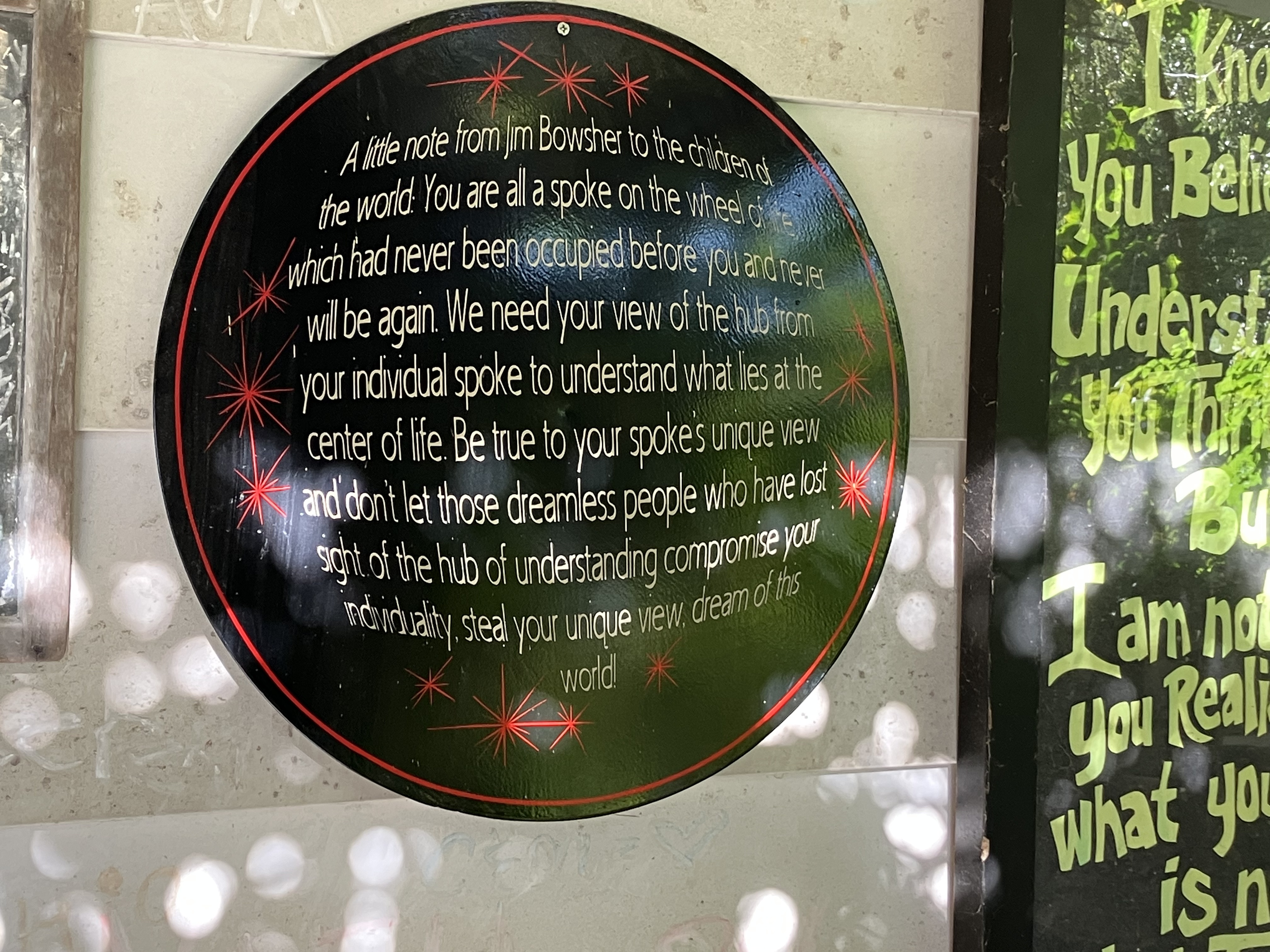
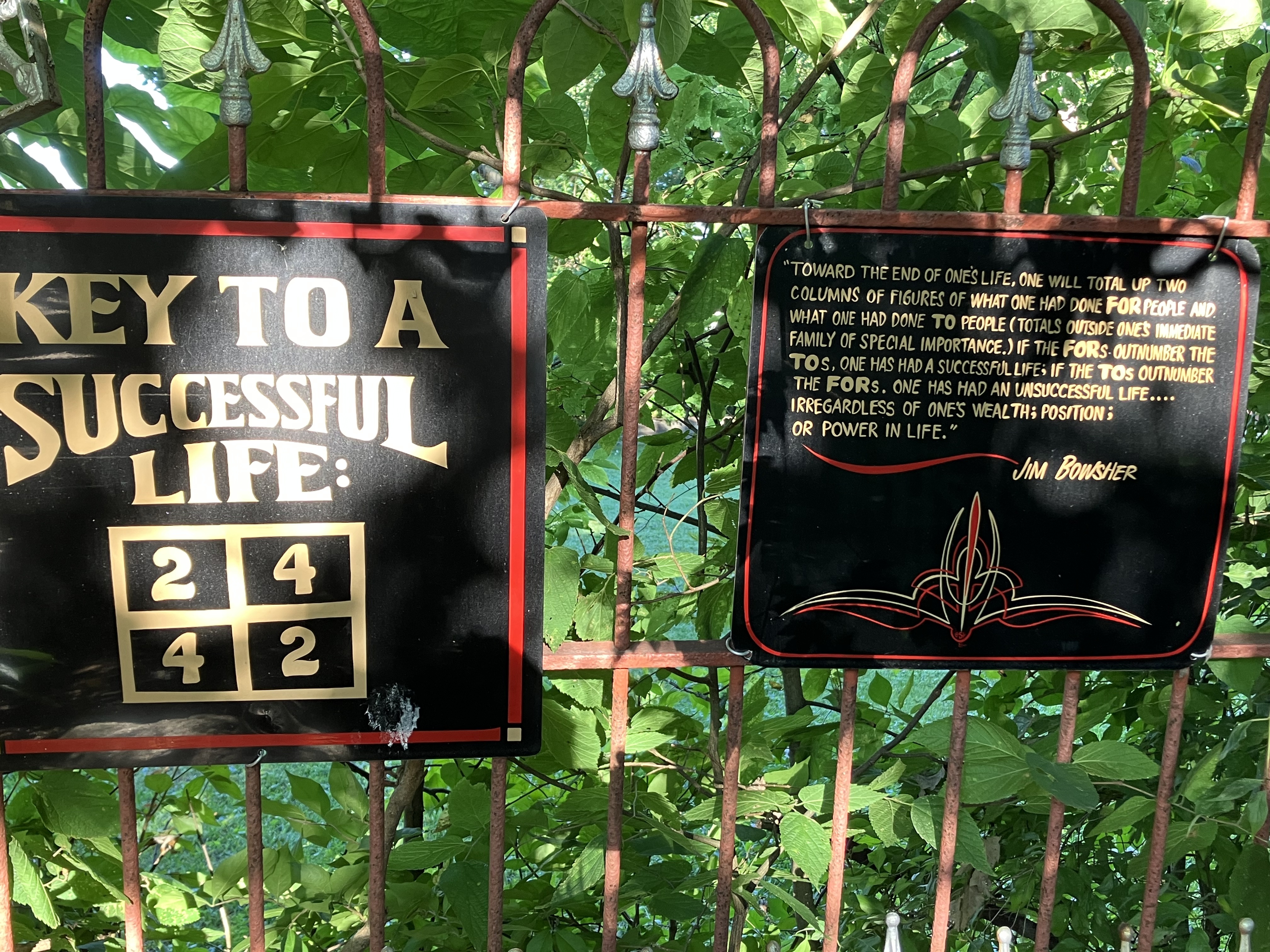
Not long before this Wapak visit, I’d come across a description of “The Temple of Tolerance,” an outdoor art installation created over a period of about twenty years, spearheaded by local historian and storyteller Jim Bowsher (see jimbowsher.com for overall photos). It took me a little while to locate the place, tucked behind a house on a quiet residential street. Bowsher’s “temple,” completed in 1999, has an international reputation but has fallen into partial disrepair following Bowsher’s 2024 death. The site is still open to the public, with a small donation box to help with upkeep. When I visited, a record-breaking rainy August had made some of the pathways through the elaborate site rather soggy. The weeds had sprouted faster than efforts could contain them. Still, the nearly 2-acre site had a reverent feel to it. There was ample evidence the place had not been totally abandoned. The site contains more than 100,000 pounds of massive cataloged field rocks, glacial boulders, and historical artifacts. How anyone could have had the stamina and vision to assemble some of the massive stone constructions was a wonder. Still, I was most impressed by a few placards that looked hand lettered, describing Bowsher’s attitude toward life.
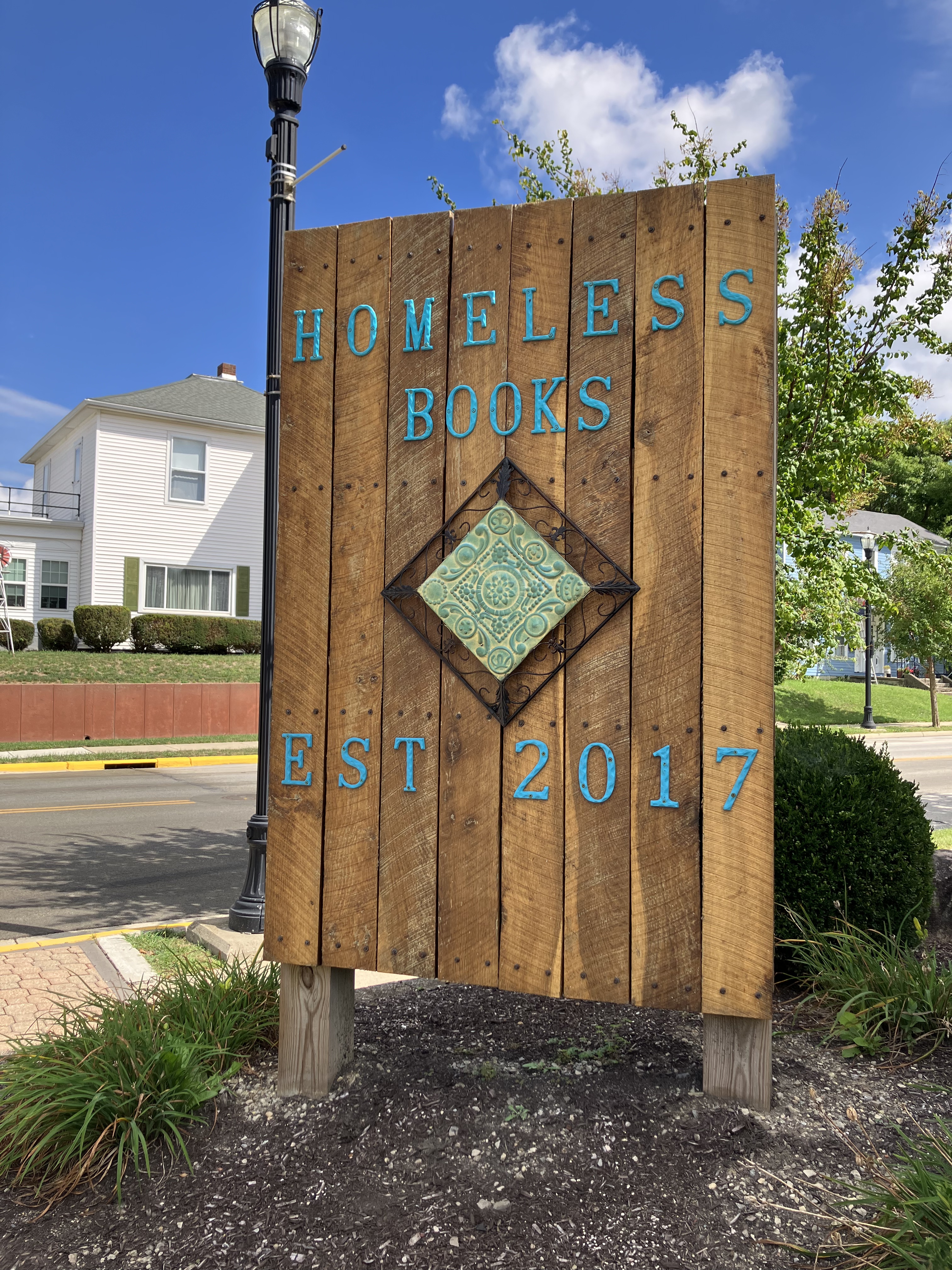
Another day as I walked through an area near downtown, I passed a modern single story building with an outdoor rustic sign announcing “Homeless Books, established 2017.” I’m a part-time writer and an avid reader, a big fan of book stores, large or small. Intrigued by the sign, I checked for its opening hours—only Sunday afternoons or “when the open sign is up.” I was there on a Tuesday, with no prospect of being around until the following Sunday. It seemed possible the shop would remain a mystery. However, I figured there might be ways to find out more. The next day, I was able to locate a contact phone number for the store. The owner picked up and gave me time to state my purpose in calling. Once I’d given my name and identified myself as a fellow book lover from outside the area, she seemed willing to talk further.
Unfortunately, the owner told me, I’d missed the Sunday afternoon time slot, the only time during the week when the store was now regularly open. However, she’d be at the site later that afternoon to do some work on the building. She’d be glad to give me a quick tour.
I wondered, what kind of book store can possibly make a profit if it’s only open one afternoon a week? Turns out, the “profit” Frances Springer was interested in wasn’t expressed in money, but rather in encouraging reading, literacy, and curiosity among the people in this largely rural county. I only learned a small part of the Homeless Books story in my brief visit, and hope I have represented it accurately here:
Frances had grown up in the area and was always interested in books. However, as a somewhat slow reader, she couldn’t always finish the books she got out of her local library before their due dates. As she grew up, she nourished the dream of later creating an environment where other readers, whether fast or slow, would have access to books without having to worry about a due date. What started in 2017 as a small, mobile operation serving rural readers later found an additional home in the building I’d happened upon in Wapakoneta.
Frances stressed that what she was running was not a traditional book store, nor was it a traditional library. “You do not have to turn books back in,” she told me. “You do not have to be quiet.”
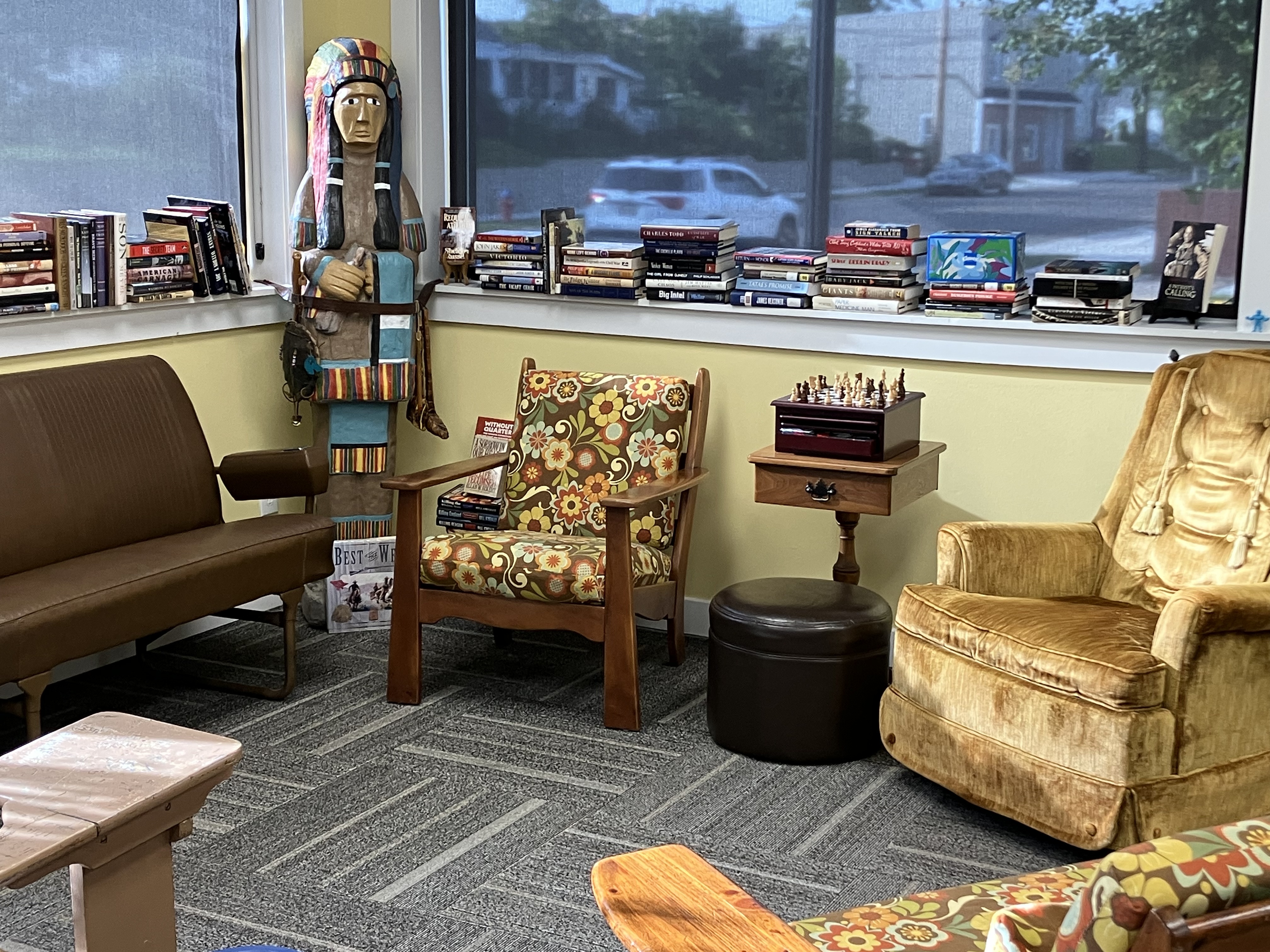
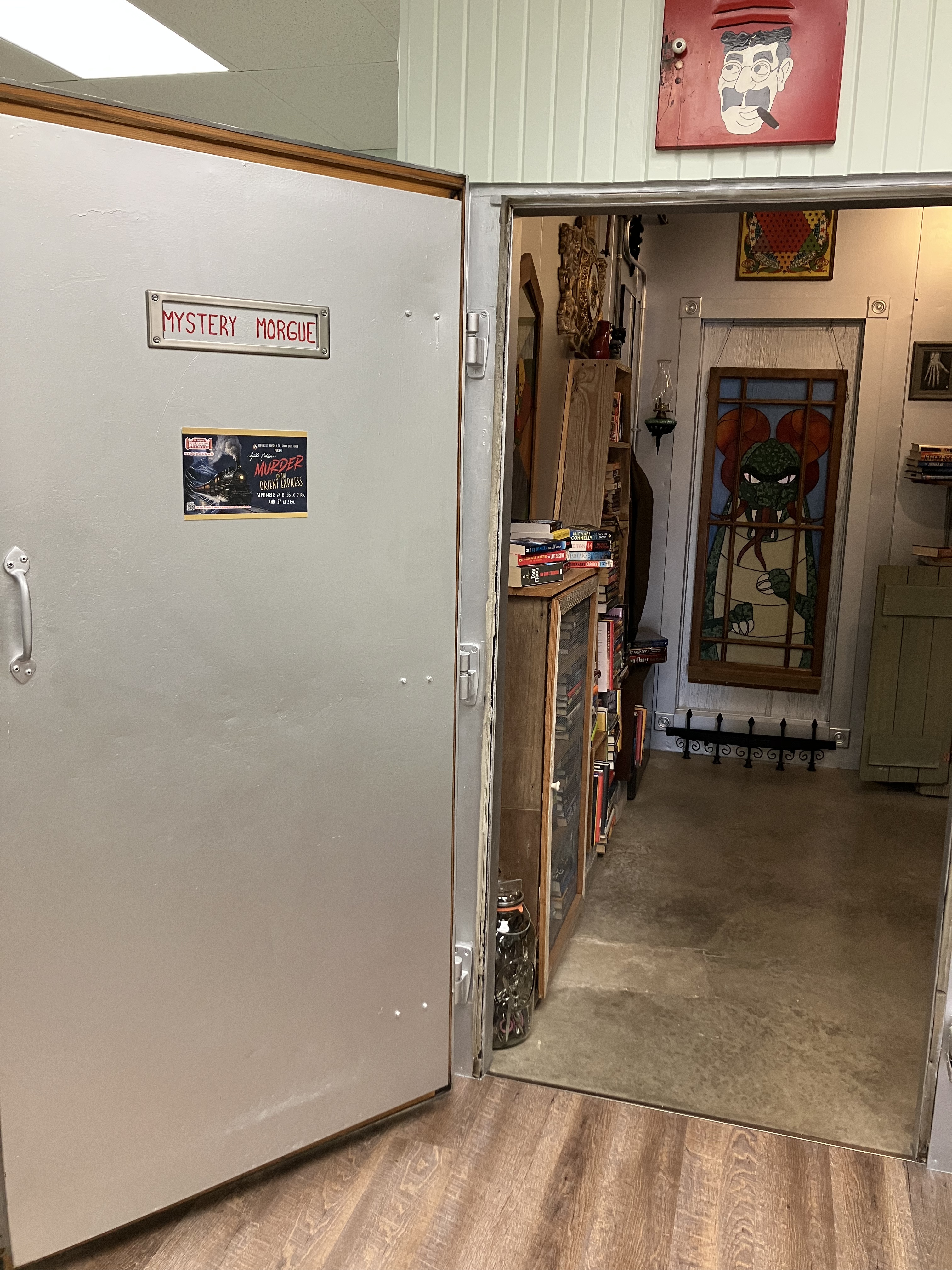
She runs the small, local operation using donations of books, furnishings, and volunteer time from area residents. Sometimes she also gets small infusions of cash. She puts in multiple hours each week collecting, preparing, and organizing the books and keeping the shop’s space welcoming and accessible. There are areas for certain kinds of books—the mystery section is in what used to be the “cooler” when the building was a flower shop—but there’s no strict organization. You might find two seemingly unrelated items right next to each other on a shelf or table.
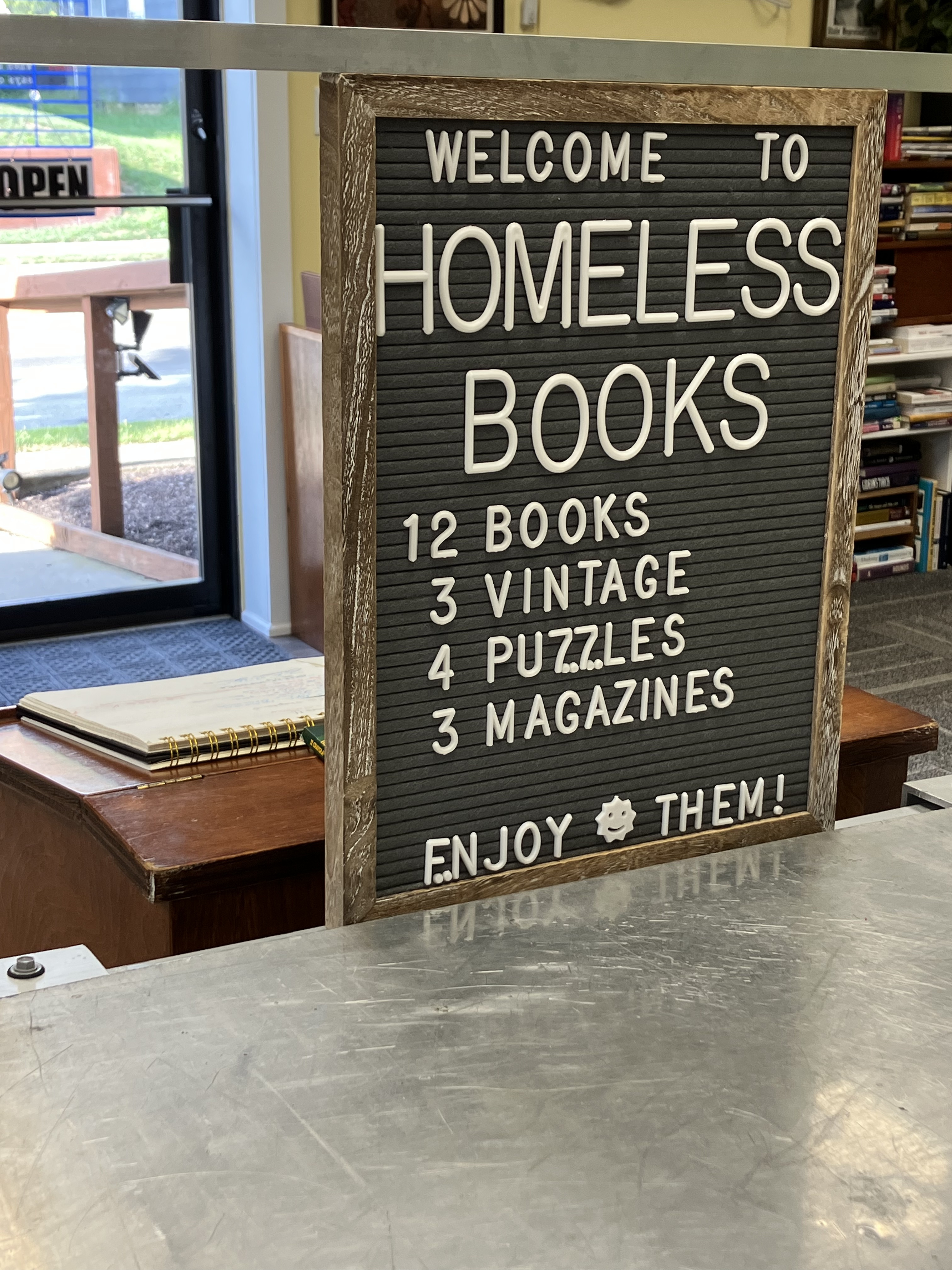
Frances told me that news of the existence of her shop and her educational mission gets spread mainly by word of mouth, though she has a small online Facebook presence. On a recent Sunday, she had over a hundred visitors at the Wapakoneta store during the four hours the shop was open. Frances does what she can to discourage commercial use of her inventory. She has a hand-printed flyer describing the purpose and limits of her operation. The quantity of books, puzzles, vintage books, and magazines available for the taking varies depending on the store’s inventory. When I visited, there was an abundance of material, so limits were accordingly higher.
Homeless Books was certainly a place I’d enjoy spending part of a Sunday afternoon. I came away with six books, a puzzle, and a magazine, most to be redistributed to family or Little Free Library locations before I crammed my suitcase for the plane ride home.
I was very glad to have had a glimpse of Frances’s unique “business model.” I hope to convey some of its magic now that I’ve returned to the more urban environment where I usually live.
= = = = = = = = = = = = = = = = = = = = = = = = = = = = = = = = = = = = = = = =
When I’d opted to spend a few days in Wapakoneta, I expected to find plaudits to Neil Armstrong, along with memorials and tributes to the numerous Wapakoneta residents who’ve served honorably in our nation’s military. What I didn’t expect was my exposure to two other “hometown heroes,” people whose mission was neither outer space nor the battlefield, people who wanted simply to nurture our shared humanity. Bowsher and Springer, each in their own way, have tried to make their hometown a more welcoming, more inclusive place. I’m much the richer for their efforts.

