While Waiting for the Fever to Break

(October 24 is celebrated as “United Nations Day,” 
commemorating the entry into force in 1945 of the U.N. Charter, whose text can be
referenced at https://www.un.org/en/about-us/un-charter/full-text)

While waiting for the fever to break,
I apply cold compresses and administer aspirin,
trying to remember not to exceed the recommended dose.
I pray, and pray, and pray some more.
I tell others and myself “I love you,” over and over, fervently.
I hum lullabies and songs of peace.
I crave quiet. I shy away from news and opinion.

While waiting for the fever to break,
I try to damp down feverish attempts to “make the world safe,”
be they my own or others’.
I search to find and support more measured changes toward
whatever the world wants to become.
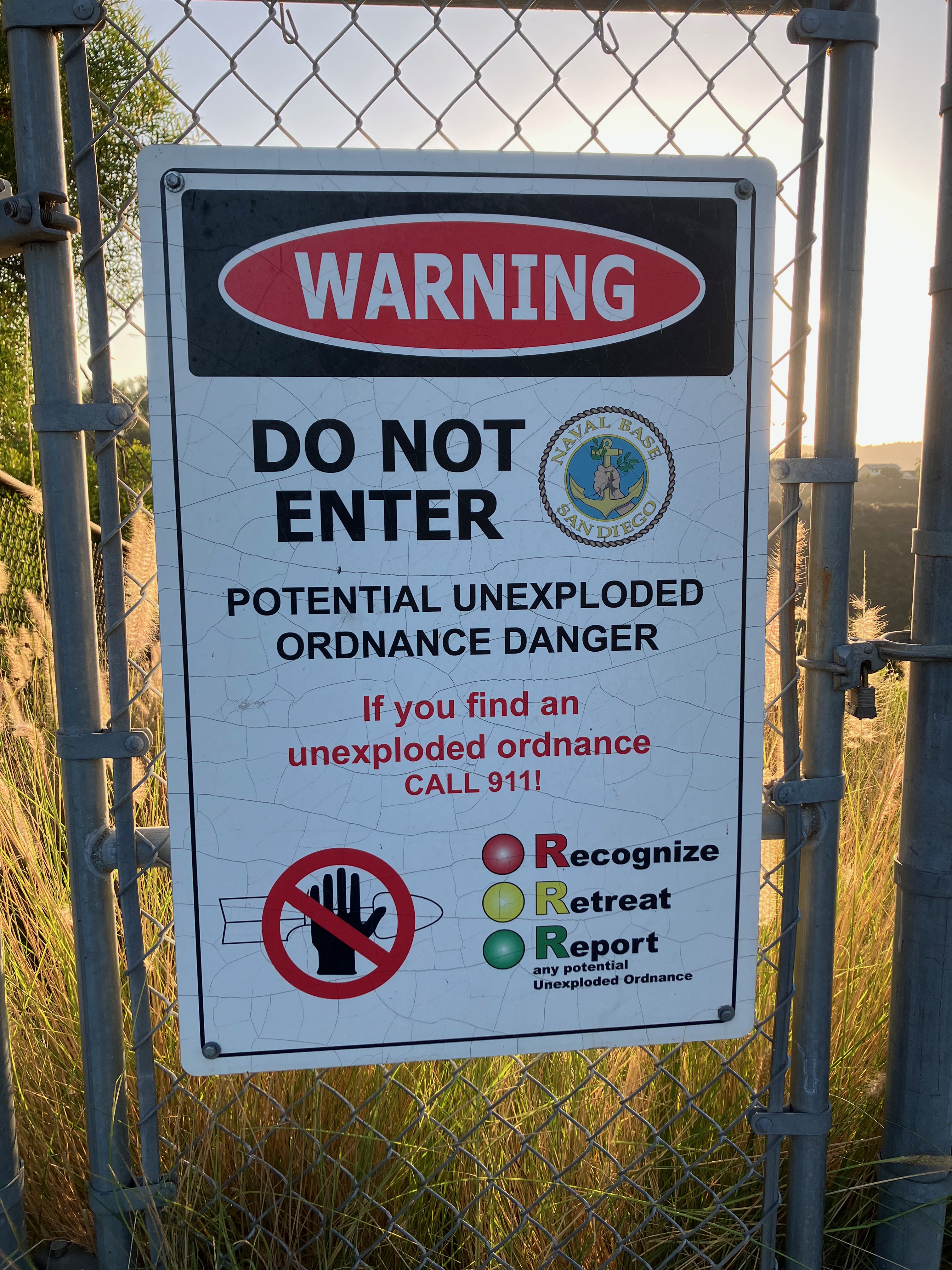
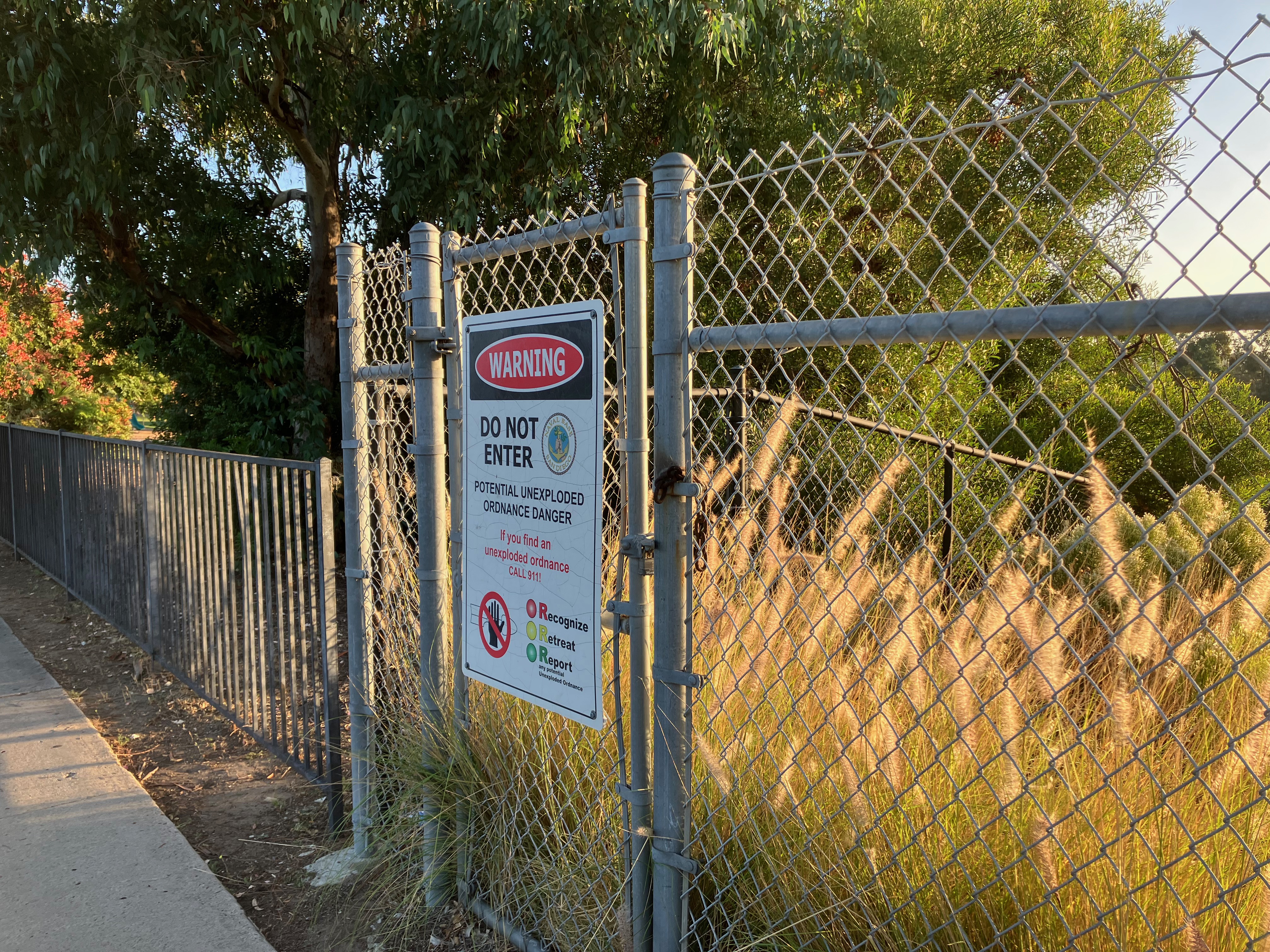
I meander around the nearby detritus of prior conflicts, wondering at the
residual scars.
I gravitate toward the small patch of cleared ground where a group of us is
learning organic gardening.
Well before dawn, jarred awake by a buzzing phone, I ask the still-dark sky for wisdom.
The stars shine an answer, one I’ve too often forgotten:
“No one is an absolute owner; we are all, rather, temporary stewards.”  

Different Fall Colors

In my small corner of southern California
Autumn is rarely aflame in bright colors
(Unless there are wildfires).

The sycamores lining our street fade to sickly yellow, 
Then gradually drop brown, crunchy leaves.
Many of the other trees stay a dull green.

So I’m heartened that our landscapers
Have chosen not to trim the bushes
Around our front walkway, not just yet.

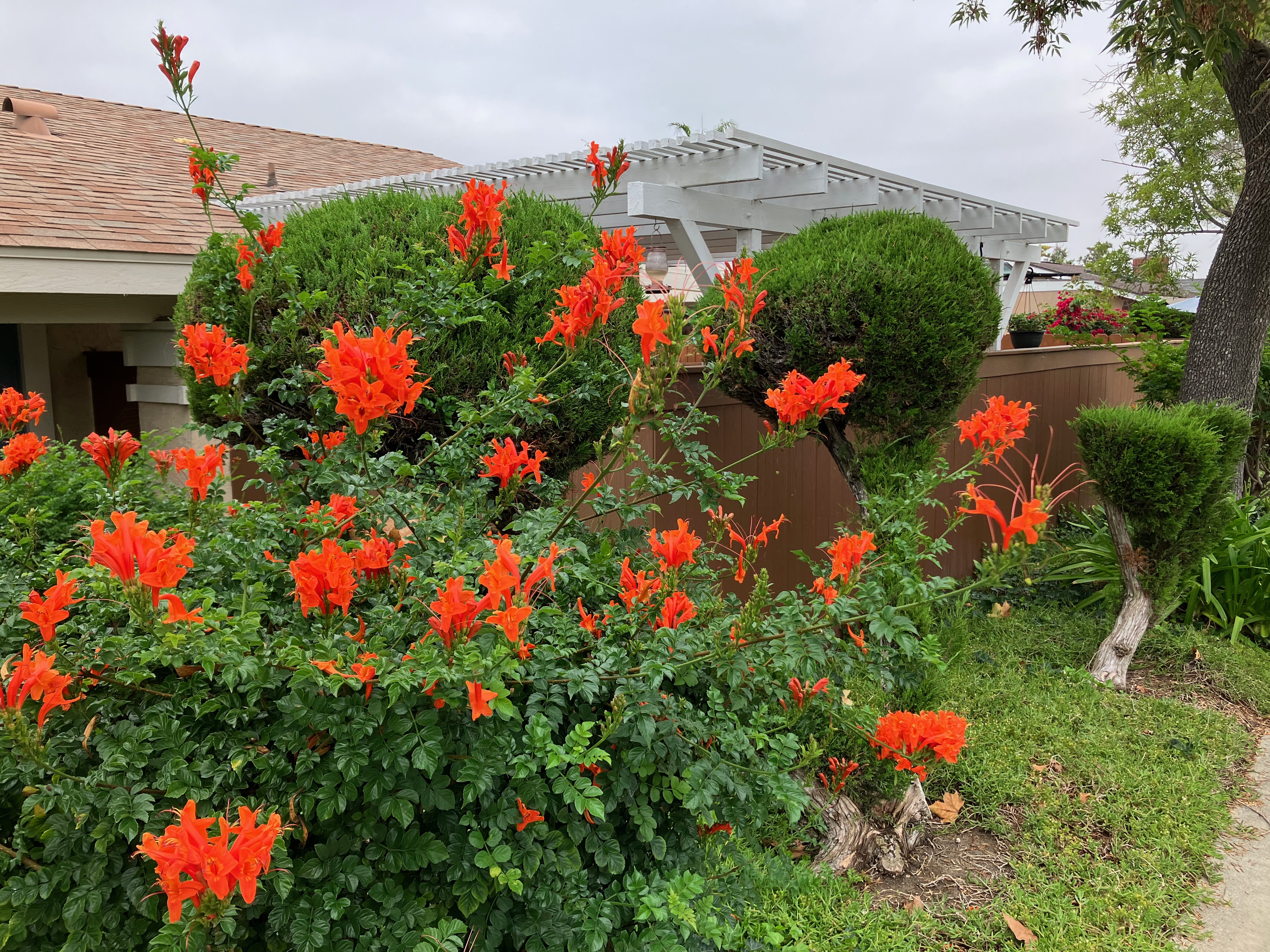
Instead, they’ve left untouched the orange
Blooms that erupt on unruly spikes,
Beloved of area hummingbirds and bees. 

Later, when the rains come (if they come)
Trimming will again recreate the squared shapes
That let us imagine a well-ordered world.

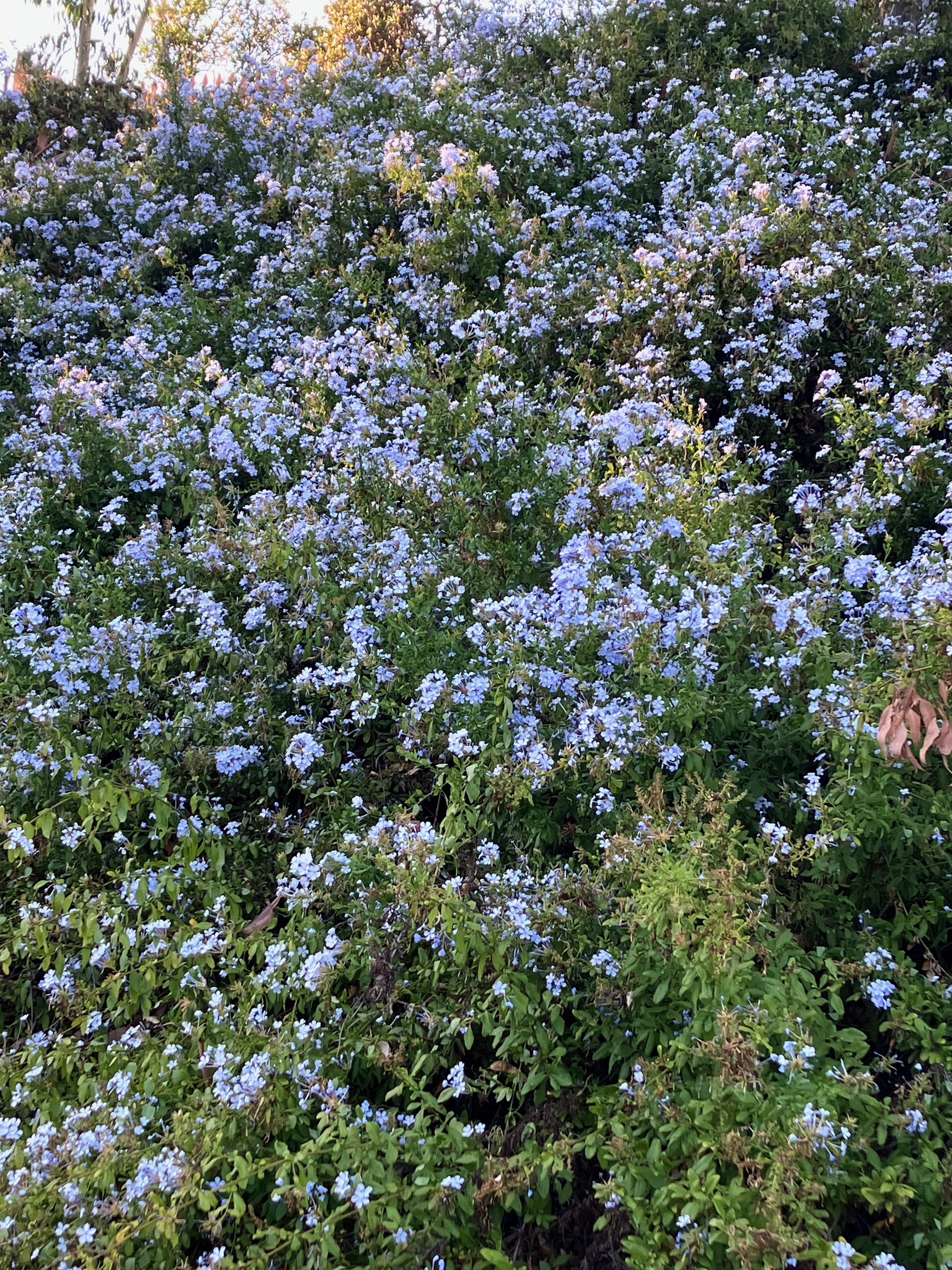
Elsewhere, in the canyons, bushes that
Conserved their energy during the longest
Days now pulse with pale blue flowers.

Learning the seasons of each different place
Requires patience, and a willingness to
Renew our wonder at this varied, vibrant planet.

Tangled Missions

Strung like beads near California’s coastline,
they are remnants of earlier Spanish settlement.
In some places abandoned, at others almost frenetically active,
they speak to the tangled history of our area.

Following Columbus, Spanish explorers and soldiers
took hold in the southern and western parts of
North America, eventually becoming “New Spain.”
At its height, Spain’s colonial empire spanned three continents:
parts of North and South America plus islands in Asia.

Physical mission settlements were a later offshoot, 
founded during the late 18th and early 19th centuries
by Franciscan missionary brothers who sometimes supported,
sometimes contested the soldierly establishment.

Politics and religion got further entangled—when Mexico gained
independence from Spain in 1821, some missionaries
returned to Spain voluntarily. Others were expelled.
Over time, most mission lands were gifted to wealthy
Mexican families. Mission buildings fell into disrepair.

Following a war, a gold rush, and further immigration, California
gained U.S. statehood in 1850; in 1861, the United States fractured.
During the period of the U.S. Civil War, some missions
again became church property. Some church buildings got rebuilt.
Some religious orders returned. Schools were started. 

From San Diego to Sonoma, with mission sites a long day’s walk between,
these twenty-one enclaves along the Camino Real commemorate
our confused and confusing history–no universally good or bad guys,
no historically consistent ownership. Indigenous people sometimes
benefited, but sometimes were burdened by disease, maltreatment,
even slaughter. Crosses now stand sentinel. Bells ring a reminder:
Few of our missions are ever neat or complete.

postcard of California’s missions

California missions (from north to south): 

Sonoma, San Rafael, Dolores, San Jose, Santa Clara, Santa Cruz, San Juan Bautista, Carmel, Soledad, San Antonio, San Miguel, San Luis Obispo, La Purisima, Santa Ynez, Santa Barbara, San Bonaventura, San Fernando, San Gabriel, San Juan Capistrano, San Luis Rey, San Diego. 

Hibakusha

Today, August 6, marks another anniversary of the dropping of an atomic bomb on the Japanese city of Hiroshima in 1945. This August 6, the war between Russia and Ukraine drags on, with periodic threats of deliberate use of nuclear weapons by the Russian military or of possible nuclear disaster at the vulnerable civilian nuclear power plant in Zaporizhzhia, Ukraine. In the U.S., summer release of the film “Oppenheimer,” about one of the physicists who helped develop the first nuclear weapons during World War II, has also reinforced our uneasiness about the possibility of nuclear catastrophe. 

A number of years ago, I had a chance to meet and to listen to a “hibakusha,” a Japanese term for survivors of the nuclear attacks on Hiroshima or Nagasaki. The older woman I heard at a backyard barbecue in New Jersey was petite, exceptionally well-groomed, but nonetheless visibly scarred. She was passionate about the necessity of reducing the likelihood of further nuclear warfare. 

She had been a young teenager in Hiroshima when the bomb was dropped. She and her schoolmates had been conscripted to work part-time folding parachutes at a war materials factory. As allied troops closed in on Japan in 1945, even young girls were recruited for the Japanese war effort. Whether this woman had been an “innocent victim” of the carnage may therefore be somewhat open to question. However, whether nuclear weapons should ever be used again should not be open for debate. 

The woman I heard has probably died by now. The number of living hibakusha is dwindling. According to the most recent count in Hiroshima, taken in 2021, the average age of survivors was 84. During a spring 2023 summit of G7 industrial nations held in Japan, some of these survivors made the effort to present their stories.

For 84-year-old Toshiko Tanaka (six at the time of the blast), one of her most vivid memories from that time was the smell of burning corpses in the days after the explosion. The authorities had started cremating the bodies of those who died.  “I was traumatized,” she says. “All my friends from school died and for a very long time I couldn’t speak about what happened.” 

It can be too easy for those of us not directly exposed to the horrors of nuclear warfare to become complacent about the likelihood of a recurrence. It can be hard to figure out how best to articulate opposition to nuclear proliferation, to nuclear arms races, to the sheer inhumanity and indiscriminate slaughter wrought by this sort of weaponry. 

May we continue to listen to the hibakusha; may we continue to develop more effective ways to reduce the chances of creating any more. 

Pre-Dawn Breezes

Another day of late July swelter in southern California.
News brays out temperature records tied or broken.
I turn off the TV–conserving both electric and psychic energy.
Just before sunset, evening cools to tolerable levels.
I go outdoors, briefly sharing the patio with pesky mosquitos.
Then fairly early to bed, after opening all windows wide.

I awaken to artificial light from the alley,
Nature still full dark. Mostly quiet.
Nearly a mile away, a few trucks downshift
On the uphill grade of the nearest freeway.

Later, an early-rising human roars by on his motorcycle.
In his wake, an early-rising bird begins tuning up.

The pre-dawn air is cool. A beneficent breeze through
My bedroom window wafts me back toward slumber.

Perhaps another record-setting hot day on tap.
Grateful for indoor shelter, for cooling fans,
I luxuriate in bed a little longer.

In a while, I’ll rise to greet the dawn.
For now, the breeze brings its pre-dawn greeting.


San Diego Early Summer Blooms, Some Imported

A somewhat delayed start to summer—
Gloomier than typical for much of June.
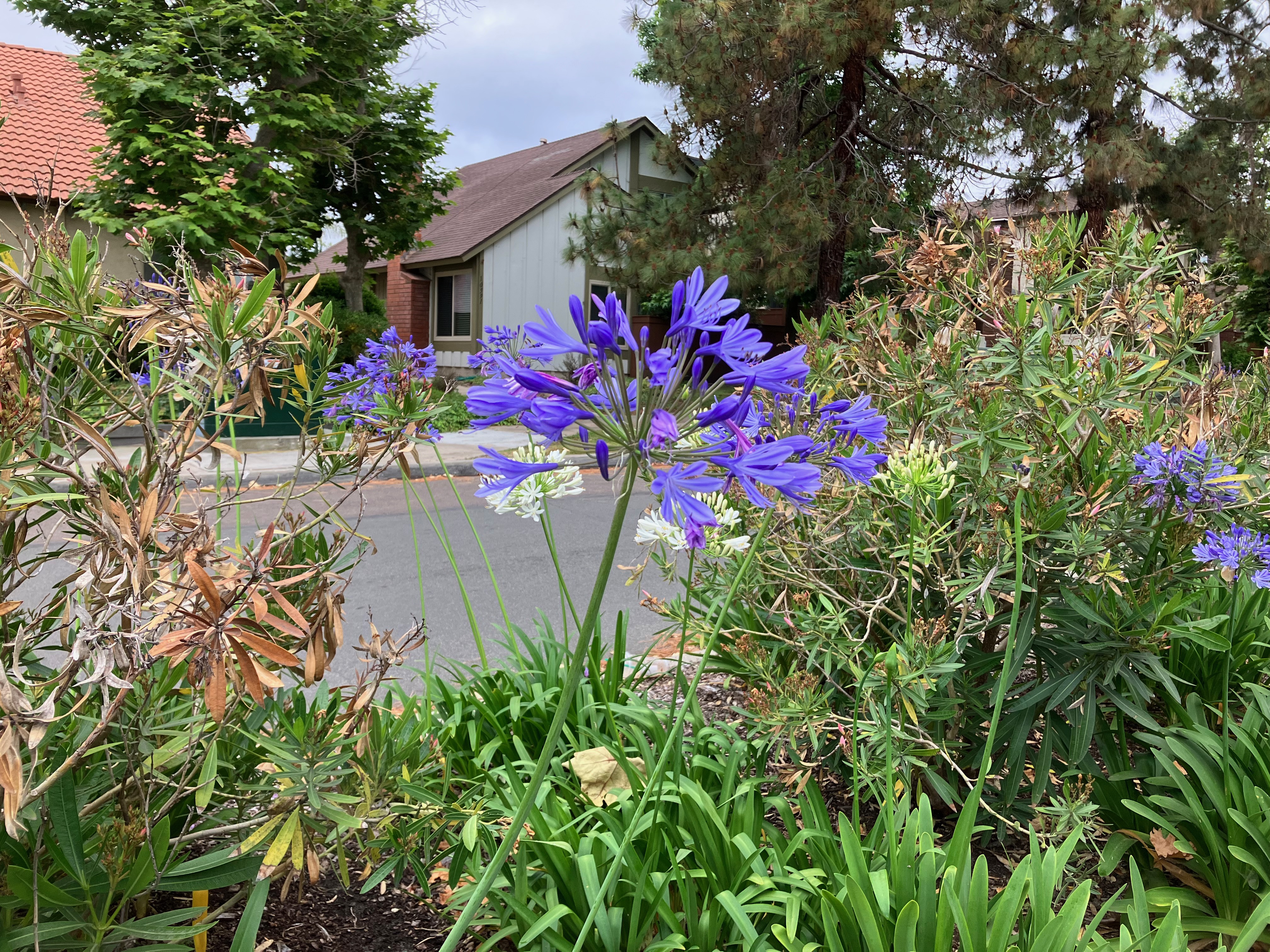
Finally, though, tall bursts of blue or white flowers
That last year were fully open before school let out.
This year, the agapanthus blossoms
Have mostly evaded being snapped off by
Pedestrian high schoolers.
Per a quick internet search, they’re popularly called
“Lilies of the Nile,” even though endemic to a limited swath
Of South Africa, a thousand miles from that river’s sources.

blue and white agapanthus

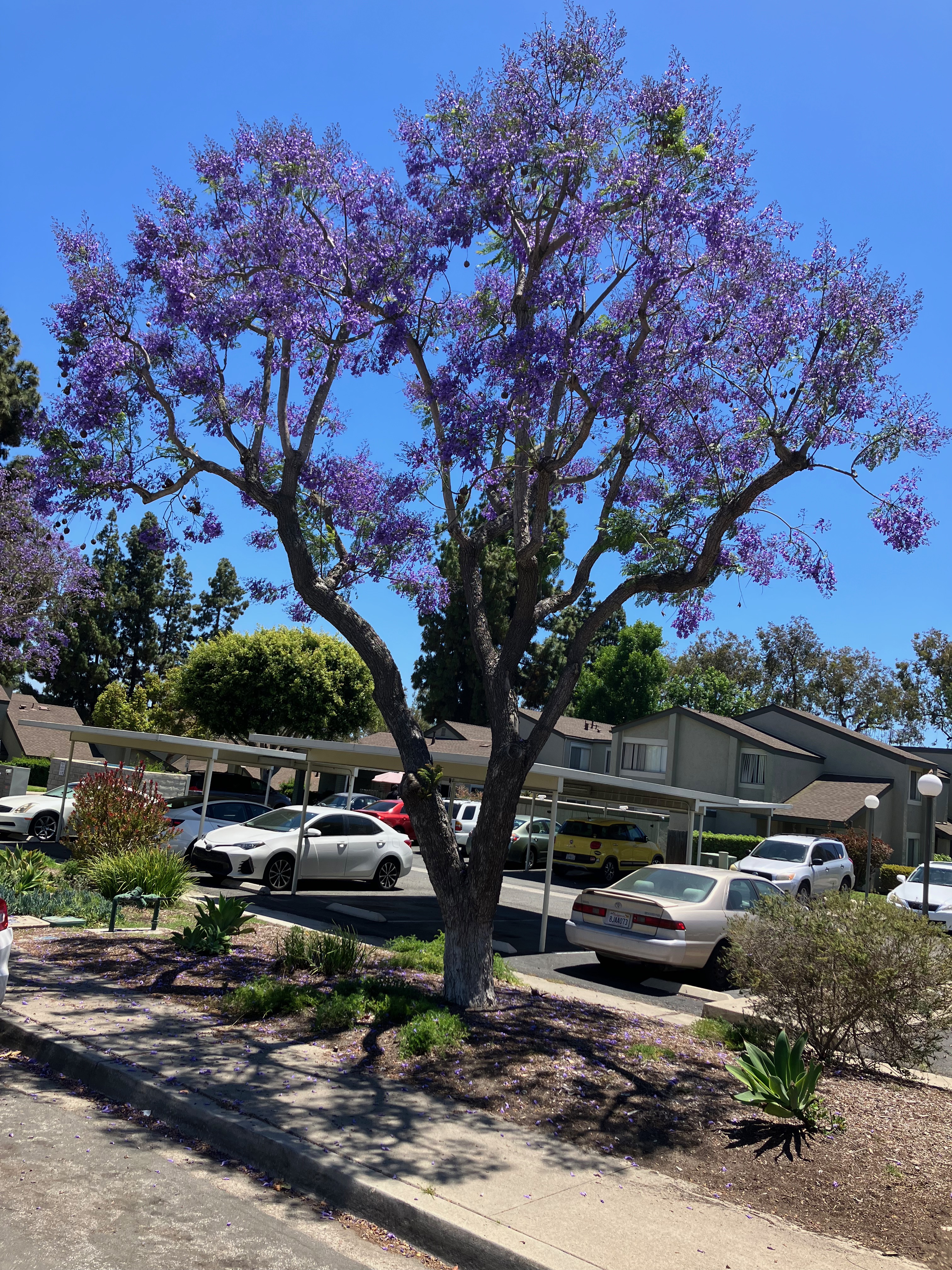
Higher up in the canopy are clouds of fleeting violet: 
Jacaranda blooms. These plants originated in Central America,
Perhaps carried northward by nurserymen, or by birds or small
Mammals. Our avenues are briefly awash in blooms
That will give way to leaves later in the season.

jacaranda tree

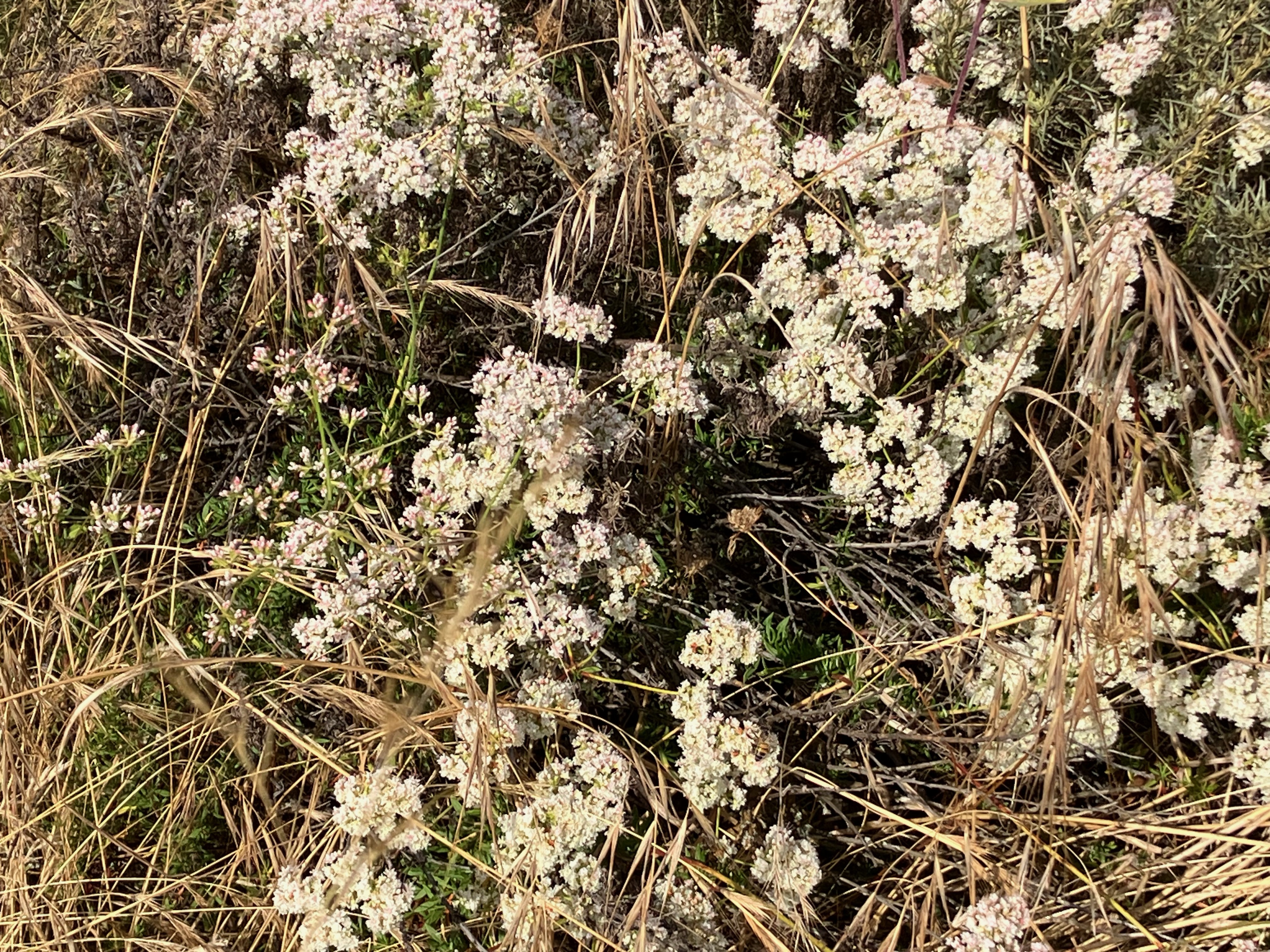
In less cultivated parts of the area, along canyon paths,
Thrive smaller, humbler sets of flowers–California buckwheat.
They start out white or off-white, darkening to chestnut brown as
The months unfold. Native to the region, they provide
Nourishment for small animals, nectar for pollinators,
Erosion control after the scars of human intervention.

California buckwheat in bloom

In the councils of plants, how silly can seem
Our conceits of imports, natives, borders.


Benjamin Banneker, Us, and Juneteenth

A little earlier this year, I read a book recommended by a friend: author Rachel Webster’s Benjamin Banneker and Us.  Part biography, part genealogy, part memoir, Webster has crafted a heavily researched, deeply felt account of one extended American family’s efforts to come to terms with nearly a dozen generations of racism, sexism, and classism. My friend is a collateral descendant of Benjamin Banneker, an early American mathematician, intellectual, and author. Benjamin Banneker, born in 1731, was widely revered in his time. In the classifications of the day, he was considered a free colored man. During the 1790’s, Banneker helped survey the land that became Washington, D.C. He also published several widely read almanacs. He died in 1806, leaving no children, but multiple sisters, nieces, and nephews. Banneker owned a farm in the vicinity of Ellicott City, Maryland that has since become a park and memorial. Because Banneker was free and so widely known, researchers of his lineage can delve much further back than is possible for most African-Americans. 

One set of Banneker’s grandparents met around 1680 in what later became the state of Maryland. Molly was a British woman serving a term as an indentured servant; Bana’ka was an African man of Wolof heritage who had been brought across the Atlantic to be sold into slavery. It’s not entirely clear how their relationship developed, but Molly and Bana’ka both obtained their freedom and had four daughters together in a tumultuous era when chattel slavery had not yet become fully fixed by law and marriage rules were confused. Their eldest daughter, Mary, fairly late in life became the free mother of Benjamin. 

Rachel Webster had always been told she was “white,” until a chance conversation at a family wedding in 2016 opened up a Banneker connection. Webster and her cousins have done lots of genealogical research. They’ve used increasingly available DNA testing, public records, and oral traditions passed down mainly through the black-identifying cousins of the family to identify over 20,000 Banneker-Lett descendants, all but one of whom have at least some traceable European or “white” ancestry.  

The book shifts back and forth between the historical facts and ambiguities of the Banneker-Lett lineage and the extended efforts Rachel makes to learn how and where she fits into this newly expanded version of her family. Some of her ancestors must have at some point decided to “pass” as white. Webster and many of her cousins on all sides of an increasingly blurry “color line” have mixed emotions about the complexities of the family’s story. Who constitutes “us” is rarely as simple as we think.    

Those of us who’ve been told we are “white” still struggle with our heritage. Our cousinships are typically murkier and less well documented than Rachel Webster’s. We wonder how to go about celebrating Juneteenth, a recently established Federal holiday commemorating June 19, 1865, when U.S. Major General Gordon Granger, recently arrived with his troops in the area of Galveston, Texas, issued “General Order Number 3.” The order reads, in part: 

“The people of Texas are informed that, in accordance with a proclamation from the Executive of the United States, all slaves are free. This involves an absolute equality of personal rights and rights of property between former masters and slaves…”   

Somewhat less cause for celebration, the order goes on to say

 …and the connection heretofore existing between them becomes that between employer and hired labor. The freedmen are advised to remain quietly at their present homes and work for wages. They are informed that they will not be allowed to collect at military posts and that they will not be supported in idleness either there or elsewhere.”  

It can take a very long time for the knowledge that none of us are free unless we all are free to enter our intellectual understanding. It can take even longer for this knowledge to move from head to heart. Some of our current debates surrounding race, sex, and class are not so different from those of Banneker’s day or from the mixed messages in General Order Number 3. 

Still, as one of my brothers sometimes reminds me, “We are all human.” Please let’s expand our understanding, delving beyond labels, working for adequate wages, sharing in loving homes, enjoying full equality of personal rights while respecting those rights in others. Whatever our supposed racial identity, that will truly be cause for celebration!    

Further Stories from the Gun Wars

Nearly ten years ago, I sat down and poured out some of my despair and frustration at America’s difficulties in coping with gun violence in an essay to a few friends. Then, the mass shooting at Sandy Hook Elementary School in Connecticut that killed 20 first graders and 6 faculty members was coming up on its first anniversary. Activists all along the spectrum of opinions about appropriate and inappropriate gun uses and gun restrictions were ramping up pressure for change.

My heart is again breaking after a shooting at a Richmond, Virginia high school graduation site in a city where I’d spent much of my adult life. The episode killed a father and his newly graduated son and wounded multiple others.

A decade on, not enough about our approach to gun violence has changed. Some rules about gun purchases have been tightened, but gun deaths from homicides, suicides, and accidents, after multiple years of relative decline, are again on the rise. So are mass shootings. 

Some progress has been made in providing preventive counseling and mental health services to those most at risk. An increasing number of jurisdictions are crafting “red flag” laws, allowing relatives or authorities to petition courts to temporarily remove or restrict firearms use by persons deemed a danger to themselves or others.

Too much of our gun violence debate consists of folks with well-entrenched views talking past each other. At events and informal meetings, I’ve had chances to listen to folks whose views are diametrically opposed to mine. Whatever we disagree on, we seem to share some basic assumptions:  

1) the death or maiming of anyone through misuse of a firearm is tragic and has long-term consequences for survivors; 

2) everyone wants to be able to keep him/herself and family and loved ones safe; 

3) we cannot through legislation alone prevent instances of inappropriate use of guns.  

There are no ready-made or easy solutions to the problem of gun violence in America. According to The Trace, a non-profit journalism site dedicated to reporting on gun violence in America, a gun industry trade group estimated in 2020 that there were about 434 million civilian owned guns in the United States (https://www.thetrace.org/2023/03/guns-america-data-atf-total/#:~:). 

Properly maintained, a gun can function for as long as a century. Properly stored, ammunition has almost as much shelf life. Estimates of number of guns stolen vary substantially, with a 2015 Harvard study indicating about 380,000 guns stolen that year, risk factors being “owning 6 or more guns, owning guns for protection, carrying a gun in the past month, storing guns unsafely, and living in the South region of the United States.” (https://dash.harvard.edu/handle/1/32630640). Given the vast number of firearms and the difficulty of tracing some of them, even if we further tighten loopholes in background checks, restrict sales of certain kinds of guns and ammunition, and limit locations where guns can legally be taken, we will still have a substantial reservoir of guns that in the wrong hands or under the wrong circumstances can do deadly harm. 

Our inability to completely solve the problem makes it doubly foolish, I believe, to act as if there is nothing further we can do. Though the same gun statistics can suggest different outcomes to people with different backgrounds and biases, we rarely have authoritative data about guns and their uses. For starters, we need to obtain and to publicize more reliable, complete statistics about the extent of gun production, gun sales, gun ownership, thefts, and gun uses in the U.S. as a baseline. (A partial repository of U.S. gun violence data has been kept since 2013 by the non-profit, non-partisan Gun Violence Archive: https://www.gunviolencearchive.org/about).   

Another way to work toward resolving our gun violence problem is through personal stories. We need to continue to share our gun-related stories, quietly but firmly, without demonizing the opposition or suggesting that we have the only answers.  Here are two of the gun violence stories most compelling for me:

“Teedy”(Thornton Glen Berryman) was the adult son of close neighbors and friends in the working class inner city Richmond, Virginia neighborhood where I lived during the 1980’s and 90’s. His gun murder was my first exposure to that sort of death for someone I actually knew. Teedy was killed in a gangland style shooting in December, 1992. His murder may have been related to the crack cocaine epidemic that exploded in the U.S. around that time, hitting urban neighborhoods especially hard. He had been missing for two days when his bullet-pierced body was found by a stranger walking his dog. Teedy’s funeral was packed, but few people except those who knew the family paid the loss much attention. The media were mostly silent. Black-on-black violence (this was assumed) was considered a sad but unimportant footnote to wider American culture. His family has never stopped mourning the loss.

  When a deranged student at Virginia Tech in Blacksburg, Virginia opened fire on fellow students and staff on April 16, 2007, killing 32 and wounding 17 others in two separate shooting sprees before committing suicide, I was half a world away, teaching English in a remote area of northwest China. News of the shooting reached us slowly. One of our children had earlier attended Virginia Tech, so I was relieved when I learned that no students or faculty members he knew were among the victims. Still, no one with any association with Tech can totally forget that awful spring morning or avoid feeling for the families of those impacted. 

The Chinese government took maximum propaganda advantage of the Tech tragedy. America’s obsession with guns can be hard to explain to those in cultures where gun ownership is severely restricted. Why, my students wanted to know, if America was the home of the free and the brave, were so many misusing that freedom in cowardly episodes of killing each other and themselves? (China has a population nearly 5 times that of the U.S., and an overall homicide rate about a tenth as high. Civilian gun ownership or possession is strictly prohibited there.) 

Trying to “resolve” a dispute or a despondency through gun violence only adds to the resentments, distrust, and family and community dysfunction that are likely sooner or later to result in further violence. To reduce gun violence, we need to share both reliable information and personal stories, doing our best to avoid skewing or further inflaming the debate. We can educate ourselves and our loved ones about the appropriate uses of guns. We can minimize the chances that any gun we own will be stolen or misused. 

Despite our best efforts, there will continue to be isolated incidents of gun violence that we cannot totally prevent. There are assuredly more that, with  a better social fabric and better public policy, we can avoid. May Teedy and Tech provide cautionary tales, incorporated into more reliable, more transparent overall information. May we continue efforts on all sides to put our own experiences into a broader, more realistic perspective.    

Mothers are Tired

Mothers are tired 
of outworn tropes proposing sheltered domesticity
or cutthroat economic jostling as our only options.

We would much rather be acknowledged and appreciated 
for our often vibrant, adaptive balance,
as we pivot through multiple changes, continually adding value.

Mothers are tired
of having too many of our daughters derided,
too many of our sons killed or injured
in conflicts over illusory control. 

We would much rather have all of our children valued,
each for their unique style, limitations, perspectives, and gifts.

Mothers are tired 
of sappy greeting cards, purchased flowers,
restaurant meals or burnt toast on our “special day.”

We would much rather have spontaneous, inclusive, carefree
celebrations less linked to any calendar.

Mothers’ hands are tired of rocking cradles. 
Mothers do not want to rule the world.

We would much rather partner with others to help heal our own
and our world’s brokenness.

We would much rather continue our strenuous, joyous lives,
punctuated with occasional bawdy songs,
with perhaps a few lascivious romps when we choose.

Bloom Where You Are (Trans)Planted

Easter morning, fog gradually dissipating.
Soil gradually drying after a
Cooler, wetter March than is
Typical for this part of the world,
I’m told.

My second gardening year here.
Multiple seasonal harvests are possible
When there’s enough moisture for irrigation.

Just ending, a Lent of voluntarily cutting back—
No meat, more vegetable protein,
More varied vegetables as well.
Soups and stews that matched the
Atypically chilly weather.

Now, a seasonal transition—more sun,
Fewer storms, more widely spaced.
Time to put in tomato seedlings, maybe.
Time to consider what other warm season veggies
Might put down roots in this nearly-new-to-me place.

After a cool season of media vitriol
And exaggerated claims of victimhood
And crisis, a relieved exhale at fuller reservoirs–
Short-term apocalypse averted.

Whether we are transnational or transgender,
Whether we’ve moved cross-country or across the street,
Be we behaviorally inclined toward transactional, transitional,
Or translational interactions, we each have seasons
Of feeling transplanted, not quite fitting.

Then we remember, sometimes belatedly, the redemptive
Character of this resurrectional season.