Category Archives: travel

Why Ten Instincts? (What May Roslings Have Left Out?) and Why Now?

As November draws to a close, I’m winding down my extended discussion of the book Factfulness and its possible relevance to current American and global situations. The book’s themes are likely to pop up occasionally in future blog posts, but never at the level of this month’s concentration. 

I’m not sure why the authors chose ten as the number of “instincts” they wanted us to watch out for. Lots of advice and self-help books have numbers in their titles—for examples, Covey’s Seven Habits of Highly Effective People, Arrien’s The Fourfold Way, Peterson’s 12 Rules for Life—but most categories overlap in actual situations. Perhaps ten is a handy number, a little beyond our typical ability to retain all at one time, but the number of fingers or toes most folks have, the base number system used in most commercial enterprises around the world. 

As I read and reread the various Factfulness chapters, I sometimes wished that the authors leaned somewhat less heavily on the distortions created by our instinctual tendencies. In their books, TED presentations, and gapminder website, the overwhelming number of examples they give are ones in which humans can be outperformed by “chimps,” Roslings’ stand-ins for totally random answers. (Given three possible answers, random responses would be right about 33 percent of the time.) Other recent psychological and sociological studies have highlighted some of the ways our earlier, partly “built in” ways of looking at the world do not fit modernity well. The one question on which most of Roslings’ respondents outperform “chimps” is the likelihood of continuing global temperature increases due to current high levels of atmospheric carbon dioxide. Maybe the Roslings could have included just one or two other areas in which we humans are not worse than random in matching our perceptions to reality? 

Since Factfulness came out, nearly a decade ago, I believe its relevance has only increased. The U.S. (and other “developed” economies) continues to grapple with multiple challenges. The Roslings, with their extensive long-term experience of the “developing” world, have done us a substantial service by focusing there, puncturing many preconceptions about the limited potential of Asian, African, and Latin American peoples (the so-called “global south”). Many in these societies are poised for continuing economic and cultural advancement. Near its conclusion, the book delineates five substantial global risks facing us in the 21st century: pandemics, financial collapse, world war, climate change, and extreme poverty. According to the authors, “…each has the potential to cause mass suffering either directly or indirectly by pausing human progress for many years or decades.” Any of these dwarf the overblown sense of risk many of us get exercised about in our instinctual responses.

What I liked best about the book was its concluding example—an illiterate peasant woman in what was then rural Zaire who may have saved Hans Rosling’s life with her insightful, impassioned speech and action incorporating appropriate responses to multiple misleading instinctual reactions:  

“I was in a remote and extremely poor village, … part of a team investigating an epidemic of the incurable paralytic disease called konzo. … The research project … had been meticulously prepared. But I had made one serious mistake. I had not explained properly to the villagers what I wanted to do and why. … (I)t was only when I switched off [some needed, noisy equipment] that I heard the raised voices. … Then I saw: a crowd of maybe 50 people, all upset and angry.  … I started to explain.  … One man with a machete started screaming again. … Then a barefoot woman, perhaps 50 years old, stepped out of the crowd. …

[She drew analogies to previous measles research that resulted in vaccines to eliminate this dangerous childhood disease. She mentioned her grandchild, stricken with gonzo, suggesting that medical research might lead to breakthroughs against future additional cases.] 

[Then] she turned her back on the crowd, pointed with her other hand to the crook of her arm, and looked me in the eyes. ‘Here. Doctor. Take my blood.’

I am amazed at how well [Factfulness] describes her [counter-instinctual] behavior. She seemed to recognize all the dramatic instincts that had been triggered in that mob [angry at Rosling’s inadequately explained attempt to draw their blood for research into a nutritional disease]. The fear instinct had been triggered by the sharp needles, the blood, and the disease. The generalization instinct had put me in a box as a plundering European. The blame instinct made the villagers take a stand against the evil doctor who had come to steal their blood. The urgency instinct made people make up their minds way too fast. 

Still, under this pressure, she had stood up and spoken out [with both emotion and examples that resonated with her fellow villagers]. … (S)he had courage. And she was able to think critically and express herself with razor-sharp logic and perfect rhetoric at a moment of extreme tension. …” 

In too much of the media exposure I get, in too many of my own reactions, I find evidence of “instinctual” responses and behaviors that can and sometimes do endanger the viability of our human enterprise. Remembering “factfulness” helps pull me back closer to reality.  

Ten November Notions

A few months ago, I posted an entry mentioning a 2018 book I often refer to: Hans Rosling and family’s study of global conditions Factfulness (https://jinnyoccasionalpoems.com/2025/03/15/newsworthy/). 

We’re in the early days of “National Novel Writing November.” While any novel I may have inside me has yet to agitate for birth, I would like to make the effort to write somewhat more frequently during this month when writers of all genres are encouraged to put pen to paper (or hands to keyboards). 

The Roslings published their book, subtitled “Ten Reasons We’re Wrong About the World—and Why Things Are Better Than You Think,” before the Covid-19 pandemic and before some of our current political dysfunction in the U.S. and elsewhere. I believe that their “ten reasons,” also called “instincts,” are still relevant, perhaps even more so now than when they wrote. I plan to explore each one of the ten, not necessarily in order, every few days between now and the end of November. (Their non-profit information foundation, Sweden-based gapminder.org, subtitled “important stuff most people get wrong,” makes frequent updates to the information they study.)  

As an introduction, I’ve photocopied the page near the end of their book that lists their ten reasons, providing a catchy graphic for each one. In the text of the book, the Roslings mesh statistics with personal stories from Hans’ life. One early experience, his near-death from drowning as a 4-year-old, helped form Hans’ world view, as did successive brushes with mortality as he pursued a career as a global health researcher with a concentration on sub-Saharan Africa. 

My interpretations of the ten reasons are somewhat different from Hans’, based on my own life experiences and opinions. Your interpretations will likely be different from mine. Still, I hope that by focussing on each “instinct” in turn, we may all wind up with slightly different perspectives on the opportunities of the present moment, as well as its dangers. 

Next up, the “urgency” instinct.  

Vacation Rental

A sort of hybrid, really—less posh
Than a luxury hotel stay or an all-inclusive cruise,
Certainly less opulent (and less expensive)
Than a crewed private yacht.

Still, less chore filled than everyday
Living, clean linens typically supplied,
Fairly often nearby restaurants or
Delis to reduce meal prep tasks.

Because hosts may exaggerate online the allure 
And amenities of their properties, especially
In popular holiday destinations, it pays
To do some independent research before booking.

More often than not, guests
Never get to meet their hosts
In person, instead getting key
Codes to open gates and doors.

The interpersonal graciousness of
Localized hospitality is mostly gone.
Interfaces among actual people
In the “hospitality industry” get more
Complex, contacts more attenuated.

Nevertheless, when all goes well—no weather foul-ups
Or travel delays–a vacation rental can provide
A much needed change of scene for a few days:
A chance to recharge, maybe to renew
Our flagging sense of vocation.

beach house in Pacific Grove, CA

Getting Ready for the Rain

For the first time in about a month,
Our weather apps are showing a non-trivial
Chance of showers tonight or tomorrow–maybe
As much as half an inch. Oh, ecstasy!

I scurry around, getting our small yard
Ready for the rain: positioning buckets to catch
Run-off from the gutter-less part of the roof,
Moistening the soil around area
Trees and shrubs to improve absorption
If/when the rains do come, clearing out roof gutters,
Sweeping away detritus from street edges, replenishing pea
Gravel on our slightly sloping garden walkway.

For as long as I can remember, I’ve
Been a weather nerd. My Maryland childhood
Included watching the approach of summer thundershowers,
Sledding during winter’s rare snowfalls, learning to swim
Just well enough to make it across a neighbor’s pool,
Keeping cool-ish during August’s soggy heat.

Here in San Diego, our heat is more apt to
Arrive in September or October, sometimes
Bringing with it the Santa Ana winds that heighten
Wildfire danger. Rain this time of year can be
A blessing, especially when it falls gently.

Weather nerdiness also exposes me to the
Increasing number of places where weather events
Are getting less gentle–friends in North Carolina
Have been displaced by Hurricane Helene,
Folks I know further north in California were burned
Out this past January, while some San Diegans are still
Recovering from our January, 2024 floods.

It’s not yet clear to me what further changes I’ll
Need to make as our rains become even more
Hit or miss. Last week, I visited Yosemite for the
First time, learning from its guides about the extremes
Of past weather in its granite-encircled, glacier-scoured valleys.
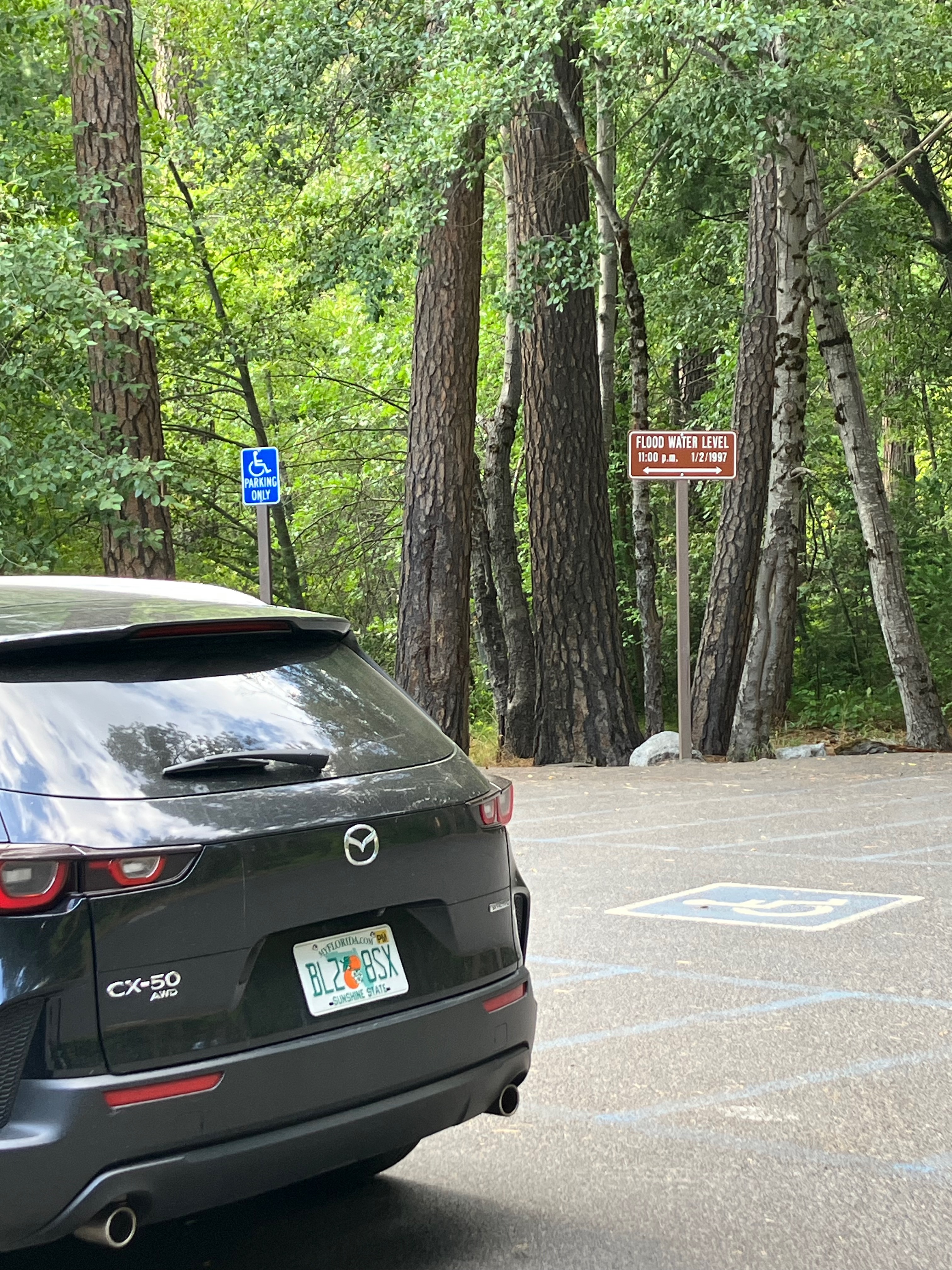
Its highest recent flood, noted at a parking area, would
Have drowned anyone not safely escaped to higher ground.

Regardless of our political outlook or economic status,
I believe we’d be wise to productively, concertedly
Get ready for the rain.

Holiday Traffic

Another Thanksgiving weekend. 
This year no need to fight traffic
To and from the grandmothers’ houses,
No need to spend hours circling
The parking lot at the nearest mall.
No need to go anywhere at all.

Now we are the grandparents.
Our muted celebration took place
Around our kitchen table, with
The other set of grandparents,
A daughter-in-law, a teen granddaughter
In attendance. Mostly vegetarian,

The feast also featured a small ham for
The meat eaters of the oldest generation.
We talked in pleasantries, mostly
Avoiding politics. The weather was warm
And sunny, as southern California often
Is in late November. Tomorrow, a wintry mix may

Disrupt the other grandparents’ flights
Back to the Northeast. Been there,
Done that. Especially the two winters
When Vermont was my, then our home.
The Thanksgiving before we reconnected, a blizzard
Delayed and almost sidelined Jim as he came north.

The following year, sleet and snow complicated
Our southbound journey, delaying our arrival at our elders’
House in northeast Philadelphia until nearly 4 a.m.
From a later home in Richmond, VA, we’d set out by car to see
Grandmas and Grandpas in Maryland and New Jersey,
Two growing boys sporadically squabbling in the back seat.

I watch with sometimes spiteful glee as
News clips feature clogged airports, or huge
Temporary parking lots on I-95 in both
Directions. Yes, Virginia, it can take nearly an hour
To clear the Delaware Memorial Bridge.
Still, I need to remain grateful for holiday traffic.

Nearly sixty years ago, the bus ride from Baltimore to D.C.
That usually lasted 45 minutes stretched to almost
Three times that long, giving my college-bound seat mate
And me time to thread our awkward conversation toward a
Slow-budding romance. Holiday traffic helped introduce me
To a future husband, children, grandchildren. Thanks be!  

Of Smokestacks and Cliffs

As we approach the shank of summer, I’ve been reminiscing about a long-ago summer I spent at a magical place, Montreal’s “Expo 67.” It was my first summer away from home and on my own. I was just out of my teens, in a serious relationship, not sure what to do about it. My boyfriend was hundreds of miles away, working at a summer camp in Pennsylvania. In those pre-internet days, we wrote postal letters back and forth, sometimes emboldened to share by mail what we’d shied away from in person. 

The world was in turmoil, perhaps a bit more than usual. I was somewhat bewildered, but hopeful about prospects for a better society. Expo 67 was a perfect vantage point for viewing new possibilities.  

Because I’d also fallen in love with the French language, at first I’d considered dropping out of college to spend the entire April-October interval of the fair as a participant-observer. I thought that a prolonged stay in French-speaking Québec province would improve my language skills beyond what I was getting in coursework at my small liberal arts college in Virginia. Our academic dean suggested an alternative—why not apply to work just for the length of my summer break, when visitors to the fair would be at their peak, the need for extra staff most urgent? That way I could get almost the same exposure to French language and culture without interrupting my college education. 

Of the hundred or so application letters I sent out, only one produced a definite job offer—preparing and selling Belgian waffles at one of the fair’s many snack bars. I jumped at the chance. Once school let out, I boarded a bus headed north across the border. It took an intervention by my soon-to-be boss to prevent me from becoming an undocumented worker. There were many in Montreal that summer—American young men evading the military draft, or newcomers from elsewhere fleeing disasters, disorder, or worse in their countries of origin.  

Over time I became one of Smitty’s Waffles best strawberry cappers. I earned a pittance, but was surrounded by others in the same situation. We shared low-cost housing tips.  We traded end-of-shift free food among the half dozen or so snack bars in our cluster. Sometimes this included freshly whipped butter, made in our gigantic electric mixer by whipping the cream that topped our waffles for just a little too long (and substituting a little salt for the sugar). 

Montreal had extended its public transportation system for the fair. A monthly pass for the Metro was affordable, even at minimum wage. Best of all, on my days off, I got free entry to the fair.  An exhibit I sampled multiple times was sponsored by Canada’s telephone companies. It featured a trans-Canada travel film, the first in immersive Imax, a genre many of us have come to enjoy since. Though I haven’t located an online archive of the film, I can remember snatches of scenery, from the easternmost stretches of the Maritime Provinces along the Atlantic to British Columbia on the Pacific. However, it’s two scenes from Canada’s interior that linger most vividly in my mind. 

The first is an aerial panorama of a huge steel mill complex near Sudbury, Ontario, belching smoke. Back in 1967, making steel was seen as a hallmark of industrial might, with smokestack pollution a bothersome but necessary byproduct. 

The second snippet is slightly longer—several young people joyriding in an open jeep across a vast plain, with no other traffic in sight. Abruptly, the vehicle brakes to a stop, just as the celebrants reach the edge of a thousand foot drop. Even after several viewings, I still gasped at the sudden halt and the averted plunge to oblivion. 

Since 1967, industrialized countries have reduced some of our smokestack pollution, viewing it as a health threat. Since 1967, we’ve also gotten increasingly concerned about a global “cliff” of climate change, caused by humanity’s net emissions of greenhouse gases. We humans have yet to master satisfying our needs and wants without endangering our long-term survival as a species. The 2015 Paris International Climate Agreement may be a small start toward solutions. It’s been signed by over 190 countries that produce 98% of the globe’s greenhouse gases. The U.S. is currently a signatory. We are reducing our greenhouse gas emissions, if not yet quite as fast as climate accords targets. I’m trying to play my part. I’m also rooting for those young joyriders. I want us to apply our collective human brakes fast enough and creatively enough to keep us from plunging over the edge of a climate cliff. 

Tourism: Boon, Bane, Both?

This spring, I traveled with my husband to two European cities—our first international trip since the start of the covid pandemic. Judging by the crowds we encountered at prime tourist sites, we were far from the world’s only “post-covid tourists.” We were lucky enough to be able to afford about a month each at small rental apartments in Barcelona and then Paris—a wonderful chance to get some different perspectives about how a more resilient human world might work. 

Both Barcelona and Paris get considerable income from tourism. According to official figures, almost 26 million visitors made an overnight stay in the Barcelona region in 2023, spending 12.75 billion euros ( or 13.8 billion dollars). About 100 million visitors come to France in non-covid years, making it the most visited country in the world, with Paris one of its most visited cities. In 2023, Parisian tourism generated revenues of 63 billion euros. Tourism in each city employs over ten percent of the work force—an important component of their overall economies.

The proprietors of our rental units were accommodating and helpful. Our lodgings contained useful tour guides with hints to optimize our access to both famous and lesser known sites. In both cities, there were many restaurants and food choices, including some at affordable prices. During our journey, we did not encounter any personal rudeness or threatening behavior. However, there were a few worrisome signs in our surroundings.  

One day in Barcelona, we visited its museum of contemporary art, tucked away along a side street an easy walk from our apartment. The building itself is a work of art, filled with adaptable exhibit spaces and easy access ramps. Outside is an extensive plaza where we watched young men and women practicing their skateboard moves. As we left the area, I noticed a large mural on an adjacent wall. The overall wording was beyond my elementary Spanish or my even more limited Catalan, but the message was clear. The accompanying graphic, a “welcome mat” inscribed in English with “Not Welcome,” told me what I needed to know.

tourist caution in Barcelona

Recently, some locals expressed similar sentiments by going to prime tourist venues and squirting patrons with water pistols. 

Protests in Barcelona are partly due to the way tourist lodging seems to distort available housing stocks. Though the rental income from our apartment helped sustain our proprietor’s family, it may also have helped drive up longer term rental prices for local residents. Not just in Europe, but in resort areas in the U.S. as well, we’ve heard laments by long-term residents about the hollowing out of local cultures and services when a town or region becomes too dependent on tourism. 

A ski resort, a summer retreat, a place to go to view autumn colors, a city with an abundance of museums and historic sites—none of these by themselves support local transportation infrastructure, schools, or other public services. Tax revenue can fall short of providing the level of services wanted. If too many non-tourism-related locals leave, the networks of volunteer groups that help make a community thrive can wither and die. Similarly, becoming too dependent on tourism can exacerbate income and wealth inequalities. Service workers crucial to successful tourism can find it impossible to afford housing near where they work. Long-distance commutes, sub-standard housing, and exhausted workers then can blemish even the poshest resort.

Tourism-driven economies can also generate excess trash and pollution. The streets of old town Barcelona were sometimes cramped, loud, and dirty. Traffic jams all over the area were getting more frequent and disruptive. In Paris, tourist taxis sped by our building nearly 24/7, along with police cruisers, sometimes with sirens blaring. They made it more difficult for visitors and locals alike to get needed rest.  

Finally, as covid so dramatically showed us, tourism is not a “core” industry. In a health crisis, millions of erstwhile tourists will stay home, leaving hotels and restaurants standing vacant, their staffs suddenly unemployed. 

An appropriate level of tourism will vary from place to place. Paris, for centuries a tourist magnet, may be more robust than most in its efforts to be a “host city” that works. In a week or so, it will become the site of the 2024 Olympic games, estimated to bring in about half again as many as its already abundant annual influx of tourists. 

While governments and economists continue to wrestle with how to “solve” the tourism conundrum, those of us who travel and/or host can help make tourism more mutually rewarding. As travelers, we can prepare with some basic education about the places we plan to visit, make responsible choices in itineraries and accommodations, use our best manners and be respectfully curious about habits and customs different from what we’re used to “back home.” As hosts, we can be more patient than we might be with fellow locals, do our best to assume positive intent by our visitors, and provide clear instructions about the use of available services. 

Whatever our role of the moment, we can acknowledge both the value and the limitations of tourism.  

Culture Lag

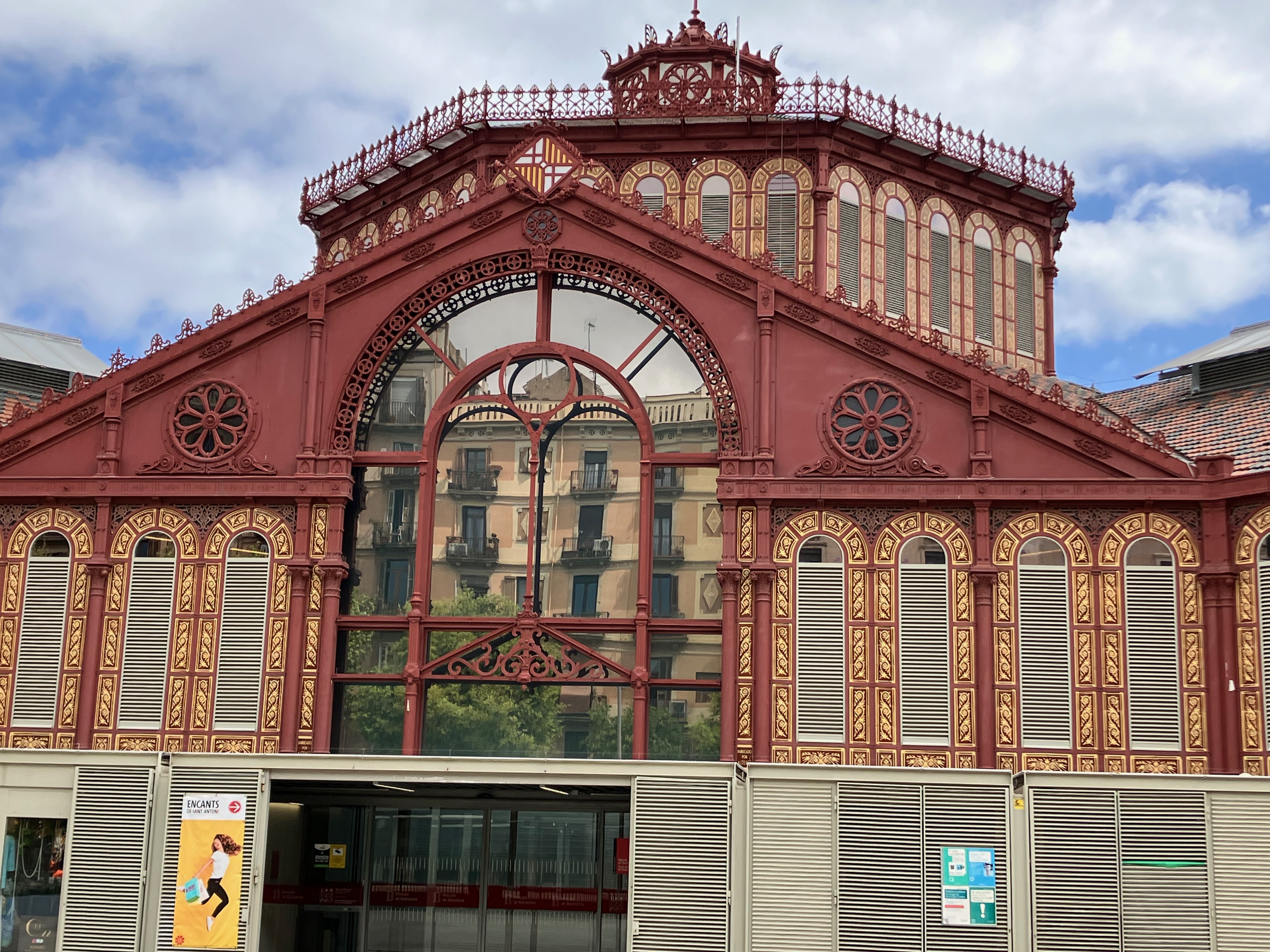
renovated Sant Antoni Market, Barcelona, Catalonia, Spain

This past spring, I had the good fortune to embark on my first overseas trip since the covid-19 pandemic. I spent a month each in two different European cities, Barcelona and Paris. Their time zone is quite different from where I live in southern California. After my return, it took me a week to adjust my sleep and waking schedules to my home time zone—jet lag. It’s taking me even longer to readapt to the culture of my home city. I’m still suffering from a touch of “culture lag.”  

Getting readjusted to a car-dependent city like San Diego is taking some time. The volume of automotive traffic, both in my neighborhood and on area freeways, continues to amaze me—Barcelona and Paris, at least at their cores where I stayed, had proportionally much less vehicular traffic. Paris has been installing dedicated bicycle lanes at a great rate as part of an aggressive strategy to reduce air pollution and make the city more livable. There’s now even a bicycle rush hour; per a recent (2024) survey, in central Paris more people bicycle than drive. In the run-up to its hosting of the 1992 Olympic Games, Barcelona, the largest city of the Spanish region known as Catalonia, totally revamped its formerly shabby waterfront to create a 2-plus-mile-long stretch of walkable, easily accessible public beach. 

Both Barcelona and Paris have robust, easy to use, inexpensive public transportation systems that serve most of their metropolitan areas. Paris is upgrading its metro (subway) in anticipation of increased ridership during the Olympic Games it will host next month. I wish our city could become less dependent on “car culture,” especially as I continue to age and my driving skills continue to diminish.   

On the other hand, I’m relieved to experience my lower exposure to tobacco smoke here in San Diego. Outside our Barcelona rental apartment, the sidewalk was always full of cigarette butts. At all hours of the day or night, people sitting on some of the local public benches periodically lit up. Staying upwind of the secondhand smoke was an ongoing challenge. Paris has banned indoor smoking in public places, but nearly every restaurant or cafe has alluring sidewalk tables where non-smokers may try to “dodge the smoke.” 

Both European cities have ongoing recycling efforts, with large, labeled bins for different recyclables at every block or apartment building. The neighborhood market near our Barcelona apartment even had a staffed drop-off location for food waste. Recycling volumes were lower because less plastic or other packaging was used to begin with. In Barcelona, people wheeled small fabric-covered carts to carry their groceries from shop to home. In Paris, cloth shopping bags were more common. 

Living spaces were smaller than ours here, with each of our rental apartments measuring less than 500 square feet. Partly because of limited space, partly because of different cultural norms, appliances were more compact and less extensive than ours—“half size” refrigerators, no automatic dishwashers, limited clothes driers. Drying racks and sunny windows served nearly as well. People shopped several times each week, if not daily. Specialty shops could provide cheeses, meats, fruits and vegetables, or baked goods. There were no “big box” stores. Across the street from our Barcelona apartment was a recently renovated 19th century market with over a hundred stalls selling all sorts of food and clothing. American-style grocery stores were generally smallish, had no parking, and coexisted with living spaces. In both cities we could easily walk to groceries, bakeries, restaurants, book shops, and newsstands. Delivery services were more often by bicycle or covered tricycle than by motorized vehicle.  

My “culture lag” after this most recent trip has been less severe than on earlier occasions. During my work life, I’d spent longer periods of work and/or travel in areas more “exotic” than western Europe. Still, San Diego is different from what I’d become used to in Barcelona and Paris. I’m not yet sure how long this episode of “culture lag” will last. 

I’m very glad to have a San Diego home to return to. Perhaps some of the better parts of Catalan and Parisian cultures will outlast culture lag to work their way pemanently into my life here.  

May Day

Sailors in a foreign port get a late night start to their next voyage.
Just settling into their departure routines, they’re at first flustered by the
Flickering of the ship’s lights, then alarmed by more serious
Malfunctions. Their pilots issue an international distress call, then
Desperately drag anchor to try to avoid lumbering into a major bridge.

Young girls in frilly frocks, some with flowers in our hair,
Dance around a maypole, skipping in and out,
Weaving intricate patterns with suspended colored
Streamers as we twirl in the iridescent sunshine.

Distress calls and maypole dances—
Mayday! May Day!

Life Plans A to Z

According to an essay I wrote in eighth grade, I wanted to grow up to become an airline stewardess or a simultaneous translator for the United Nations or a circus trapeze artist. As I got older, I began to realize that these initial dreams were unlikely to get fulfilled, at least not in the way my thirteen-year-old self had imagined. I might need to create alternatives. 

For starters, stewardesses (the profession then was almost entirely women) were required to have 20/20 vision without eyeglasses. In those days before the availability of contact lenses, my severe myopia would disqualify me as a prospective flight attendant. Later in high school, I began to meet other students who had been raised bilingually. It gradually sank in to me that my simultaneous translation prospects were slim. Regardless of how much I studied, I was unlikely to become as proficient as others who’d learned two languages (or sometimes more) from birth. Finally, although I’d been a “queen of the jungle gym” in elementary school and loved going to the circus, I began to appreciate how much additional training I’d need to reach professional level on a trapeze. I also noticed that over time circus crowds were getting sparser. More and more “big tops” were folding. 

So I began formulating “Plan B’s.” Even if I couldn’t become a stewardess, I might be able to arrange other ways to travel widely as an adult. I might not be able to do simultaneous translations, but perhaps I could teach foreign language skills to those with less exposure than I had. I might not ever become a circus entertainer, but I could create verbal sketches and skits to amuse people. 

By the time I completed college, I’d had my first international work experience—preparing and selling Belgian waffles at a bilingual snack bar at the 1967 World’s Fair in Montreal, Québec, Canada. I’d enrolled in an advanced program to get a teaching credential for French language instruction. From Montreal, I’d sent a summer’s worth of weekly humorous travel sketches to our small-town Maryland newspaper. 

I was about to become a newlywed, at a time when American young men were susceptible to being drafted into the military. Some of them were then sent to participate in a far-off war in Vietnam. A few days before our wedding, my groom-to-be got his notice to report for induction into the army. Rats! Time for “Plan C.” 

My only future brother-in-law was already serving in Vietnam. Worst case, my future husband might soon join him. Knowing my tendency to “awfulize,” I figured I could keep my stress level somewhat in check by staying busy. I applied for and got a part-time clerical job in addition to my full-time academic course load. 

Several weeks later, a surprise phone call from my now-husband relayed most welcome news: a minor congenital back abnormality had reclassified him as less fit for military service. He could return home and resume his non-military career. “Plan D” found both of us happy to be together, but very, very busy. I made it through a hellish school year of teaching beginning French to 187 rambunctious adolescents, then embarked on “Plan E,” what turned out to be a lengthy career in commercial information systems.  

Over the course of the next fifty years or so, I fulfilled additional alternate versions of my adolescent dreams: for a couple of years in my thirties, I was on the staff of the U.N. in a French-speaking African country; in my forties, I created holiday programs spoofing local politics for an area non-profit; in my fifties, I survived a serious health scare partly by becoming more adept at yoga and a graceful Asian exercise practice called “qi gong.” I also traveled widely and spent multiple semesters teaching English as a foreign language in rural China. 

At my current life stage, I get much incoming mail either promoting various burial services or suggesting worthy causes I should include in my “estate plans.” As the end of my planning alphabet approaches, I face ongoing uncertainties and anxieties, including pandemics, climate change, massive human migrations, escalating housing costs and homelessness. My coping skills are sometimes challenged. I hope that younger generations will expand newer coping tools and use them wisely. 

Should anyone ask, I’d suggest that it’s great both to have dreams and to have some “plan B’s” (and C’s, D’s, etc.). Life is apt to adjust your original plans over and over again.