
This MLK weekend, I didn’t feel much like celebrating. It seemed as if much of the civil rights progress of the past half century and more was being erased as quickly as our national executive could flourish his sharpie and sign yet another exclusionary and/or incendiary executive order.
Still, I wanted to show solidarity with the activists and citizens who for years have been calling our country to live up to its ideals, so I got a ride to downtown San Diego to walk in Sunday’s MLK 5K. There were a lot of other walkers and runners, most more fit than I was. I figured I could probably go the distance, if somewhat slowly.
It was a gorgeous day—sunny, with a light breeze and pleasant temperatures. Along the way, I got to hear snippets of conversations among those who also took a slower pace. The atmosphere was congenial, most of us opting to enjoy the walk and the weather more than just stewing about the sorry state of our republic. Someone probably “won” the race, but all of us got some worthwhile exercise in a friendly environment.
Later, I stayed for part of the annual parade that’s been held in San Diego for many years, beginning even before the MLK holiday was enacted nationally. Some of the groups marching were predominantly black, but many were mixed, with high school and college bands, various professional associations, and contingents from area employers. Most of the early groups were generally apolitical. I enjoyed the colors, the festive mood, a few of the gift items thrown from passing floats. Before I left, some more militant marching groups appeared—I took a picture of a set of local activists whose banner intrigued me.
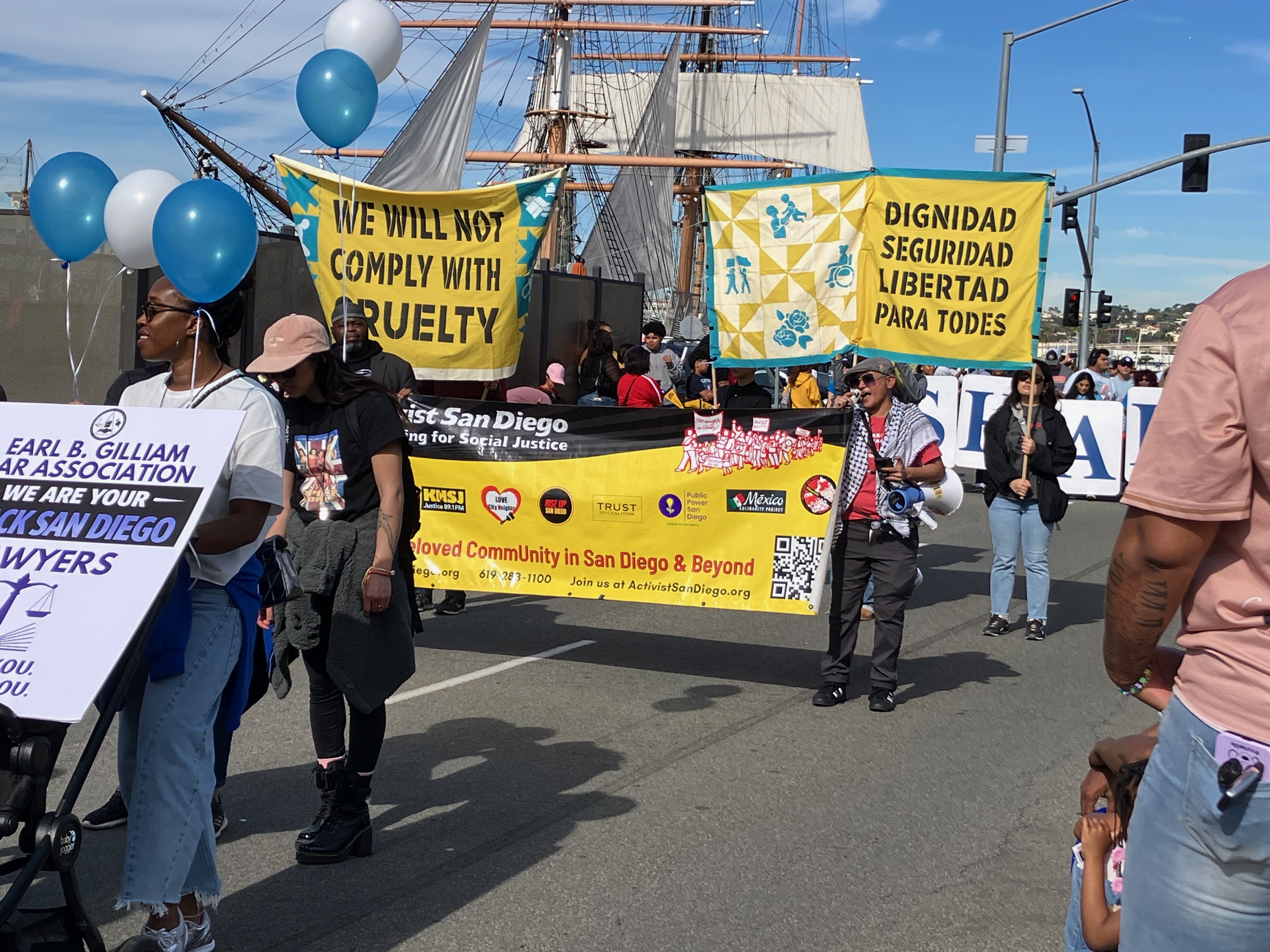
What combination of tactics could work best to slow or reverse our slide into increasingly authoritarian rule, I wondered? I wished I were a better writer, able to craft a rallying cry that would re-inspire me and others. Then I remembered a poem written during a previous dark time for the disinherited, James Weldon Johnson’s 1900 “Lift Every Voice and Sing.”
A black friend had delved deeper into the words to this three verse civil rights poem during a workshop nearly thirty years ago on building the beloved community. The first verse stresses harmony and rejoicing, a needed uplift for the students at the segregated black school in Florida where Johnson was then principal. But the poem doesn’t sugar coat either the realities of prior slavery or the challenges of the Jim Crow era then unfolding. Its second verse lays it all out:
Stony the road we trod, bitter the chastening rod,
Felt in the days when hope unborn had died,
Yet with a steady beat, have not our weary feet
Come to the place for which our fathers sighed?
We have come over a way that with tears has been watered
We have come, treading our path through the blood of the slaughtered.
Johnson’s brother Rosamond crafted music to go with the poem. A school chorus first performed it at a school ceremony later that year. A generation later, the hymn was adopted as an official anthem of the NAACP. The song has become an enduring symbol of the struggle for civil rights—its mandate expanding to include equal rights for all.
There’s a lot more work to be done before the ideals expressed in our nation’s founding documents are fully realized. The work will not get done solely with marches or protests, though they may help. Sometimes the road ahead will be stony, but gentle perseverance can get us to a better place again. We’ve been working at perfecting our union for 250 years—with luck and fortitude, we’ll have a better nation and a better, more peaceful world before the next 250 years are done. Then, we will truly be able to lift every voice.
 Jinny's Occasional Poems